In Light of Digital Knowledge .. Do Books and Libraries Lose Their Status?!
Review and Preparation: Sarah Saleh
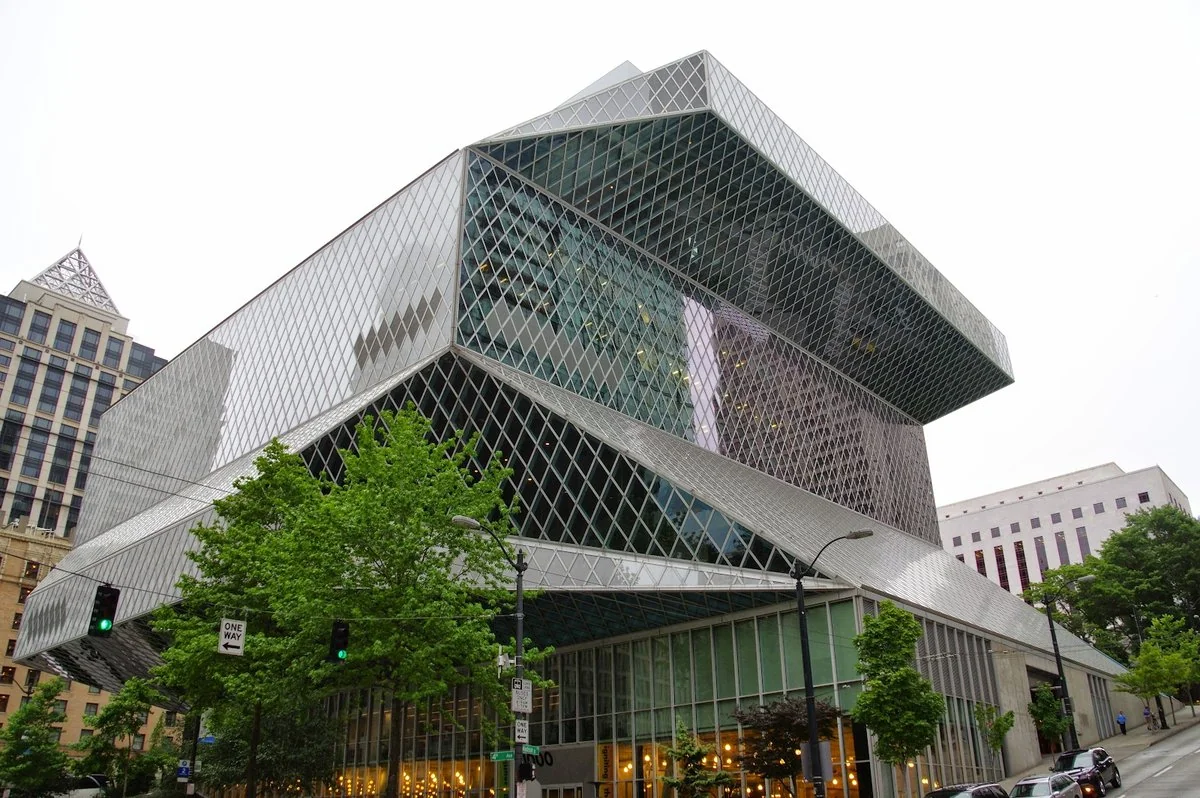
In the Internet age, will we still to libraries to borrow books and do research? The answer seems to be a resounding yes, because libraries are more than just a place that keeps volumes on shelves covered with dust.. Herbert Muschamp wrote in the New York Times about the new Public Library building in Seattle, "This is the most enlightening building I have the honor to review," and described the building design by Rem Koolhaas as "the glowing chandelier on which your dreams swing."
And Time magazine placed this library building at the top of its list as the best architecture. This is reminiscent of the crowd of visitors at the opening of the Seattle Library, which is considered one of the most important public libraries in the United States, numbering about 16,000 small and large public libraries.
So libraries still represent the memory of nations and perform a basic function in preserving, organizing and to a large extent validating our knowledge, and are usually viewed as a pillar of free reading. The library in our lives is the "fourth side" with home, work and school.
Questioning the Importance of Libraries
Perhaps no one can predict the future of libraries in light of the digital information revolution that places before us an important question about the present, "What is the role of libraries as cultural institutions in the age of the Internet, hundreds of satellite channels and growing computing?.
Andrew Carnegie believes that libraries are so important that he dedicated a large part of his future to advocating for them.
But there are trends to question the importance of the role of libraries in light of the modern digital revolution, attributing the reason to companies like Microsoft that contributed to most people now having computers and most of them are connected to the Internet. Usually 80% of Americans, for example, can connect to the Internet whether at home, work or school. Not to mention the rapid spread of high-speed wireless communication lines and the emergence of a new generation of lightweight tablet computers.
In addition to that, specifically in December 2004, months after the opening of the new Seattle Library mentioned earlier, the search giant (ogle) announced an agreement with Harvard, Oxford, Stanford, Michigan universities and the New York Public Library to digitize millions of volumes from the shelves of this public library and those university libraries to make these materials searchable for free for everyone via the Internet, where ogle pays for electronic scanning and libraries get a computerized copy of their information containers in return.
Michael Keller, head of librarians at Stanford University, says "within two decades most human knowledge will be digitized and available for reading on the Internet and one hopes that it will be free like reading in libraries these days."
Most people these days, when they want to get something, turn to the Internet. Sheri Shariati, who graduated from San Francisco State University, says she hasn't taken a book home from the library since basic education, "we are in a new era and if I want information I will to the computer."
The fact of the matter is people turning to the Internet even while in the library. Most public libraries these days allow Internet access, which is actually heavily used.
A visitor to the luxuriously renovated reading room of the main building of the New York Public Library says, "Many visitors were carrying a laptop. The strange thing is that we were sitting in one of the largest libraries in the world, yet many of us didn't have a book in our hands. These people came to the library to connect their laptops to the high-speed Internet connections installed at each table."
The Future of Paper Culture
If that is the case, do libraries lose their status or importance? More importantly, is paper culture left behind? As mentioned before, no one can reliably predict the distant future, but for libraries, the digital information revolution raises a set of questions about the present. Daniel Akst asserts in an article on the Carnegie Corporation website that libraries are still flourishing. America today has approximately 16,500 libraries, more than the number of McDonald's branches, thanks in part to new and expanded facilities built to serve thriving suburban populations, circulated materials, and library visits per person have risen since 1990. In fact, despite the Internet boom, the past 20 years have resembled a lden age for building new libraries. A number of cities and suburban communities are building new and modern libraries, some designed by major architects like Koolhaas (Seattle), Michael Graves (Denver) and Moshe Safdie (Vancouver). People have always considered libraries as important public buildings whose appearance must embody community aspirations. This side of the library's purpose emerged a century a, when Carnegie was funding libraries.
Firm in the Face of the Winds of Change
Los Angeles, Chica and other places have found a new sense of purpose in serving various large immigrant populations arriving in these cities. Even if libraries nowadays focus less on assimilation, the glossy and busy new building of the Flushing branch of the Queens Library system in New York has gained national fame for accommodating many languages and cultures in its surrounding community. The New York Public Library runs a program to provide materials in 11 languages to all libraries in New Jersey. The Chica Public Library has materials in at least 45 languages, and the San Antonio Public Library in Texas, which has a relatively new central building, built a large Latino collection. Libraries across the country also offer English language assistance, immigration and citizenship information and a range of other resources for newcomers.
Libraries Developing Themselves
These are some of the many reasons for people's love for libraries despite the presence of alternative and abundant sources of information and entertainment at our fingertips. When people were asked in the national survey conducted by the Marist College Institute for Public Opinion, "What is the value of having a public library in your community?" 67% said "very valuable," another 27% said "valuable," and 63% of those surveyed said "important." In an opinion poll conducted for the American Library Association, it was reported that 62% of adults in this country want library cards, equal to the same percentage that uses the Internet regularly. Despite what is rumored about libraries being a refuge for children and the elderly, most frequenters are from the 25-34 age group, ing twice a month. "Libraries are more than dissemination of community information or any other information per se." Libraries will have a crucial role for years to come regardless of how much of recorded human knowledge makes its way to the Internet. No one has yet come forward and proven success in preserving digital information for a century or more, and the explosion of knowledge and information ensured by the digital revolution makes organizing and indexing library skills more valuable than ever. Already there are more and more free reference services available every day, and some libraries contract with these services in other time zones to make this easier. In the opinion of library owners who have begun to keep pace with these changes rather than resisting them, the purpose of libraries will be one: being a free place to allow people to access and share information. Helen Blowers, director of digital strategy at an Ohio state library, said, "A public library building is not a warehouse for books, but a center for gathering people." Experts noted that people used to use the Internet for information from newspapers, but they now use Facebook, Digg and Twitter to discuss various aspects of their lives and daily news, which libraries with an eye on the future are trying to keep up with by creating electronic circles for people to exchange information. Toby Greenwalt, virtual services coordinator at a Chica library, said, "We can keep up with these currently oning trends," noting that he installed services to respond via Twitter and text messages in his library, where he monitors conversations and uses the information in them as inspiration for public discussions in the library. Greenwalt pointed to the changing role of librarians, since information has become online and relates to people's personal problems, the first's role became to be managers of discussions in libraries and technical support coordinators and to help library frequenters connect with each other. Among libraries that have taken to developing themselves is that in Charlotte and Mecklenburg, North Carolina, which contains a multi-media electronic space, where visiting children can film videos and record the music they love. It also contains a blog for electronic games and constantly hosts tournaments for this type of entertainment. The Aarhus library in Denmark took a unique step, displaying an "information column" where people can share news stories, considered an "information exhibition" allowing visitors to observe digital maps composed of layers of information. Library director Rolf Happel said, "Libraries were never about books alone."
For these reasons, libraries will remain. As for those optimistic about the continuing role of libraries and paper books, they attribute this to many reasons, including:
Paper Books Have Historical and Cultural Value:
The idea of the library becoming a museum for books is a scary idea for librarians. Instead of continuing as active researchers, they could turn into museum workers, and even lose their jobs. But if the library becomes an interactive place for meetings, cultural events and exchanging ideas, then the idea of its transformation into a place to preserve literary heritage enhances its importance. Indeed, old books have moral value and are part of history and civilization that should not be lost to digitization.
The Internet Doesn't Provide All Information:
This is true. Although ogle took on the task of digitizing millions of books from the largest libraries, publishers and authors will not allow them to make their works available for free online. Making full books available via ogle Book Search is already prohibited by law, only snippets are allowed.
The Internet Complements Libraries:
This can be illustrated by interpreting the types of materials obtained via the library, such as periodicals, books and other sources. The Internet falls among these sources. This clarification shows the preference of libraries over the Internet. Using online search helps simplify general ideas and gather quick facts and a wide range of ideas. Libraries are completely different institutions from the Internet. Talking about one replacing the other seems contrary to any logical thinking.
Digitization Doesn't Mean Destruction:
Libraries did not avoid ogle's book digitization project, but cooperated with it. This project, which includes a group of the largest libraries (Oxford University, Michigan University, Harvard University, Complutense University in Madrid, New York Public Library, University of Texas, University of California) that made their collections available to ogle, enabled them in return to obtain them in digitized form. Although we can imagine that a group of digitized books whose copyright has lapsed, another group of books protected by law will not be accessible via ogle, which faces major lawsuits in America from authors and publishers. The terms of the contract do not waive the responsibility of the participating libraries. Libraries are still important for access to copyrighted collections.
Digitization Means Survival:
The most important reason for digitizing books returns to the nature of books that wear out over time and are also vulnerable to many damage factors.
Libraries are Not Just Books:
Technology integrates with libraries and doesn't sweep them away. Technology revealed that librarians' work isn't limited to putting books on shelves but includes guiding and educating beneficiaries on how to find information. Although technology provided better access to information, it is a complex tool, and often requires a specialist who knows how to deal with it. This is the librarian who dedicates himself to learning advanced technologies to help beneficiaries reach information effectively. (This is in their job description).
Paper Books Will Remain
But even if the fever for using handheld devices reached digital books, paper books will remain. Radio is still alive despite TV, and despite video you still to the cinema, and despite email you still use the phone. Even if the matter pushes publishers to issue books in digital form only, there will still be paper book lovers. Even if digital books float in the end, digital libraries will remain equally important where they guarantee access to collections whether in digital or paper form.
Virtual Disappearance of Libraries:
Although the existence of an archive of American history on the Internet led to a decline in museum visits, the numbers that declined from visiting are present on the Internet. Libraries still receive 58,000 unique visits each year (from different IPs, meaning a different person), and the number of schools and universities offering degrees online (distance education) is increasing, and a large number of these libraries are working to improve their virtual library collections.
Not Everyone Can Access the Internet:
Despite some initiatives in some Arab countries for free Internet, many cannot pay the telephone bill, let alone the Internet. Besides, many developing countries do not have technical knowledge, and if provided, it is difficult to acquire devices, and if acquired, some are in remote areas not reached by communication network infrastructure. Satellite access for them represents a cost they cannot afford under any circumstances.
Society is not yet ready to abandon libraries, and perhaps it will never happen. Libraries can be adapted to social and technical changes but cannot be replaced. While libraries differ from the Internet, librarians are most professionally qualified to guide students, researchers and citizens to understand how to search and find valuable information on the Internet. Although much information is on the Internet, much still exists on paper. Libraries and librarians now, more than ever, are extremely important for preserving and improving our cultural heritage.
Source:
Daniel Akst, Carnegie Corporation of New York
Will Sherman