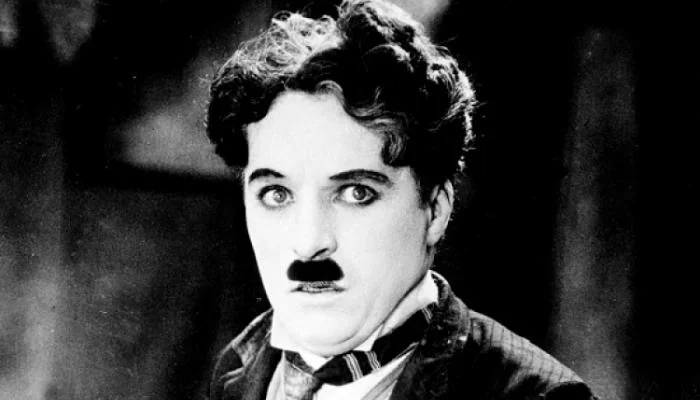
The most famous are for Charlie Chaplin, Hitler, Einstein, and Salvador Dalí. Mustaches in Arab and international culture: Transformations from manhood to the world of fashion
Mustaches have their presence in various societies; they are the title of manhood and bravery, and they distinguish between one stage and another, from childhood to youth to manhood. Mustaches have been associated with these meanings in various mindsets and cultures.
Men did not grow their mustaches in these images that we used to see, for example, in the first half of the twentieth century in different shapes and sizes. The history of the mustache dates back to 300 BC, where the first known case of a man having a mustache appeared at this time, which is a picture of a horseman from the Eurasian steppes. The journey of mustaches has historically ne through many fluctuations. In the modern era, you find them associated in the Arab world with social status, money, and influence, while in the West, they transformed from a symbol of power to a symbol of rebellion.
The mustache is: the hair that grows above the upper lip, and it appears in human males at puberty. It is one of the signs of manhood in some societies. Mustaches were used as a proverb for manhood among Arabs, for example the expression "perfumed of mustaches," meaning those with thick and strong mustaches. Since ancient times, it was indicative of manhood, and it may add aesthetic touches to some. Politicians were proud of their twisted mustaches; if one of them rose up and grabbed his mustache and made a promise saying: "Take it from this mustache," he would not break his promise, and if he did, shame would follow him.
Shaving the mustache in the East is shameful for some, especially in the countryside and villages. The sultans of the Ottoman Empire had a special distinction for mustaches and had statuses that Mustafa Kemal Ataturk abolished, so the military institution became free of twisted and scorpion-like mustaches.
Mustaches have shapes, including: the Hitler mustache, which is in the form of a small square stuck above his upper lip, which is a carbon copy of the mustache of the artist Charlie Chaplin, and the Stalinist, Gypsy, Pyramidal, and English mustaches.
Arab Mustaches:
There is no evidence of the importance of the mustache among the Arabs; if you to the heritage of pre-Islamic poetry, you will find it devoid of any poems talking about mustaches, and you find that the symbols of courage and manhood were associated with the horse, the sword, and lineage.
In the Islamic era, we find that it urged the shaving of mustaches, and scholars differed on the recommended sunnah for the mustache; some urged a full shave, and others urged trimming it, which means that lengthening it had no importance in the pre-Islamic era and in the early Islamic era.
Throughout history, you find that the Arabs did not care about the mustache except during the Ottoman rule of the Arab world. The Turks appeared loving the mustache whose ends point upwards after being influenced by the mustache of the German Emperor Wilhelm II. In this era, Arab interest in the mustache began, growing it and linking it with qualities of strength.
Historical Mustaches:
In past years, beards have dominated men's fashion, not only in the Arab world, but in the entire world, and have become symbols of manhood. However, the spread of Turkish series has brought mustache fashion back little by little to the Arab world, and this time without any mentionable manly content, but rather a limitation by Arab youth.
Among the most famous personalities known for their distinctive mustaches: Friedrich Nietzsche, Hitler, Stalin, Albert Einstein, Charlie Chaplin, and Salvador Dalí.
Strangely and with a great deal of humor, there is a woman who grew her mustache, she is: Frida Kahlo, the Mexican surrealist painter, as she chose to reject contemporary ideas of beauty and took care of growing her mustache and eyebrows.
One of the strangest mustaches is the mustache of the Spanish fine artist Salvador Dalí, the founder of the surrealist movement in fine art. He adapted the idea of the upward-curled mustache from the well-known Spanish painter Die Velázquez. Dalí used to take care of his mustache and put wax on it to lift it upwards and he would style it carefully. He was offered to sell a part of his mustache for $10,000, but he sent the buyer a fake mustache made of dried grass for fear of magic.
Growing mustaches was a social phenomenon, and during the Ottoman era, it was closer to military ranks given to each level. In the thirties, King Fuad had a distinctive mustache of those described as a falcon could stand on. This mustache may have been a product of Ottoman heritage combined with modern Italian civilization, which Fuad was influenced by as a prince, then a sultan, then a king of Egypt, where Ottoman mustaches spread greatly among the Pashas.
In the Arab Gulf, mustaches of various sizes spread, then they were trimmed slightly, and then small beards that cover the chin area only were added to them as a type of fashion that keeps pace with the times. Most residents of the Gulf and the Kingdom grow their mustaches, but with the mixing with other cultures and the appearance of educational missions outside the Kingdom, especially to Europe and America, some have moved towards shaving the mustache completely, especially from Arabs and Saudis living abroad, whether in their work or their scientific and study missions.
Signals:
https://www.albayan.ae/five-senses/2001-06-07-1.1123244
https://m.akhbarelyom.com/news/newdetails/3223860/1/
https://www.youm7.com/story/2019/2/7/
https://www.alqiyady.com/
https://www.syr-res.com/article/9988.html
https://ar.wikipedia.org/wiki/%D8%B4%D8%A7%D8%B1%D8%A8