Do childhood years get lost between mobile phones and advertisements? .. Arab children's culture between tradition and innovation and family and artistic education
Most of the writings dealing with the culture of the Arab child highlight a number of positive aspects that can help the child's growth, education, and preparation for the future. Some researchers believe that art and art education have a major role in shaping the child's culture. Culture means "science, knowledge, and arts," and in addition, it includes skill and cleverness.
In her book: "Art, Music, and Drama in Child Education," researcher Hanan Al-Anani stresses that searching for child culture means searching for all aspects related to their personality, including physical, sensory and skill aspects, and also includes intellectual and psychological aspects. Culture cannot be limited to some aspects and ignore others.
Dr. Muhammad bin Hussein Al-Dawahi, in a research entitled: "The Role of Art and Art Education in Shaping the Culture of the Arab Child," studies the problems of child culture and believes that it suffers from many problems, including the dominance of traders over children's literature, and that those who write for children do not know the self-composition of children, not even their own children. Also, children's literature is dominated by foreign and Western .
The researcher believes that there are two other factors that negatively affect the culture of the Arab child: first, the treatment given to the Arab child, which results from our misconceptions of the world of childhood and our neglect of children and their cultural and even social needs. A child is not given the opportunity to contribute to the meetings of fathers and mothers and is removed for fear that he might exhibit undesirable behavior that would reflect poorly on the parents, and this act distances them from serious social communication. The second factor: Arab children are often left with the media, as it is the only one that captures their attention and forces them to sit quietly. The desire of the Arab family for the quiet and submission of children to media devices like television and others makes them forget to monitor the information, ideas, and other cultural materials presented to them, all or at least most of which originate from sources and cultures that do not have the same prevalent in the Arab world and do not match their customs, traditions or beliefs.
Mobiles and Electronic Games:
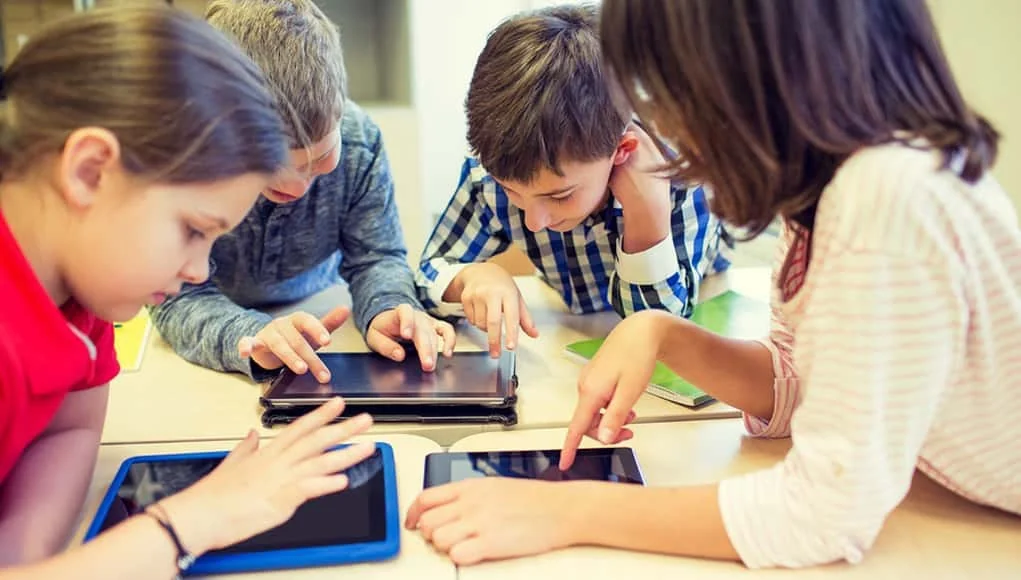
With the appearance and massive spread of mobile phones in the hands of children, and the emergence of many attractive apps for them, especially electronic games, the mobile device with its apps, games and sites has taken over most of children's time and broken their playing, movement, and reading habits, and even adversely affected the way school curricula are received, which has created a social and cultural crisis that must be closely attended to, focusing on monitoring children first at the family and social levels. This is particularly important in this intensive advertising era that strongly pressures a person's daily time.
Many fathers and mothers suffer from children spending more time in front of a mobile or computer screen, which raises many questions about the effect of these devices on their children: do they affect their brains? Do they reduce their social activity? Do they harm them emotionally? Can the child be delayed in speaking because of them?
Yesterday's parents suffered from the long hours children spent watching television, and they warned for decades that they might develop "square eyes," which are the eyes that were accustomed to watching a square television set.
Most parents complain of their children straying from the useful habit of reading and not following purposeful stories and novels that talk about a hero in some field, reading which develops minds and allows for children's minds to open and try their imaginations.
Carrying mobile phones has a highly dangerous effect on a child's health, physically and psychologically, and it could be one of the main causes behind children developing autism, learning disabilities, and a lack of movement and activity, and the matter might worsen to the point where the child suffers from seizures.
Excessive use of the mobile phone by children also slows down language development and is also linked to Attention Deficit Hyperactivity Disorder (ADHD), and this risk increases especially with an increasing number of young children playing with their parents' phones.
Research conducted in Germany pointed out that about 70 percent of pre-school age children play with their parents' smartphones for more than half an hour daily, and this is a big mistake.
The excessive time a child spends on a mobile phone or tablet can lead to obesity due to a lack of movement and physical activity, and obesity can cause more serious complications such as diabetes and high blood pressure.
The damages children can suffer because of staying on mobile phones for long periods include ADHD as well as sleep disorders.
Some electronic games depend on violence and aggressive practices that are closer to virtual reality like PUBG, and this aspect may affect a person who is addicted to these games, especially children, and they will have a bad psychological effect, developing a sense of aggression and violent acts.
Electronic games, especially those with high-speed content, contribute to poor focus and lack of attention in addition to reduced memory capacity. Studies have shown that children who play video games for more than two hours a day may be prone to problems related to attention, lack of focus, stress, and impulsivity.
Solutions and Suggestions:
Dr. Al-Dawahi believes that solutions to most of the problems related to the culture of the Arab child can be resolved by benefiting from the fields of art and art education.
He recommends in his research to pay attention to art education as a subject, review its content in schools, and encourage extracurricular activities of auditory, visual, and performing arts including plastic art and national songs, exploiting holiday time in these activities, and providing simple publications on arts and art education.