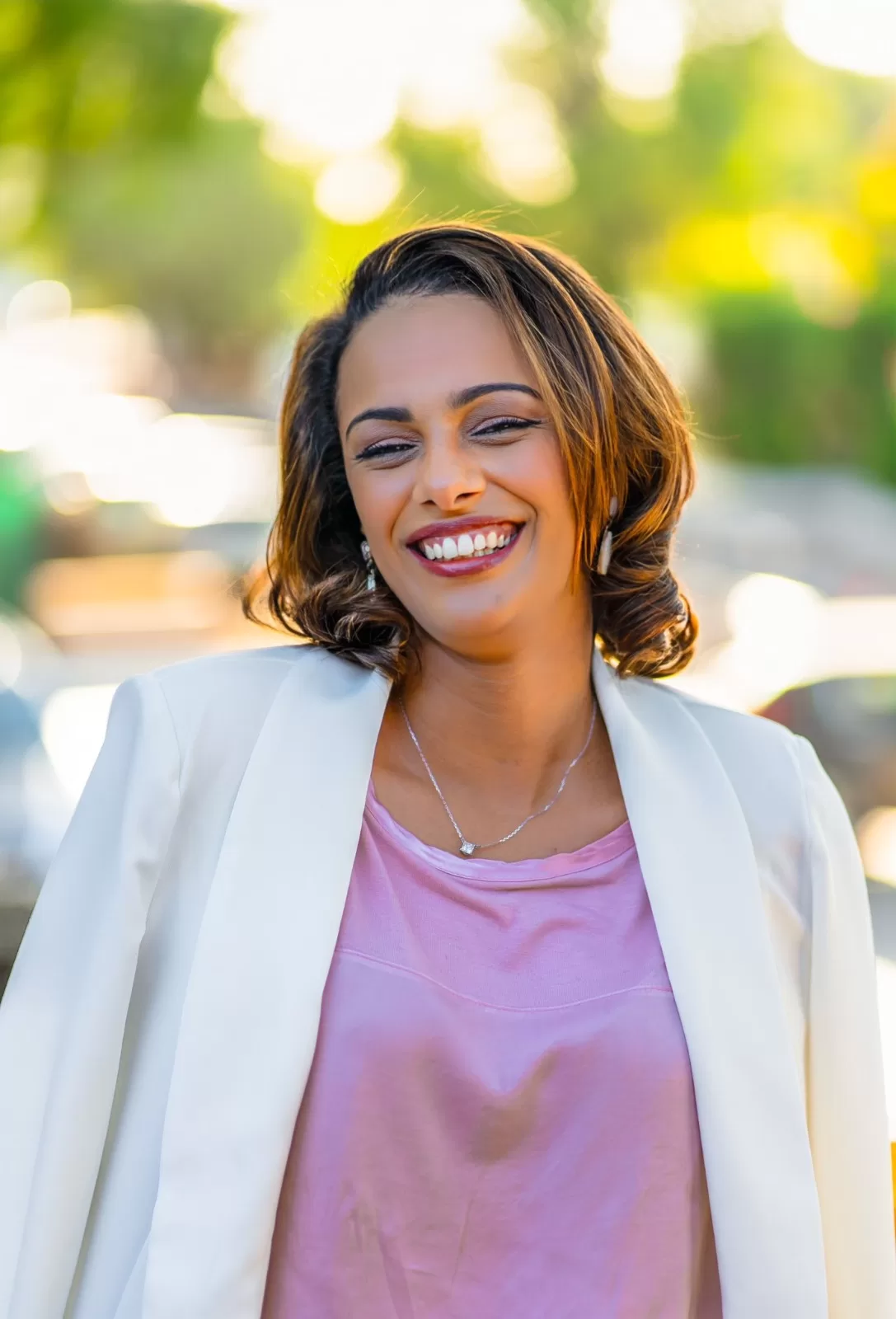
Migrated from Tunisia to Djibouti to find a wider horizon: Poet Zainab Haddaji: Spatial alienation has lost much of its intensity due to globalization and social media
Interview by: Abdullah Al-Samti
Tunisian poet Zainab Haddaji is undergoing a human experience in her expatriation in the Arab-African country of Djibouti for more than five years. Despite this experience, she has not lost the brilliance of poetic writing, as she prepares to print her first collection in the coming months. Zainab Haddaji believes that the Djiboutian people are kind and open to the outside world, but Djibouti remains unknown to the Arab world. In her constant tours, she captures its customs, traditions, and nature. She believes that unfortunately, many Arabs still dream of migrating to Northern countries which might not actually be pleasant places to live given today's changes, whereas Africa, this young continent rich in resources, can provide good opportunities for those who want to settle. About her experience in African travel and the impact of expatriation on her poetry and short stories, we had this interview.
* What does migration or alienation in Djibouti represent to you?
When I came to Djibouti in 2019, my goal was to find a wider and longer horizon for my career. It was a difficult decision. I left my family and friends in Tunisia and everything I achieved to migrate to a new country I knew nothing about except what I read on the internet. Now, Djibouti is my second home that welcomed me with open arms. I faced difficulties, especially professionally, but socially I found only welcome and love. The Djiboutian people are kind and open. Here I don't feel the alienation others describe. I live like any Djiboutian citizen. Perhaps because mentally I accustomed myself to accepting this change and moving forward.
* Is it a migration of estrangement or alienation?
I can say it is an alienation that led to estrangement. In Tunisia too, I was forced to leave my city El Hamma in the south to move to the Sahel and then the capital for study and work. I always felt alienated. Capital city behavior in Tunisia differs from its counterpart in the south. When I worked in journalism, for example, I was forced not to speak my southern dialect and replace it with the capital's dialect so as not to be a subject of ridicule by the audience who had an ingrained idea that people from internal regions are less "civilized." These cultural barriers drove me to leave the country.
* Is there a difference between self-alienation and spatial alienation?
For me, self-alienation is the hardest, because it is a psychological state we can't escape except by facing it. As for spatial alienation, it has lost much of its intensity due to globalization and social media and technology. The expatriate remains in constant contact with their family and reads their country's news with the click of a button.
* How did you accept migrating to the "opposite of the other", considering Djibouti might be the opposite of Europe or Canada?
I'm not surprised you ask me this. It's a frequent question with much astonishment. Djibouti, although an Arab country, remains unknown to most Arabs except for Yemenis who form a basic component of the people along with Somali and Afar. My migration to Djibouti came by pure chance through a six-month work contract. I decided to take the adventure without thinking much. The difficulties I lived in my country increased my desire to leave for any place seeking peace of mind. Now, I don't regret trusting my feeling. When I arrived at the airport, I felt reassured. Unfortunately, many Arabs still dream of migrating to Northern countries which might not actually be pleasant places to live given today's global changes. Meanwhile Africa, this young continent rich in resources, can provide good opportunities.
* Does place affect the nature of creative performance and poetic writing?
I believe that depends on the creator's nature and sensitivity. In my experience, Tunisia had and still has the largest share of poetic texts, especially the period of my residence in the capital. The crowded, noisy capital full of contradictions made me move from short stories to poetry. I wrote short poems documenting my psychological and emotional history. Poetry became my "technical" means to understand what I live.
* How do you see Tunisia from a distance in a foreign land?
This is the hardest question. When I was in Tunisia, I had an Iraqi visual artist friend who said during our evenings: "I carried Iraq in my heart and left, and what is in the heart does not fall out." I can borrow the same phrase from him to describe my relationship with my country. I have come to realize what he truly meant.