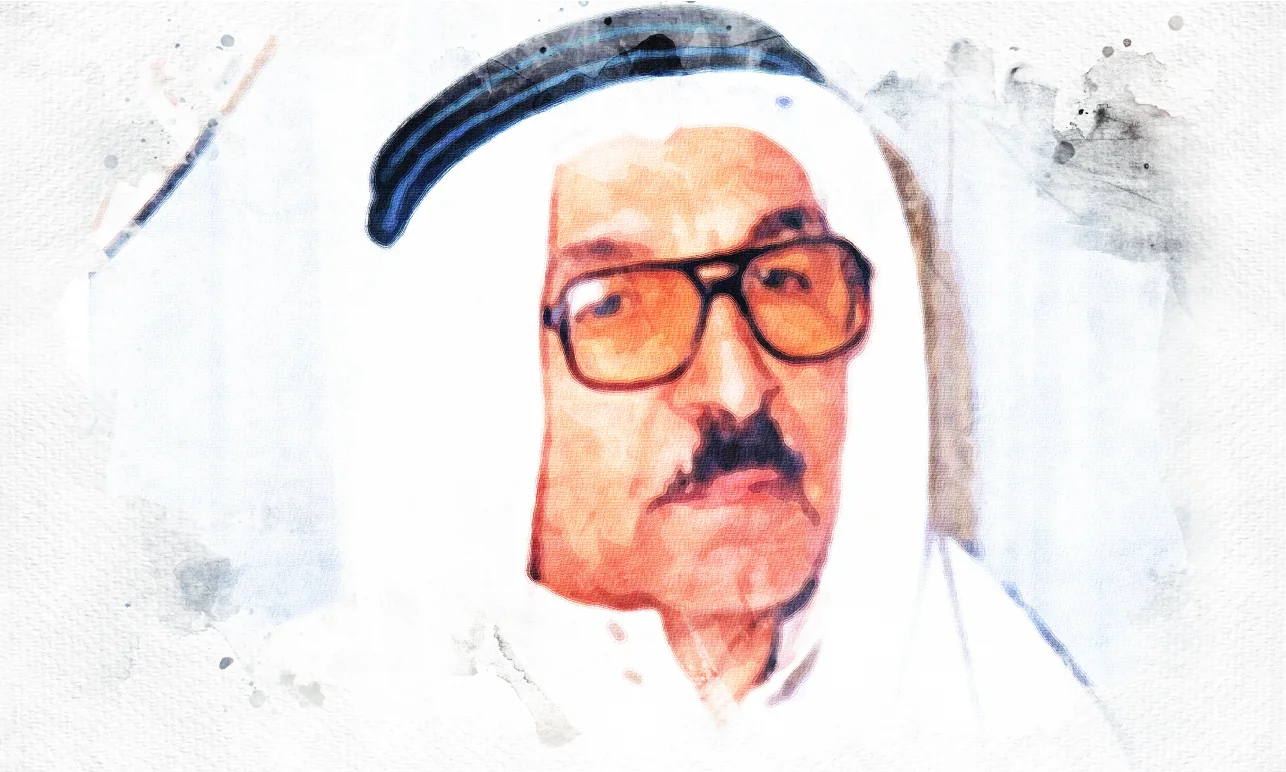
Scenes from the journey of Ibrahim Al-Nasser Al-Humaidan between remembrance, imagination and the world of narration
Special to Ahwal Al-Ma'rifa
Ibrahim Al-Nasser Al-Humaidan represents one of the pioneers of literary creativity in Saudi Arabia in the short story and novel. He began his literary career by publishing his first short story collection "Our Mothers and the Struggle" in 1380 AH - 1960 AD. The following year, he published his first novel "A Hole in the Robe of Night". At that time, poetry dominated the scene and prose writers were few. Names like Saad al-Bawardi and Fahd al-Arifi were present but the genre was new. Al-Humaidan was influenced by Russian narrative, particularly Anton Chekhov. He began his career writing for newspapers like Al-Dhahran and Al-Yamamah, eventually supervising literary pages. His first collection was influenced by Arab national struggles against colonialism and the 1956 aggression on Egypt. His works, including "Land without Rain" and "Cat Eyes," reflect his evolution from romanticism to social realism. Women are a central theme in his work, appearing in over two-thirds of his stories as symbols of human beauty and struggle. His stories also tackle social issues like village development, the arrival of modern technology (phones, radio), and marital issues. Between 1381 and 1424 AH, he published eight novels including "Clouds of Autumn" and "Blood of Innocence," tracking social transformations in the Kingdom, such as the beginnings of women's education.