Love is only for the first place.. Saudi poets in the cities of others
Special: Ahwal Al-Ma'rifah
How did the Saudi poet read the cities of others? How did he express them in his poetry? What are the most prominent of these cities that he made an aesthetic spatial space for generating his poem from an artistic and expressive point of view?
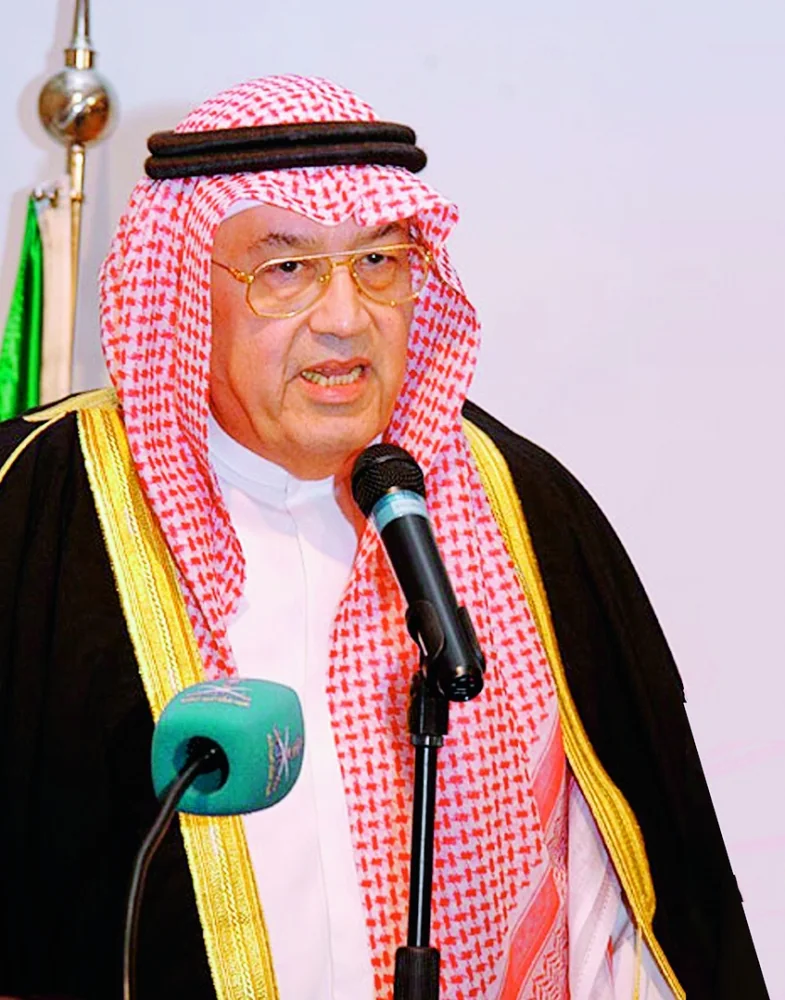
When the poet and novelist Dr. Ghazi Al-saibi bid farewell to London, for his move to another job, he wrote asking:
"What can you say about a city where you spent a part of your life, almost equal to one-fifth of it, and witnessed the birth of your daughter, the birth of three of your grandchildren, and in which you knew the peaks of happiness as you descended into the depths of pain? What can you say about a city where you lived as a student crowding people on the bus because you did not have taxi fare, and lived as an ambassador moving in the most luxurious armored cars? What do you say about a city that witnessed the labor of your first novel, and the birth of a number of your collections and books? What do you say about a city that you leave when you depart it with a number of your closest friends, in addition to a number of those who cannot be underestimated as "others"? Farewell cannot be easy, and farewell words cannot be free of contradictory emotions, and your feeling cannot be free of an inconsistent mixture of the desire to stay, and the longing to depart.
That, in short, is my story with London, which I knew as a student, a visitor, a tourist, and a resident, until I sometimes imagined that it, in turn, knew me. However, London knows no one: it loves no one and hates no one, it does not rejoice to meet anyone nor does it grieve for the separation of anyone. Who blames London, which has witnessed what it has witnessed of the cities of the world combined, if it has lost its ability to react? London, which has seen the struggle of giants, the fall of kings, rivers of blood, fires and plagues, can it blink an eye if a passing accident occurs here or there? London, which has given birth to men who built empires, and men who dismantled empires, can it be terrified if a state appears here or disappears there? London, which has embraced minds that changed the course of science and, consequently, changed the course of history, do you expect it to dance with joy at a scientific discovery here or there? London is like the legendary Laila, whom everyone claims to have reached, and she loves only herself." (Asharq Al-Awsat newspaper, Thursday, 03 Shaban 1423 AH, 10 October 2002, Issue 8717)
From here he wrote his famous poem: "Reading in the Face of London" in which he says:
The face of London
Silent .. covered with raindrops
Her face.. the face of a lover
Terrified by the day of separation
So it wrinkled
While crossing expressions of distress
And the trees
Memories of falling leaves
And the bird that migrated
And the warm, short summer
The poet did not fully sympathize and coexist with the face of London; the face is wrinkled, and distress appears on its features, and traces of boredom in this pale face, as if the poet did not fully feel comfortable with this face, and the feeling of alienation remained. In Cairo, Al-saibi had previously written poems about Cairo, and wrote his famous novel: "The Freedom Apartment".
The sense of alienation dominates Saudi creative works, especially in poetry, where the Saudi poet does not fully feel at home in the external cities where he lives for work or study, but he highlights the pleasure of his senses in sensing places, and his longing for the motherland remains. Despite what we find in the poems of Saudi poets of expressions about cities they lived in or visited such as: London, Paris, Rome, New York, Madrid, Moscow, Cairo, Beirut, Damascus, and Sana'a.
The poet Dr. Abdulaziz Khoja has a number of poems about many cities he lived and worked in as an ambassador, and his poems carried the following titles: The Virgin of Al-Rusafa, A Meeting in Paris, A Winter Night in Moscow, The Heart of Beirut is a Stone.
Dr. Abdullah Al-Maatany sees in a lecture he delivered in Beirut on December 7, 2010, at the Beirut International Book Fair, that Beirut turns for some poets of the Kingdom into a romantic entity that melts into its real beloved, so the indicative signs of the text intersect and relate, thus Beirut becomes the beloved woman and from here the human symbol meets the spatial symbol.
Dr. Abdulaziz Khoja says in his poem: Meeting in Paris:
My Laila, the night in your eyes has become drunk
He sipped the wine from a kiss that was od and did not ask
A reddish wine from a lip and from two eyes sends me
A devil of flame, a saint and dazed
Paris, in its sides, passion has placed its fate
It knew its charms, so it was not stingy and he was not stingy
We came to you, O Paris, as lovers with hope
Two hearts overflowed with passion and did not know boredom
When we departed into the space of the universe, we were separated by
The distance of place, but the emotion did not depart
Laila is the one who inspires the poet with memories and the aesthetics of the first place, as he says:
My Laila and the night in Moscow is without a moon
And the night in it is without a star or a meteor
The city is not just a place in the poem that is expressed, but it constitutes a historical, geographical, temporal, and cultural background at the same time inside the poem. It dramatizes the text and gives it other dimensions than its initial indicative dimensions. It inspires him with what the place explodes of memory and longing, and at the same time inspires him with a set of emerging pictorial elements such as the presence of characters belonging to this city or that, and intertextuality with its poetic or self-biographical dictionary, or its presence in Western or Eastern society, while inspiring the poet with a set of images, fantasies, and rhetorical innovations of metaphor and metonymy, and formulating for him a set of different expressive scenes.
There are many various ways to contemplate the scenes of the many cities that Saudi poets created during their experience of these cities, whether by expressing them and describing their places and most prominent landmarks, or absorbing them to create new multi-meaning indications. Cairo formed a field for literary expression for a number of Saudi writers, whether those who studied in it and resided in it for a period of time like the poet Hamza Shehata, while the expression of cities outside the homeland is done by inspiration or recall sometimes as we find in the poet Fawzia Abu Khalid, who studied in Beirut and wrote about it, but she inspired other cities like Cairo, Baghdad and Jerusalem in various poems as in the following titles: Traveling on the wing of Spanish fans, The song of the daughters of Mukalla to the brides of the Nile, From whoever entered Tel al-Zaatar, and she focuses on the national dimension in these poems and others, and writes:
The scene of our daily death on screens
The arrival of the Tatars
Iraq is the last land of ruin
Beirut before the flood.
While she writes about Egypt:
O Egypt. Did you say you repented of your love
Did you say you repented of the passion of your books
Of the passion of sugar cane
Coming from the color of your wound
Egypt was never the gift of the Nile
It was never the owners of the estates.
Cities change, journeys change, and the emotional feeling for them changes, and the first place remains. The place of the homeland is the most familiar, no matter how the poets' houses change.