Scientific critical experiences from Saudi Arabia.. Nawal Al-Suwailim from dialogue in poetic theater to Twitter space
The experience of the critic Dr. Nawal bint Nasser Al-Suwailim constitutes a distinguished literary and cultural experience, whether at the level of contribution to the Saudi literary scene and its aesthetic, creative and artistic transformations, or at the level of qualitative publications that she provided to the Saudi and Arab literary library in general.
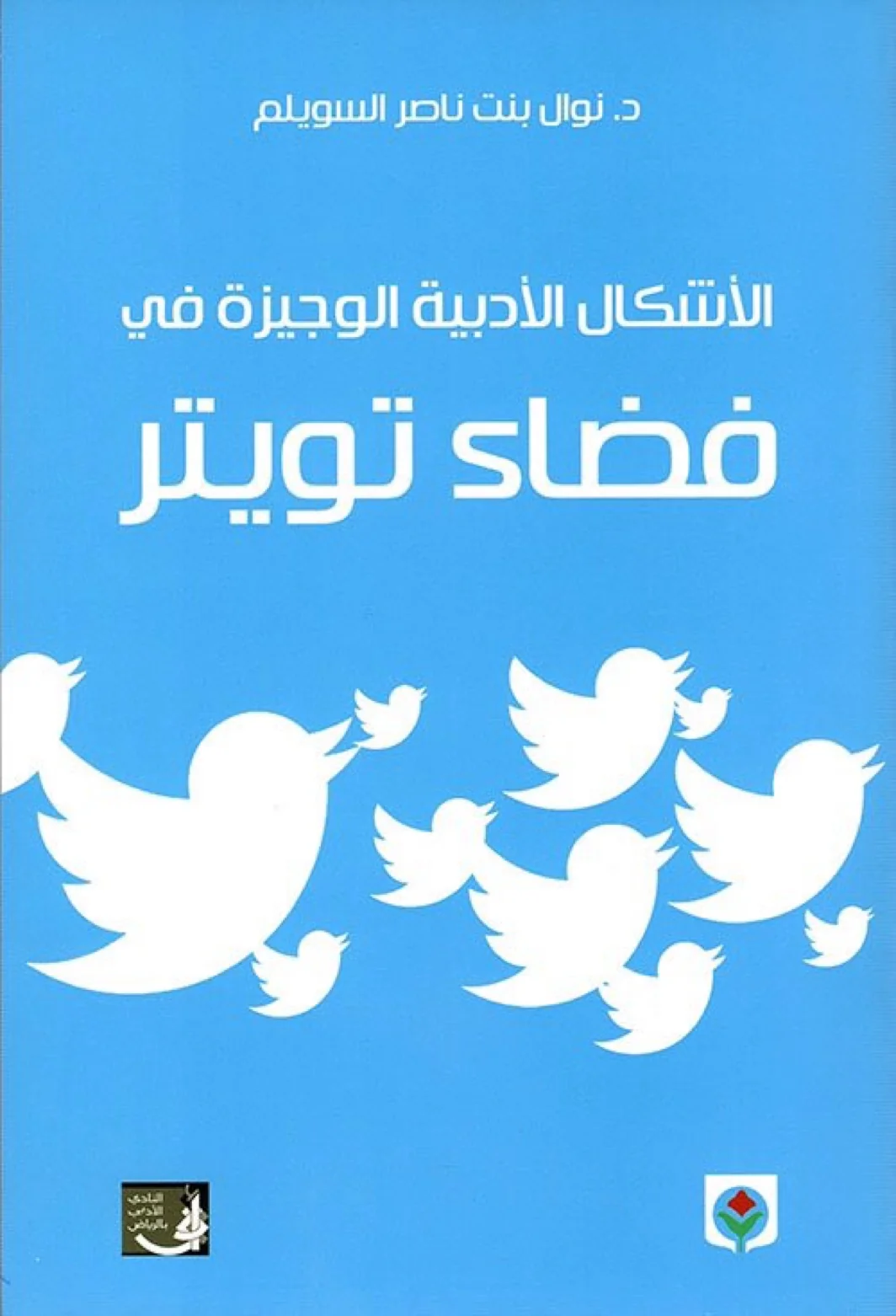
The features of the critical project of Nawal Al-Suwailim are manifested in this active and continuous follow-up of everything that is new in the world of Saudi and Arab creativity. She writes in fertile and rich areas and may be one of the few critics who touch these cultural areas and spaces, as her book about (Twitter space) " is among the first books that touch the phenomenon of writing on the social networking site Twitter ( Twitter ), and it was published in 2017 AD, which is the same year in which Dr. Abdullah Al-Ghadami''s book was published: (Twitter Culture).
Theatrical Introduction:
The critic Dr. Nawal Al-Suwailim, Professor of Literature and Criticism at the Arabic Language Department / College of Arts, Princess Nourah bint Abdulrahman University, began her critical writings with a book on theater, entitled: "Dialogue in Poetic Theater between Dramatic and Aesthetic Function in Egypt from 1961-1990 AD, Dar Al-Mufradat, Riyadh, 1429-2008 AD..
In this book, she dealt with poetic theater in Egypt during thirty years between (1961-1990). This time period es beyond the generation of pioneers who established poetic theater, starting with Ahmed Shawky and most of the output of Aziz Abaza and Ali Ahmed Bakathir. Their poetic plays have received an abundant share of critical studies, and this study begins from the stage of development in which Taf''ila poetry prevailed as a musical template for most of the theatrical output, and the texts of poetic plays in the seventies and eighties fall within the framework of this research.
The book, which consists of (584) pages, includes two sections. The first section includes five chapters in which the author discusses the relationship of dialogue with the elements of the play through: dialogue and idea, dialogue and plot and conflict, characters, and time and place. The second section is entitled: (Aesthetics of Dialogue) and includes four chapters: on style, poetic imagery, intertextuality, and music. Dr. Nawal Al-Suwailim saw that no other artistic shift occurred after the sixties that we can consider a subsequent advanced stage for Salah Abdel Sabour, but a kind of intersection of literary arts occurred and the use of novelistic narration and the poetic dialogue borrowed aesthetic elements in the language of the modern poem.
Twitter Space and Text Spaces:
In her book "Short Literary Forms in Twitter Space", Dr. Nawal Al-Suwailim studied the reflections of modern technology on literature. One of the most prominent manifestations of this influence was the attraction of the Twitter site ( Twitter ) for writers, poets and prose writers, who write a short literature whose linguistic volume does not exceed (140) characters (it later became 280 characters), which is technically called a tweet, which is what the author called (Short Literary Forms).
In the book: "Text Spaces - Critical Approaches in the Poetics of the Literary Text", the book is concerned with the subject of the literary text and its reading from a critical perspective. The author dealt with four studies: the law of displacement as a manifestation of the poetics of the literary text, and a prominent theory in stylistic analysis. She also studied the phenomenon of employing grammatical terms in contemporary poetry, and studied the theory of parallelism as a principle through which poetics is achieved, and finally she studied the theory of literary genres that occupied ancients and contemporaries and formed an important critical movement.
Dr. Nawal Al-Suwailim continued the writing path with a group of prominent critical works, including:
· Waiting for the Day, short story collection, Athar Publishing, Dammam, 2018..
· Representations of the Body in the Poetry of Salah Abdel Sabour, Dar Al-Nabigha, Cairo, Egypt, 2020..
· Alienation in the Experimental Theater of Fahad Al-Harthy, Dar Al-Nabigha, Cairo, Egypt, January 2020.
· Sarcasm Methods in the Book (The Impossible Well) by Mohammed Al-Ali, Najran Literary Club, 2020 AD..
Dr. Nawal Al-Suwailim speaks about her experience with writing, saying: "Literature penetrates our lives lightly without us noticing, and this is a blessing, as the channels and outlets of literature have expanded and the book that contains poetry or narration is no longer the only outlet. Electronic content has introduced literature and contributed to enhancing its presence. We feed on poetry and live on stories, in reading, voice and image. The popular literary culture now is selections, aphorisms, and eloquent words that echo in our daily lives and are stored in memory, and the speaker leans on them as a means of argumentation. Reading in discourse analysis and its strategy practically reveals the value of literature and its importance in influencing the masses." .
Dr. Nawal Al-Suwailim adds: "Most of what I wrote is critical writing. I read a lot and wrote little. I repeat this phrase to my students: "If you want to write a line, read a book." and I find it expressive of my situation. Writing a paragraph about a term costs me reading books. Reading is the first gate that establishes writing. The relationship began with establishing the library, investing in annual book fairs to feed the library with everything new, and borrowing from public libraries, even used libraries I visited in the hope of obtaining a rare book. I bought and acquired more than I read. Books are references and sources that will come time to read. Reading for me is functional for preparation purposes, scientific research and arbitration, and free reading for creative works, each of which contributed to refining the letter and improving it." .
After that, she presented a large group of researches dealing with poetry in the Kingdom, modern Arabic poetry, short stories, Arab heritage, theater and novel, while participating in a large number of literary forums and conferences, including:
· The Fourth Short Story Forum at Al-Qassim Literary Club held on 12/5/1429 AH..
· The Third International Conference of the Faculty of Arts, Text between Critical Theories and Modern Linguistics at the Faculty of Arts / Arabic Language Department at Al-Zaytoonah University of Jordan in Amman in 1435 AH. October 29-31, 2013 AD..
· The Second International Conference on the Arabic Language and Keeping Pace with the Times – Challenges and Ways to Confront them at the Islamic University of Madinah in 1436 AH.
· Linguistics and Literature Forum in Moroccan and Saudi Studies in the period 13-3-1438 AH 12-12-2016 AD..
· The 17th Literary Criticism Conference: Transformations of Discourse in Literature, Criticism and Language in the last two decades from July 16 to July 18, 2019 AD.
· Islamic University Conference in Madinah: Media and Arabic Language 20-22/3/1441 AH..
On the other hand, Dr. Nawal Al-Suwailim is a short story writer and has publications in the field of short story. She also effectively participates in general cultural activities, in literary workshops and providing qualitative skills, and in a large number of university, literary and cultural activities.
The experience of Dr. Nawal Al-Suwailim is one of the distinguished literary and critical experiences that still continues its active vitality and movement with all vitality and movement, and monitoring the renewed Saudi literary and critical creativity.