It lacks continuous updating .. Lexicons of Saudi writers and their dictionaries between tradition and innovation
Lexicons and dictionaries of writers constitute the first feature for identifying the writer, as they recount their brief biographies and present the literary genres they write in. They also provide initial information about them and their literary productions, and therefore their cognitive value is extremely important for researchers and readers in monitoring the creative movement, its trends, and its spread, especially for researchers from outside the Kingdom in the Arab world and the world who want to identify the features of the literary and creative scene in the Kingdom, its characteristics and developments, and to stand on this scene both qualitatively and quantitatively.
A collection of lexicons, dictionaries and literary guides have been issued, but what they lack is constant updating of their data and adding new literary names every three or five years, so that they monitor new writers and creators and add them through new editions.
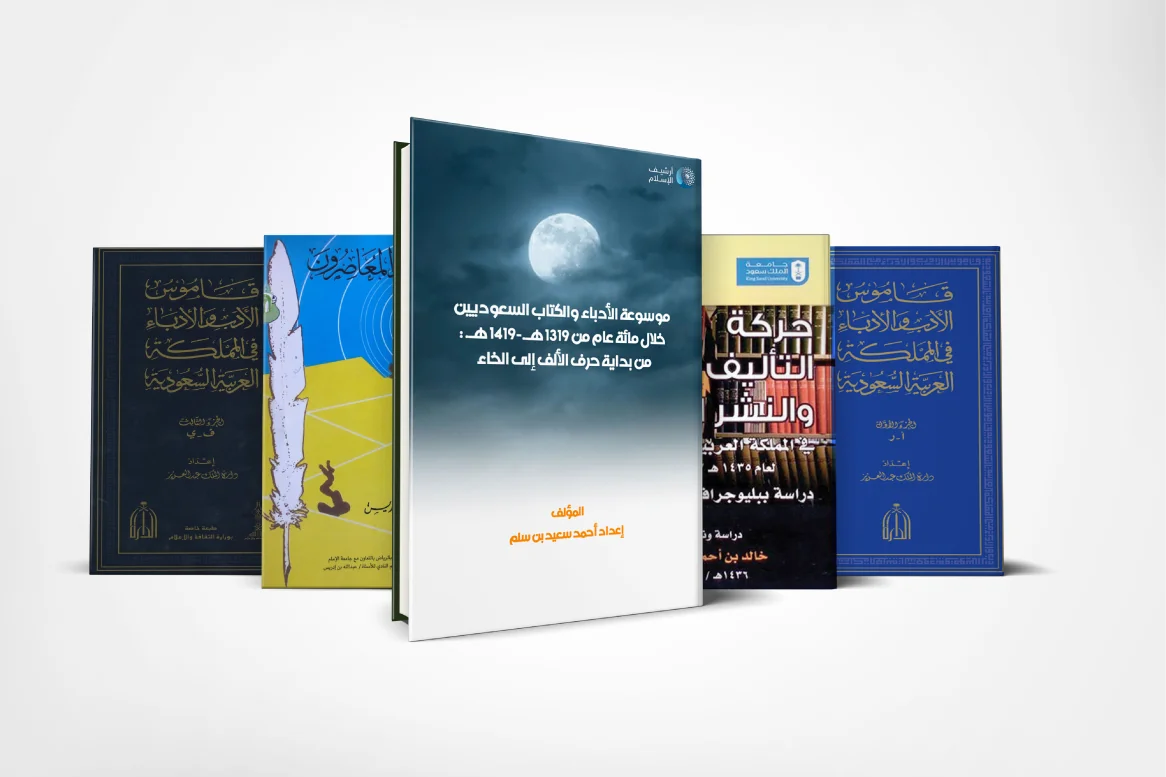
Among these dictionaries: "Dictionary of Literature and Writers in the Kingdom of Saudi Arabia", which is a massive encyclopedic work adopted by the King Abdulaziz Foundation. It is in three large volumes in an elegant print and includes about a thousand entries on literature and writers in the Kingdom. More than seventy senior Saudi specialists participated in supervising, writing and reviewing its materials.
The dictionary introduces poets, novelists, short story and literary article writers, researchers, critics, playwrights, biographers, and translators of literary books from among the Kingdom's sons, referring to their most prominent works and cultural activities and their most important publications, listing a number of references related to them.. The dictionary also introduces the most famous cultural and literary institutions in the Kingdom, and the most prominent books, periodicals, magazines, awards, and literary arts in the Kingdom from its establishment until 2013, consisting of 1900 pages.
Lexicons and Guides:
The ways of monitoring literature and writers in the Kingdom varied, some issued in the form of critical books introducing groups of writers or poets, and some in the form of a massive encyclopedia, such as: Encyclopedia of Modern Saudi Arabic Literature in ten volumes, published by Dar Al-Mufradat in Riyadh, including independent volumes on various literary arts such as poetry, story, article, play, and others, or groups of diverse publications in the form of literary guides or lexicons for specific regions of the Kingdom.
Among these works – in historical sequence – are: "Hejaz Literature" by Muhammad Surur Sabban (1926), "Inspiration of the Desert" (1937), "Hejaz Poets in the Modern Era" by Abdulsalam al-Sasi (1951), "Literature in the Arabian Gulf" by Abdulrahman al-Ubayyed (1957), "Contemporary Najd Poets" by Abdullah bin Idris (1960), "From Contemporary Taif Writers" by Ali Khudran al-Qarni (1990), "Writers and Authors in the Hail Region" by Abdulrahman al-Suwayda (2006), and "Dictionary of Contemporary Ahsa Poets" issued by the Ahsa Literary Club in (2010). There are books about a particular literary art, like: "Anthology of the Short Story in the Kingdom of Saudi Arabia" by Khalid al-Youssef (2009), and "Diwan of Female Poets in Saudi Arabia" by Sarah al-Azwari (2011),. There are dictionaries dedicated to introducing writers, such as the special issue of Al-Manhal magazine (1966), "The Literary Encyclopedia" by Abdulsalam al-Sasi (1968), "Lexicon of Writers and Authors" (1990), and "Encyclopedia of Saudi Writers and Authors" by Ahmed bin Salam (1999).
On the other hand, Saudi writers did not receive the status they deserve in the literary encyclopedias, lexicons and comprehensive studies on the level of the Arab world, except with simple participations based on individual effort or what the preparers of these encyclopedias can reach of names through personal acquaintance.
The Al-Babtain Dictionary of Contemporary Arab Poets was limited to 176 Saudi poets, and the Dictionary of Arab Novelists included 18 Saudi novelists. As mentioned earlier, the Dictionary of Modern Arab Literature included entries for 88 Saudi writers.
The story writer, novelist and researcher Khalid Ahmed al-Youssef has been working on issuing a lexicon on Saudi writers for years, providing brief definitions for each writer, and includes columnists, novelists and story writers. Al-Youssef had previously presented a book for biographies of writers titled: "Guide to Writers and Authoresses," issued in 1415 AH / 1994 AD, in addition to various bibliographies interested in modern Saudi literature. But the individual effort in such works may not be sufficient and comprehensive of the conditions of bibliographic work and integrated monitoring of the literary scene, especially since it is distributed over various historical stages and multiple places and regions; it is a primary institutional research work.