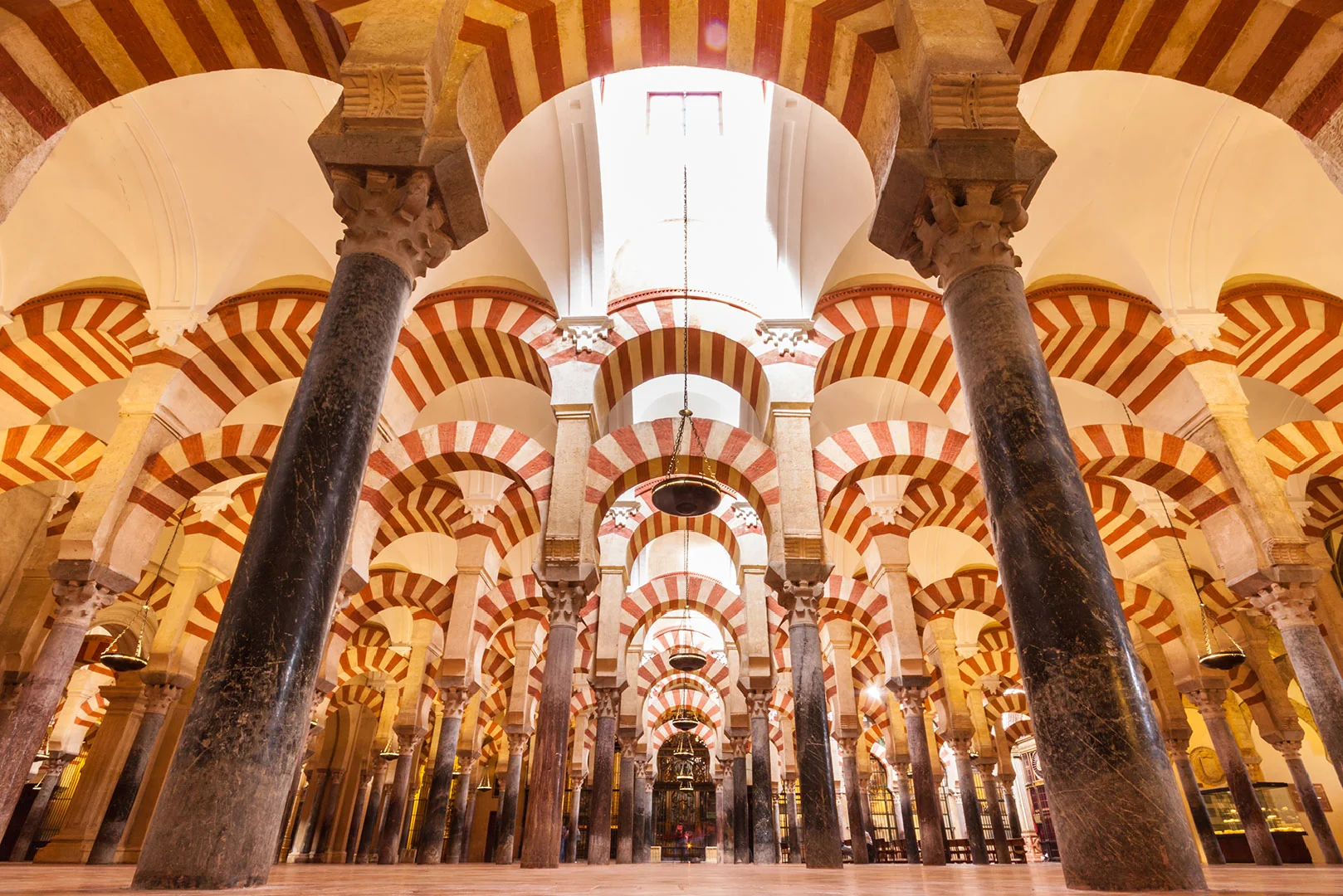
Cordoba... City of Science and Libraries
By: Abd Al-Baqi Khalf
Cordoba, the jewel of the cities of Andalusia and the destination of scholars in its time, the settlement of people of merit and piety, the pride of the people of knowledge and Islam, and the destination of students and jurists. Great works and delightful books were authored in it, and massive compositions were classified in it. Interest in books, and spending much money to buy them, reached a degree not reached by any city in history. Therefore, it was the city of Andalusia with the most books and its people were the most interested in acquiring them. The interest of Cordoba in science and libraries reached a limit that made a modern Western thinker wish that the Muslims had conquered France so that Paris would become like Cordoba, a common center for civilization and sciences; for the average person could read and write while the kings and princes of Europe did not know how to write their names (1),. Cordoba was filled with stationers (Warraqin) who took care of books, from writing and sewing to binding; they performed the role of publishing houses, with some estimating that eighty thousand books were copied in Cordoba annually (2). It was famous for public and private libraries containing thousands of volumes in philosophy, literature, mathematics, astronomy, medicine and pharmacy. Its prosperity made it a destination for scientific missions from Europe to study in its institutes and view its treasures of books. Through Cordoba, Europeans first knew the books of ancient Greece and Persian, Indian and Syriac books translated into European languages via Arabic (3). One of the brightest eras was that of Caliph Abd al-Rahman al-Nasir (300-350 AH). He was famous for his love of books, even reaching Byzantium; Emperor Constantine VII sent him a medical book by Dioscorides as a gift (4). Nasir established a great library in his palace, but after the Umayyad state ended, its books were scattered. His successor, Al-Hakam II Al-Mustansir (350 AH), was also a lover of culture and history. He sent merchants and envoys across the world to buy books for Andalusia (5,6). He reportedly paid a thousand ld dinars for a copy of Al-Isfahani's "Al-Aghani" before it even spread in Iraq. He gathered the most skilled scribes and binders, resulting in a collection unmatched elsewhere (7). Famous scholars included Al-Zahrawi (Abulcasis) in surgery (8). In the tenth century, the "Calendar of Cordoba" was compiled by Rabi bin Zaid for farmers (9,10). One famous book lover was Ibn al-Mutarrif, the Chief Judge of Cordoba, who employed six full-time scribes to copy every valuable book he found (11),. His library was second only to the Caliph's and sold for forty thousand dinars after his death. His library was artistically designed with green walls and balconies (12). Other collectors included Ja'far al-Qaysi and Salama bin Said. Women also participated, such as Lubna, the scribe of Caliph Al-Hakam, and Aisha bint Ahmad bin Qadim, who possessed a massive library. Cordoba competed with Eastern cities like Cairo and Baghdad, drawing students from all over the world to its fountain of Islamic culture.