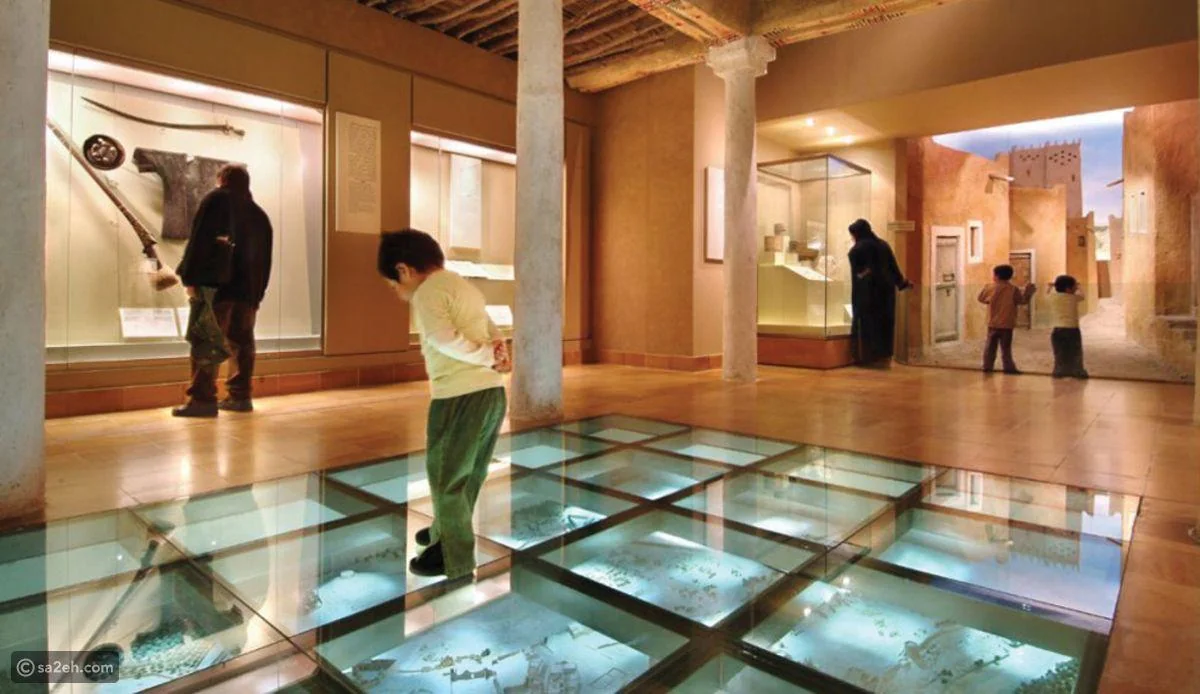
Their number reached 221 museums distributed across various regions.. Private museums in the Kingdom: Cultural spaces to enhance the civilizational dimension and preserve folk heritage
Ahwal Al-Ma'rifa – Special
In the year 1977 AD, the museum sector in the Kingdom of Saudi Arabia was launched with the establishment of the National Museum, and the first beginning was with the issuance of Cabinet Resolution No. (727) on 8-11-1383 AH corresponding to January 1964 AD, approving the establishment of a Department of Antiquities associated with the Ministry of Education (at the time). The real launch of archaeological activity in the Kingdom of Saudi Arabia came in 1396 AH (1976 AD) when the Department of Antiquities and Museums (at that time) began the basic work of the antiquities sector, and placed at the beginning of its formation among its priorities the establishment of a national museum in which to display archaeological and heritage pieces owned by the administration, and the antiquities revealed during the archaeological surveys and excavations. The National Museum was opened as the first official museum in the city of Riyadh on Muharram 21, 1398 AH (corresponding to December 1977 AD). It was headquartered in the Museum Department before moving in 1418 AH to its main headquarters in the King Abdulaziz Historical Center in Riyadh.
Through this stage, the Kingdom's care for museums began, and the establishment of various museums in a number of the Kingdom's regions, until the museums reached (53) vernment museums, and about (221), private museums, distributed over different regions, given what the Kingdom contains of archaeological holdings and heritage treasures rooted in the depths of history. In addition to the fact that museums collect this diverse material heritage, they unleash the imagination of visitors from citizens and tourists to learn about the features of civilization in the Kingdom through its long historical stages.
From vernment to Private:
Museums in the Kingdom vary between vernment and private. Among the most prominent vernment museums are: The Two Holy Mosques Museum, Jeddah Regional Museum, the Saudi National Museum, Shubra Palace Regional Museum, Al-Masmak Historical Museum which conveys the stages of the Kingdom's establishment to visitors, and the Saudi Museum of Contemporary Art, in addition to a number of museums distributed across the regions of the Kingdom.
Given the archaeological ingredients and historical elements the Kingdom treasures, a number of the nation's sons and daughters turned to establishing private museums, and some private institutions also turned to establishing a number of specialized museums that inspire the diverse cultural elements of the Kingdom, including museums concerned with diverse folk heritage, others concerned with personal historical holdings, some concerned with the holdings of kings and princes through the Saudi eras, and some concerned with manual arts or fine art. All these qualitative museums pour into the space of the diverse Saudi culture.
The National Museum in Riyadh is considered the most important and largest museum in the Kingdom, and a major tourist and civilizational destination in the capital. The National Museum enjoyed special care from the Custodian of the Two Holy Mosques King Salman bin Abdulaziz when he was the vernor of the Riyadh region. This museum was established as the most important museum in the Arab world, and it was opened by King Fahd bin Abdulaziz - may d have mercy on him - in 1419 AH within the grand opening of the King Abdulaziz Historical Center on the occasion of the hundredth anniversary of the Kingdom's establishment at the hands of the late King Abdulaziz - may d have mercy on him.
The total area of the National Museum is twenty-eight thousand square meters, and it includes diverse exhibits, artifacts, documents, manuscripts and display boards, in addition to documentary and scientific films.
Special Qualitative Museums:
Private museums spread throughout the Kingdom, and are established under permits from the Ministry of Culture. The Saudi Commission for Tourism and National Heritage (formerly) supported these museums with land and loans, in addition to training and qualifying private project owners by supporting them in workshops and external and internal participations, and participating in events locally and internationally, with an effort to coordinate for these museums to be on the path of tourist tracks.
According to statistics published in Araa Around the Gulf magazine, the number of private museums in the Kingdom reached (221), museums, distributed over the Saudi regions as follows:
Riyadh region 50 museums, Eastern Region 27, Makkah region 19, Asir region 48, Northern Borders region 1 museum, Najran region 2, Jazan region 7, Al-Baha region 5, Hail region 12, Madinah region 12, Qassim region 24, Tabuk region 8, Al-Jouf region 7.
Among the most important of these private museums are: Ashirat Sudair Heritage Museum, Al-Mushawah Heritage Museum, as well as the Heritage Museum for Arts and Crafts, Ahmed bin Omar Al-Zahrani Museum, which is one of the folk heritage museums and Al-Amiri Heritage Museum.
Among the private museums are also the Islamic Dinar Museum, Umm Al-Qura Museum: Makkah Al-Mukarramah, Al-Mahra Museum, Khaybar Museum, Tayba Heritage Museum, and the Media City Museum for Heritage. Among the private museums of the Qassim region are the Al-Abari Museum for Heritage and Old Cars, which is one of the folk heritage museums, Dar Al-Ajdad Museum, and Al-Hassiyani Museum.
These private museums include diverse collections of antiquities and historical holdings that were private property of some princes and vernors throughout history, and they also include folk tools from different crafts, and holdings from old war tools such as old guns and swords, as well as furniture, antiques, old cars, old daily life means, and other rare books, paintings, manuscripts and diverse artistic figures.
Private museums constitute a qualitative cultural space, completing the archaeological and historical image of the national vernment museums, so that followers and scholars can stand on the various civilizational and historical stages of the Kingdom, and inspire what enhances the knowledge dimension and connects generations with diverse qualitative cultures embraced by the Kingdom.