The Moroccan Treasury and its Development
Prepared by: Professor Muhammad Al-Qadi
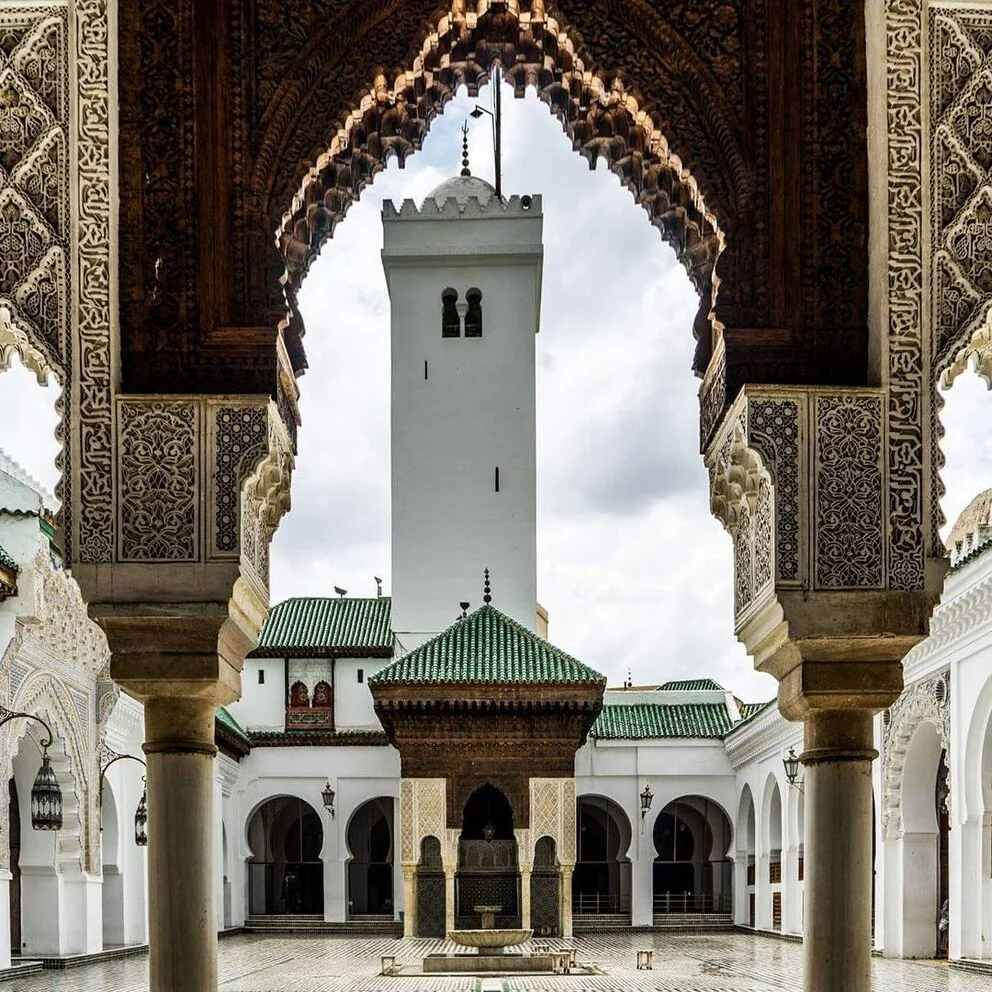
American writer Henry David Thoreau says: "Books are the hidden wealth of the world, and the heritage of generations and peoples." Love for books is an old disease, and interest in books is a cause for science and knowledge and its fruit. Interest in them is considered part of the Islamic creed and a strong useful basis in building our Islamic society. Morocco before Islam rejected material conquests but accepted Islamic guidance in its first blooming eras. With Islam, Moroccans became eager for knowledge, working to establish cultural foundations. Their care for books and libraries was clear in all eras, competing to acquire rare volumes. The first public library was established by Abu al-Hassan al-Shari near his school (571-649 AH) in Ceuta, providing accommodation and organized study for students. Fez became a civilizational center with the founding of the Al-Qarawiyyin Mosque and its library. Yusuf ibn Tashfin and his son Ali bin Yusuf had significant libraries during the Almoravid era. During the Almohad era, scientific activity expanded, especially under Abu Yaqub al-Muwahhidi, whose library rivaled that of Al-Hakam in Andalusia. The Marinid era was the brightest intellectual era, where schools with private libraries were established in Fez, Marrakesh, Taza and elsewhere. Sultan Abu Inan al-Marini was the first to set library systems and separated Quranic manuscripts from other books. In the Saadi era, Marrakesh thrived with scholars from Andalusia and Sudan. Ahmad al-Mansur al-Saadi was famous for his library. Today, Moroccan libraries and private treasuries contain tens of thousands of manuscripts in all sciences in Rabat, Fez, Marrakesh, Tetouan and other cities. Recent pious endowments include the libraries of Allal al-Fassi, Abdallah Guennoun, Muhammad Daoud, and the Sabihia library in Salé. Famous catalogers include Muhammad al-Manouni, Abdallah Enan, and Muhammad al-Arabi al-Khattabi.