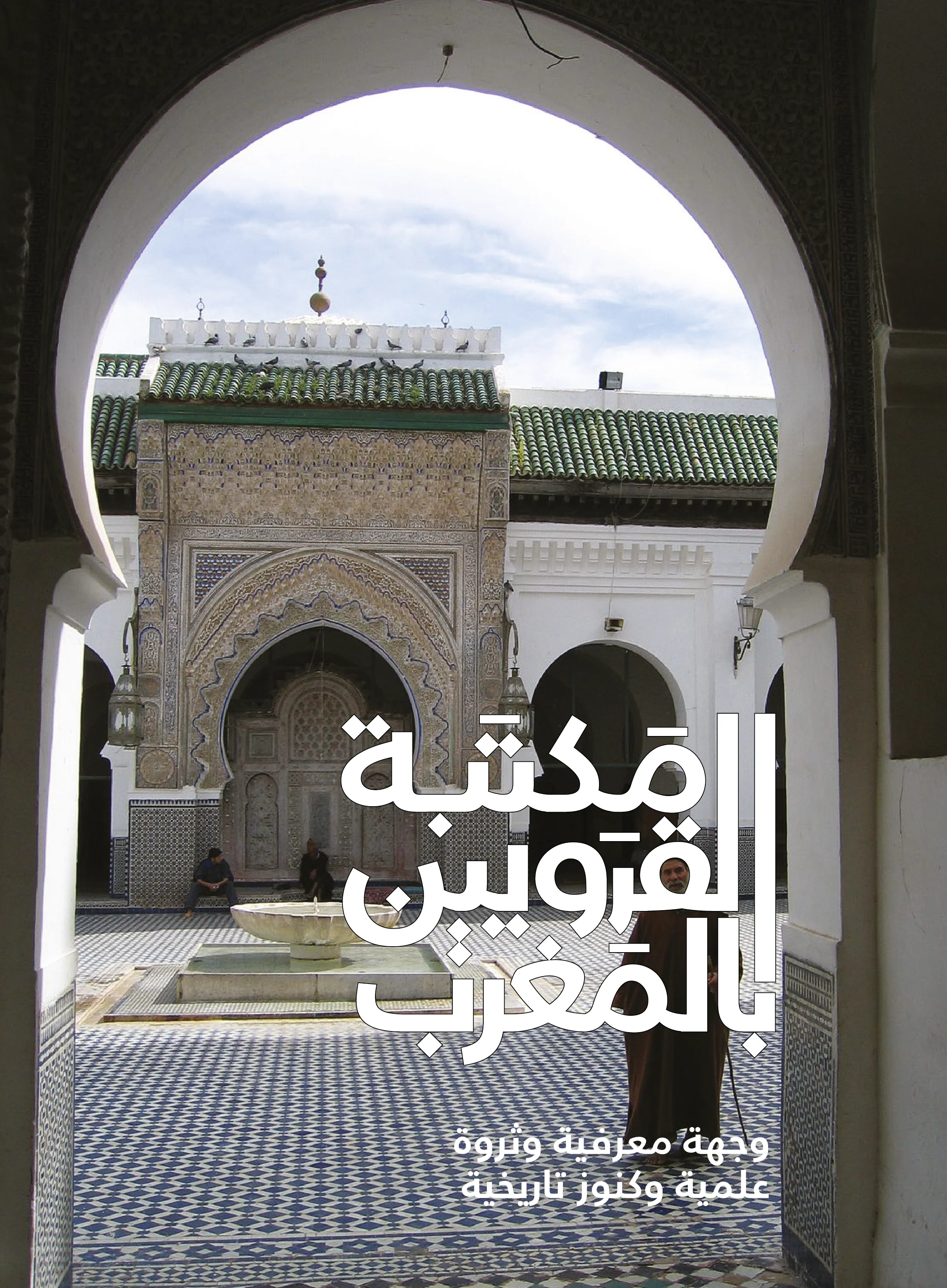
Al-Qarawiyyin Library in Morocco.. A destination for knowledge, scientific wealth, and historical treasures
Ahwal Al-Marifa – Special
From its origins as a small library next to the Al-Qarawiyyin Mosque to the time Sultan Marinid Abu Inan took care of it and established a law for reading, studying, and copying, Al-Qarawiyyin Library in the Moroccan city of Fez has covered a historical distance exceeding eleven and a half centuries. However, it is not considered the oldest library in the world as mentioned in some references, as it is preceded by the Library of Alexandria, which was established before Christ and remained standing until the Muslims entered Egypt led by Amr ibn al-Aas on December 22, 640 AD until it was renovated in 2002. Al-Qarawiyyin Library was established in 750 AH / 1349 AD and is located in Al-Qarawiyyin University in the Moroccan city of Fez, which is considered the oldest university in the world, established in 859 AD. The university was established by Fatima bint Muhammad al-Fihri, a period when algebra was discovered by the Arab scientist Jabir ibn Hayyan. The library contains precious treasures of rare manuscripts and constitutes scientific wealth, and a fertile cognitive and civilizational heritage and a unique knowledge destination for Arab and foreign researchers who travel to it to drink from its knowledge. (1),
The Beginning is From Here
The beginning of the library, as we mentioned, was at the hands of the Moroccan Sultan Abu Inan al-Marini in the year 750 AH, who provided it with a collection of valuable and rare books and works. Then the Saadians added many books in the 16th century AD that they moved from the Marinid Library in the same city, and enriched it with unique manuscripts and documents, so that its contents (in 1613) exceeded 32 thousand volumes. The Saadians were the ones who expanded the library and built a special wing called (The Saadian Dome) inside the Al-Qarawiyyin Mosque. It remained until 1940, when the late King Mohammed V directed the construction of a wing known now as the "Alawite Wing," and the library was moved to this wing to separate it from the Al-Qarawiyyin Mosque and give it a special entrance. (2) The unique library maintained its scientific balance, which includes a flood of works and manuscripts by great scholars of the Islamic Maghreb like Ibn Tufail and Ibn Rushd, who was famous for his numerous works in the lden age of Yaqub al-Mansur. The dome of the library was decorated with gypsum and wooden ornaments engraved in an authentic artistic style, revealing the extent of the influence of Andalusian creativity on Moroccan architecture, which flourishes in the homes and mosques of Morocco with a glorious history. The library also enjoys enchanting spaces adorned with Sufi Islamic decoration and mosaics, giving the place high heritage value (3).
Library Contents
What confirms the scientific value of the library is the frequency of students, academics, and researchers visiting it, as it contains publications estimated at 24 thousand titles, including rare publications some of which are up to 150 years old, and about 4 thousand manuscripts indexed electronically. Among its most prominent treasures: (The Grand Qur'an) gifted by Sultan Ahmed al-Mansur al-Dahabi at its inauguration in 1011 AH; there is no duplicate copy of it in any other library inside or outside Morocco; and (Mukhtasar Abi Musab al-Zuhri) written on ancient parchment in Cordoba, Andalusia; and (The Biography of Ibn Ishaq) which is considered the oldest manuscript title there, along with a number of rare books and the oldest copy of the Holy Qur'an dating back to the ninth century AD in Kufic script, in addition to the graduation certificate of (Fatima al-Fihri) herself from Al-Qarawiyyin University, engraved on a wooden board. The library's value also lies in its possession of the oldest manuscript dating back to the second century AH, which is the book (Al-Siyagh) by Abu Ishaq ibn Ibrahim al-Fazari. It also houses the only copy in the world of a medical book titled (Arjuzat Ibn Tufail), which consists of books discussing medicine in a mathematical way. Among the precious books in the library is (Dawam al-Tahsil) by Ibn Rushd the Grandfather about the jurisprudential disputes that were oning among Arab jurists in the seventh century AH; the manuscript was written on gazelle skin and contains about 365 pages, completed in Morocco and printed in 20 parts. Al-Qarawiyyin Library also keeps a unique copy of the book (Al-Ibar) by Ibn Khaldun, which he personally placed in the library while he was residing and studying in the city of Fez. The manuscript of (Al-Ibar) was placed on the UNESCO World Heritage list under the "Memory of the World" program.
Maintenance of Contents
To maintain the library's contents and its precious scientific balance, the library includes the latest restoration laboratory at the Arab level. It is now keeping pace with global development in this field to preserve its precious treasure, benefiting from European experience, especially German. To preserve those valuable manuscripts, experts have stored them using microfilm, which facilitates the process for researchers and protects those gems from damage and loss. There are several projects with Moroccan universities, especially Sidi Mohammed Ben Abdellah University in the city, to convert microfilm copies into discs to facilitate scientific research and combat piracy. The library has been equipped with technological means to protect those treasures from moisture, fire, and theft by adopting a strategy consistent with international standards. This ancient library includes a collection of advanced machines with digital scanners to identify very small holes in old paper scrolls, in addition to a preservative machine that treats manuscripts with a liquid that hydrates them enough to prevent cracking. In a special room surrounded by strict security measures, most of the ancient works are found, including the ninth-century copy of the Holy Qur'an written in ornate Kufic script on camel skin (4).
Renovation of the Library
This historical landmark, considered the oldest library in the world, is distinguished by an iron door with four ancient locks, with colored decorative tiles in the (Al-Qarawiyyin Treasury). Restoration work took years; since 2012, the library underwent renovations that lasted 4 years, thanks to architect Aziza Chaouni, who oversaw the renovations and renewals, including the introduction of several fountains and the renewal of original religious inscriptions carved on the walls. The library was reopened in the ancient city of Fez, the scientific capital of Morocco, after its restoration within the program of: rehabilitating ancient buildings, which saw investments of nearly 30 million dollars and includes the rehabilitation and renovation of 27 sites in the city, including 11 historical schools and Zawiyas, 40 hammams, and 43 Qur'anic schools including Al-Qarawiyyin Mosque, 83 shrines, in addition to 176 mosques that are ancient masterpieces in engineering and architecture (5). The library still maintains its Moroccan-Andalusian architectural character, distinguished by its Islamic decoration, authentic mosaics, and historical fragrance.
Footnotes: · Wikipedia · Al-Hayat Newspaper 03/07/2016 · Wikipedia · Sultana website 20/09/2016.