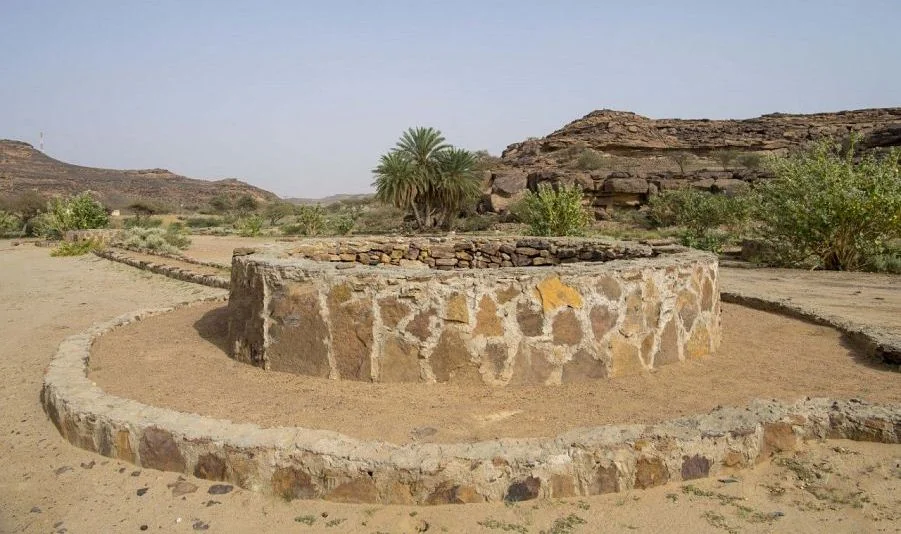
Not the last, the Hima site in Najran .. Six Saudi sites on the UNESCO World Heritage List
The announcement of the registration of the (Hima) site in the Najran region on the World Heritage List issued by the United Nations Educational, Scientific and Cultural Organization (UNESCO) on July 24, 2021, came to complete the civilized heritage scene in the Kingdom to six sites that embrace a rich and diverse mix of historical creativity in the Kingdom that dates back thousands of years. The land of the Kingdom of Saudi Arabia embraces a group of civilizations that appeared throughout history, including civilizations that arose and flourished in the pre-Christian eras, dating back to more than 16 thousand years, as most researchers believe, and other civilizations that extend with the appearance of Islam and its various eras. The cultural rock art area in (Hima) is located on an area of 557 square kilometers, and includes 550 rock art panels containing hundreds of thousands of inscriptions and rock drawings. The area is one of the largest rock art complexes in the world, and is located at an important point in the ancient caravan routes and trade routes crossing the southern parts of the Arabian Peninsula. It is believed to have been one of the main markets in the ancient Arabian Peninsula, and the wells in Bir Hima represent the last water supply point on the North Road, and the first after crossing the deserts on the South Road. The Hima site includes tens of thousands of rock inscriptions written in several ancient scripts, including inscriptions in Thamudic, Nabataean, South Musnad, Syriac and Greek scripts, in addition to early Arabic inscriptions (from the pre-Islamic period) which are the beginnings of modern Arabic calligraphy. With the inclusion of the Hima region, the Kingdom of Saudi Arabia has registered its sixth site in the World Heritage List, along with the Al-Hijr site listed (2008), Al-Turaif district in historic Diriyah (2010), historic Jeddah (2014), rock art sites in the Hail region (2015), and then the Al-Ahsa Oasis (2018).