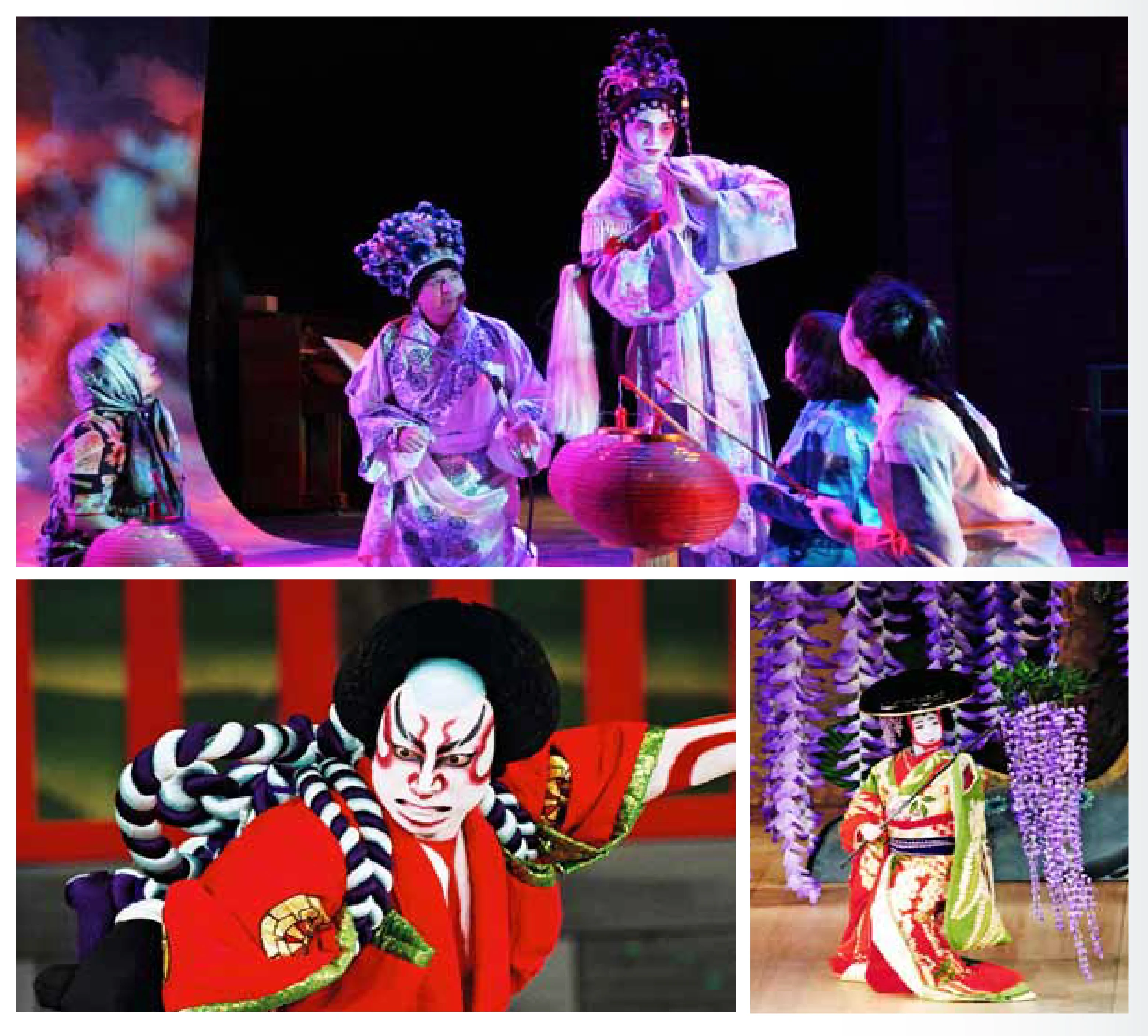
Japanese (Noh) Theater: A three-sided theatrical art .. Sarugaku and Dengaku: Traditional Japanese Archipela Arts
Dr. Saleh Saad attributes the basis of Japanese (Noh) theater to a religious reference, in addition to its contact with other similar beliefs. Despite the high poetic quality it enjoys, it should not be treated as (dramatic texts of a literary character, but they are presentable by a group of actors, according to a contemporary directorial vision) a pantomime-kinetic theater .. because Noh theater is "a slow, deliberate form of drama .. relying on a fixed basic structure .. with the stability of the structure and the simplicity and depth of the changing content, the dominance of the word and the theatrical act recedes and the field opens before the work of the image with its infinite inclusions. Spirituality, the language of symbol and the shadow suitable for the state of deep contemplation and aesthetic rir parallel to the principles of chivalry and martial arts of the Samurai warriors are the three sides that form the limits of Eastern and Japanese theatrical expression in particular, in contrast to the trinity of the body-act-love that forms the framework of what we call Western theater today. The meaning of the word (Noh) in the Japanese language is talent, achievement or skillful work. It has been used to refer to two forms of traditional Japanese theater (Sarugaku and Dengaku), which are rougher manifestations of Bugaku art, which are dances accompanied by music, performed as individual segments where drama is only formed through its connection with this forest of arts that moved together from the Asian mainland to the Japanese archipela since the early decades of the seventh century AD.