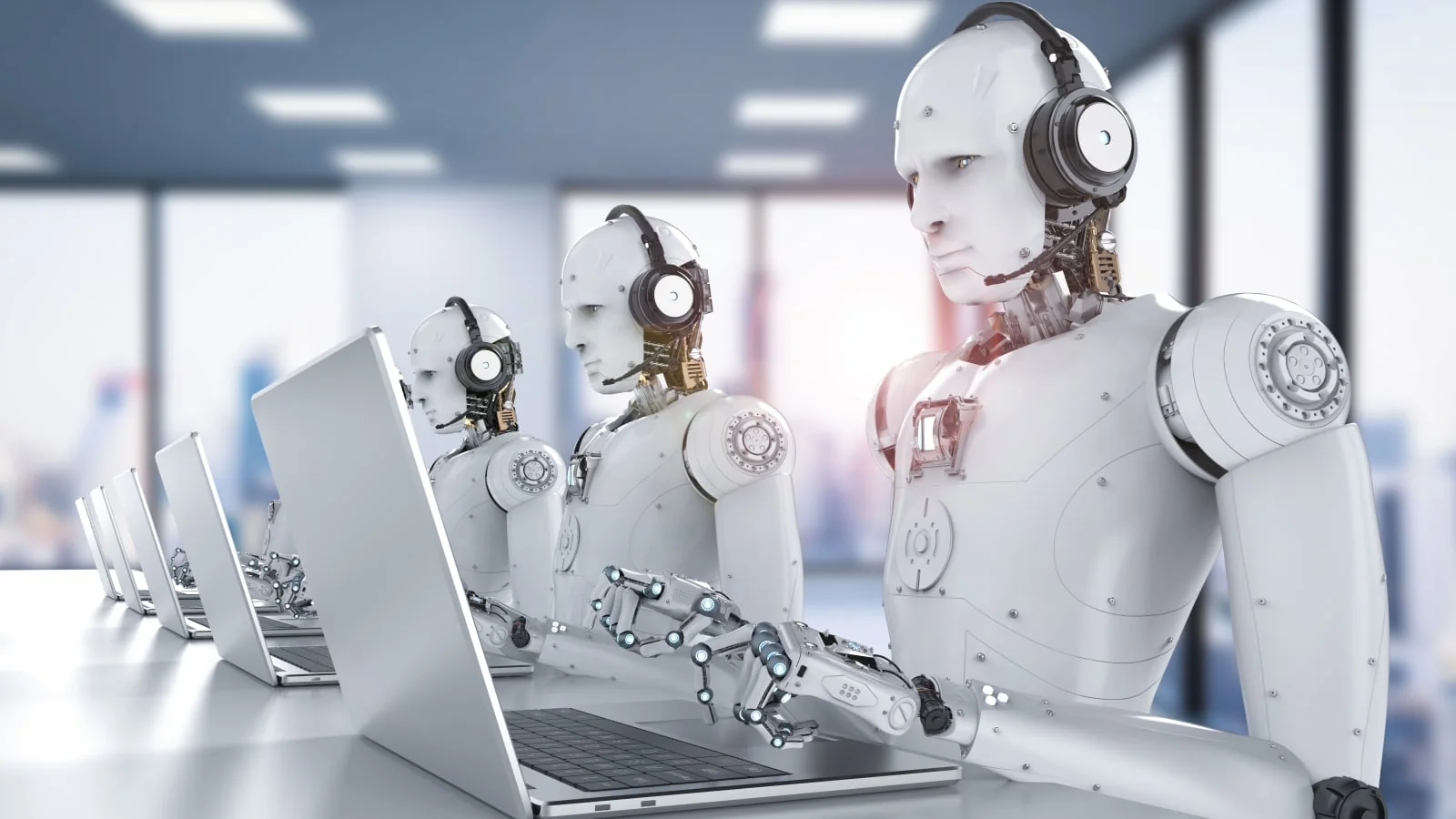
Robots.. threaten human jobs
By/ Hosni Abdel Hafez
In a report issued by the World Bank, it was stated that a large number of human jobs might disappear during the next decade in favor of robots. A British report had warned of the disappearance of 10 million jobs within the next few years, equivalent to about 37% of the total jobs in Britain. In Japan, many companies have started setting future plans to lay off human labor and replace robots in specific jobs. One insurance company recently laid off dozens of its human workforce in favor of artificial intelligence systems. According to company officials, these robotic systems would increase productivity and raise the percentage of returns.
Figures indicate that the year 2015 witnessed an unprecedented increase in the number of industrial robots working around the world, by 1.6 million robots. By next year (2020), it is expected to add more than one and a half million new robot units. China is the largest shareholder in robot sales, with about 27% of total robot sales globally, followed by EU countries with about 20%. A report from the International Federation of Robotics (IFR) indicates that about 75% of these robots are used in only five countries: China, South Korea, Japan, the United States, and Germany. At least 65% of robots work in the automotive, electrical, electronic, metal and machinery industries. The global average for robot usage density in labor markets has now reached 69 robots per 10 employees in the manufacturing sector.
In its report issued in July 2016, the McKinsey Global Institute indicated that a research team assigned by its board of directors analyzed more than 800 occupations in the US labor market, and found that certain professions are most preferred for automation and the use of robots instead of human labor, namely the machinery and equipment manufacturing sectors at 59%, food services at 73%, and retail at 53%. As for works that are still largely away from automation and the use of robots, they were mostly works related to human resources management and development, where automation did not exceed 9%, as well as works and professions that require the application of expertise in decision making, planning, and creative work.
At the company level, the largest replacement of automation and robotic labor for human labor was carried out by Foxconn, one of the world's largest electronics companies, which in late 2016 reduced its workforce by letting of 60,000 workers to have robots and modern automation systems replace them in performing routine repetitive tasks.
Modern Models
From the perspective of the service they provide, robots are classified into two main cateries:
First catery: Includes robots that can perform tasks more accurately, without effort, and achieve greater productivity.
Second catery: Includes robots that can perform dangerous tasks that are difficult for human workers to perform.
In the automotive industry, robots have become very familiar for three decades, as major car factories rely on advanced robots that work according to an automated manufacturing system, where the productivity of one robot is equivalent to the productivity of more than 30 human workers. Welding, painting, and assembling car parts are done without significant human intervention. In the packaging industry, robots have become a main part of the workflow, and they have also seized a large share in the electronics industry. Recent times have seen the emergence of many robot models that perform tasks never done before:
The Fighting Robot: Dozens of models have appeared, including the "Atlas Robot" by Boston Dynamics. It is about two meters tall, weighs 75 kg, and has artificial intelligence allowing it to jump, retreat, maintain balance if pushed, and rise again if it falls. It is equipped with sensors to deal with entities in its environment, can walk in varied terrain, use weapons, and perform reconnaissance.
Robot Sophia: Produced by Hudson Robotics, distinguished by its ability to interpret emotions, track facial features, and converse with humans. It is the first robot in the world to be granted a country's citizenship, granted by Saudi Arabia during the "Future Investment Initiative".
Robot Sally: Developed by Chowbotics, specialized in preparing and serving food. It is described as the best robot for preparing various salads, capable of distinguishing between more than 20 food ingredients with calorie information.
Swarm Robots: Inspired by insect colonies like ants and bees. Thousands of small robots work together for tasks difficult for humans like cleaning tunnels, space exploration, and guarding. The latest was from SRI International (CentiBots Project) developing microscopic robots.
Why this demand for robots..?
Global industrial companies like Volkswagen, Kiva, Amazon and others rely almost entirely on robots for managing factories and warehouses. Economists see a rising trend for advanced AI robots due to advantages like:
- Producing multiples of what a human worker produces.
- Not needing breaks or complaining about long hours.
- Not demanding mandatory rights from companies.
- Significantly increasing profits.
- Flexibility and ease in programming.
- Ability to perform extremely dangerous tasks.
Andrew Berg, from the IMF, says that with the increase of robots, the financial return increases. Warehouses become more useful when robots stock shelves, increasing traditional investment levels eventually. Robots do not consume, they only produce, thus the output that can be shared increases.
Danger to human jobs
Despite the services robots provide, their increasing demand and the displacement of millions of humans from their jobs represents a dangerous threat to the future of human labor and creates a terrible gap in capital distribution. Dr. Edward Yaffi, an economics professor, notes that the labor share of income in the US has been decreasing since the turn of the millennium. Robots only benefit capital owners and some skilled labor that robots cannot easily replace. The rest receive low wages and a decreasing share of the pie. A study by Oxford University on the future of job markets in light of technological developments indicated that half of current jobs are threatened with moving from humans to robots within two decades.