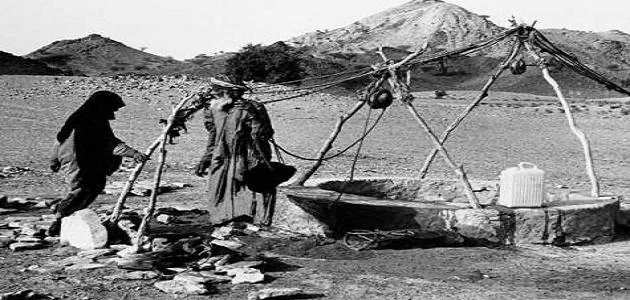
The journey of drinking water to the human mouth: from waterskins and pottery to the plastic bottle
Long is the journey of water to the human mouth. The ancient human who lived in trees and caves and lived side by side with nature, eating and drinking from vegetables, fruits and planted crops, sometimes tending towards hunting, used to drink from flowing water in streams and rivers or from rainwater in fresh lakes. He used to to them to drink his water and quench his thirst, but he needed to store the water to have it at any time he wanted, and here his invention of the waterskins (Qurab) made from the skins of the animals he hunted appeared.
Water has a great impact on human life, as humans like all living beings need water to be able to live. The Almighty said in His Holy Book: (And We made from water every living thing) (Surat Al-Anbiya, verse 30).
Therefore, humans have never abandoned water, as it is one of the titles of their life and daily food.
From here, humans used the skins (Qurab) to store water, and until recently, the people of the desert used the waterskin to cool water, especially in the summer and intense heat. They also used it on desert trips, and the waterskin was the companion of travelers and the ancestors' refrigerator in the house and in tents. In the Kingdom, the waterskin was most used in the desert to get a cold, pure drink of water. The old folk poet Hamidan al-Shuweiar said in one of his short poems: "I found the medicine for thirst... the waterskin."
From the field of using the waterskin, the old profession of "Al-Saqqa" (water carrier) emerged, which was known before civilizational development for delivering water to homes and buildings. Al-Saqqa is the person responsible for transporting water from reservoirs or rivers to mosques, schools, homes, and public drinking fountains (Sabil) due to the lack of water reaching these places to serve the people.
Water carriers used to carry waterskins made of at skin on their backs filled with fresh water. It was said: The applicant for this mission must pass an initial test to join the job of Al-Saqqa, which is to be able to carry a waterskin and a bag filled with sand weighing about 67 pounds for three days and three nights without being allowed to lean, sit or sleep.
Pottery and Jar water:
Water has formed a fundamental need for ancient farmers in the continents of Africa and Asia for 8000 years to irrigate their lands. Rivers like the Nile, Tigris, and Euphrates flooded and irrigated the crops several times annually. However, that was not enough given the need for daily irrigation. People used simple tools like the axe and shovel to dig water channels on the riverbanks to deliver water to agricultural lands. The Romans also used these channels mountain peaks to the city. However, storing this water required reservoirs, as well as small tools to store water for drinking and quenching thirst. Thus, there was a resort to clay and the manufacture of pottery tools from the Zeer to the Ballas to the jar to the small Qullal. Most countries in the world witnessed these pottery industries, especially in the Middle East. In the Kingdom, pottery making is one of the old handcrafts due to the people's need in the past to use it for drinking and cooking food. Sands and rocks were used in the manufacture of clay, from which pottery is made. In the Nile Valley, people used clay from agricultural lands to make pottery and also the bricks for building houses by burning the clay after shaping and adapting it, then burning and cooling it to become a pottery tool.
The Times of India Online cited four benefits of pottery vessels which are that pottery helps in improving metabolism, naturally keeps water cool for longer, is environmentally friendly better than plastic bottles, and provides pH balance.
Thus, humans used pottery vessels for a long time for their drink and food, until the era of glassware and cups appeared, followed by the era of aluminum.
However, scientific studies do not stop citing the negative effects of using these various tools from skins to pottery to glass to aluminum, which forces humans to seek other tools for drinking water, liquids and various juices.
The era of plastic bottles:
Industries in recent decades have reached making plastic bottles for use in drinking and preserving water. These bottles have spread widely throughout the world due to their ease of carrying, multiple sizes, and extreme ease of use for preserving drinking water and consuming it anywhere and anytime.
However, some societies were wary of them in their beginnings, given what they might carry of negative effects on public health. But with the world's preoccupation with rapid consumerist nature, they turned to plastic bottles in a major way and they are sold in all markets, malls, supermarkets and groceries. It is written on the bottle that the expiry date is for one year, and its components of groundwater, sodium, calcium, minerals and others are also written on it.
But have scientific research studies remained silent about humans using these plastic bottles for their drinking and cooking?
A study has shown that plastic water bottles are harmful to health, as they are designed for single use only, so attention must be paid to this point well. Analyses performed on some bottles after one week of use showed the presence of chemicals and bacteria that may be responsible for causing serious diseases, such as heart disease, hormonal problems, and the risk of breast cancer. There were concerns particularly regarding Bisphenol A (BPA), which is a controversial chemical used in plastic manufacturing and is believed to interfere with reproductive hormones, in addition to its effect on all natural functions in the body. Research also indicated...