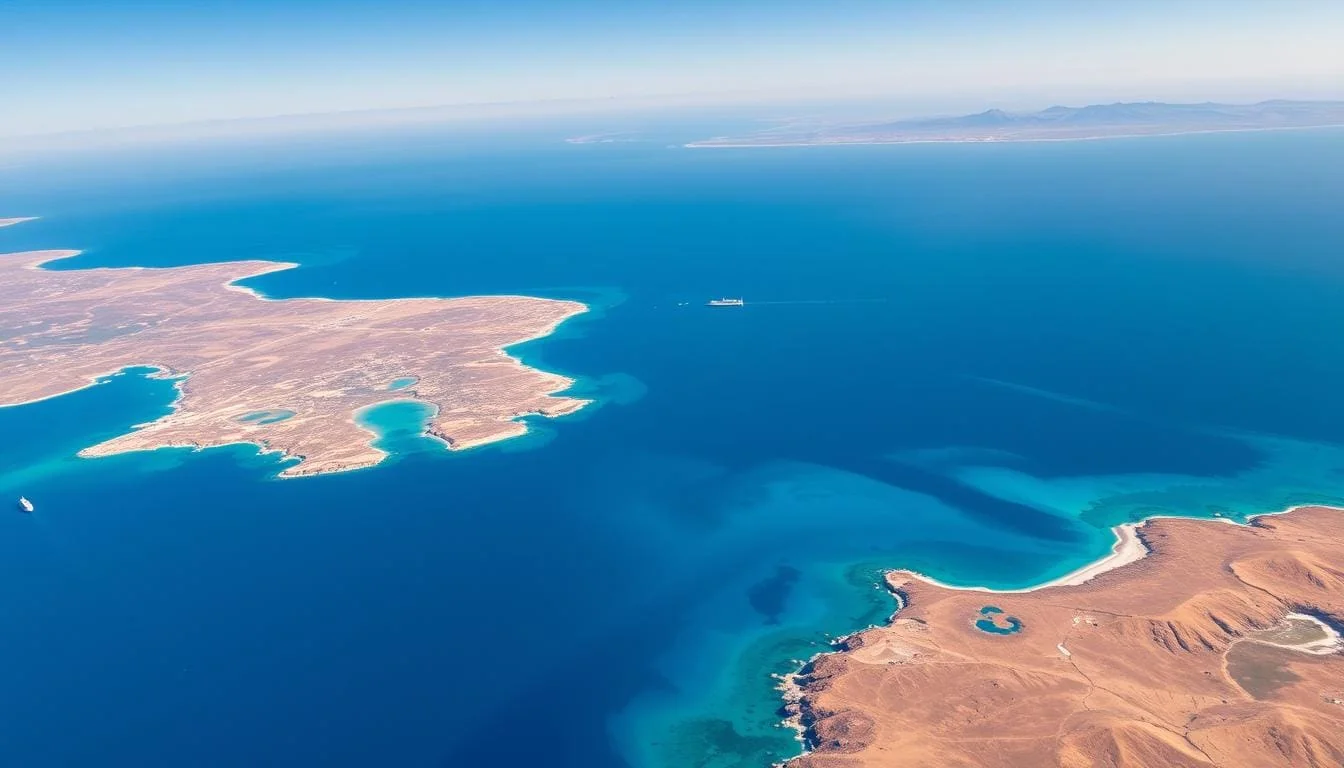
The Gate of Tears Bab-el-Mandeb Arab-Islamic Relations with Abyssinia
Dr. Abdul Karim Al-Samak
The relations of Abyssinia with Southern Arabs date back more than three thousand years. With the birth of Islam, these relations developed to the highest level through the exchange of letters and delegations between the Prophet Muhammad and the Negus (Ashama ibn Abjar). This study traces this relationship.
Abyssinia and its Geography:
Al-Qalqashandi described Abyssinia as a great kingdom with vast borders. It was culturally linked to Egypt and southern Arabian Peninsula civilizations. It was known in Greek as "Ethiopia," meaning "the burnt face." The name Abyssinia came from the Arab tribe "Habashat" that settled there. It is a high plateau in Northeast Africa with an area of 1,080,000 square kilometers, bordered by Sudan, Kenya, Somalia, and the Red Sea.
Arab Presence in Abyssinia:
Dr. Jawad Ali noted that Semitic migrations to Abyssinia were primarily from South Arabia. They founded the Kingdom of Aksum and spread their language. Abyssinians recognize their kings as descendants of the Queen of Sheba (Bilqis). Many Arab tribes like the "Tafri" and "Amhara" settled there. The Ge'ez language, used by the church, is very close to Arabic.
Christianity and its Entry:
Christianity entered Abyssinia from Egypt, following the Coptic Orthodox faith. King Abraha I converted in 327 AD. Christianity reached Najran via Abyssinia, leading to the first recorded holocaust in history at the hands of the Jewish King Dhu Nuwas against the Christians of Najran.
Yemen between Persian and Abyssinian Attraction:
There were five major Abyssinian campaigns against Yemen. The fifth campaign resulted in the end of Jewish rule in Yemen and the establishment of Abyssinian sovereignty, 90 years before the birth of the Prophet. Later, Abraha al-Ashram attempted to destroy the Kaaba in the Year of the Elephant (570 AD), but his army was destroyed as mentioned in the Quran. Subsequently, the Persians took control of Yemen until the arrival of Islam.
Abyssinia during the Prophetic Mission:
The Prophet Muhammad described the Negus (Ashama) as a king who does not wrong anyone. The first migration in Islam was to Abyssinia in the 5th year of the mission. The migrants included Othman ibn Affan and the Prophet's daughter Ruqayya. A second larger migration followed with 83 men and 11 Quraysh women. The Quraysh sent Amr ibn al-Aas to retrieve them, but the Negus, after hearing Ja'far ibn Abi Talib recite from Surah Maryam, refused to hand them over and eventually converted to Islam.