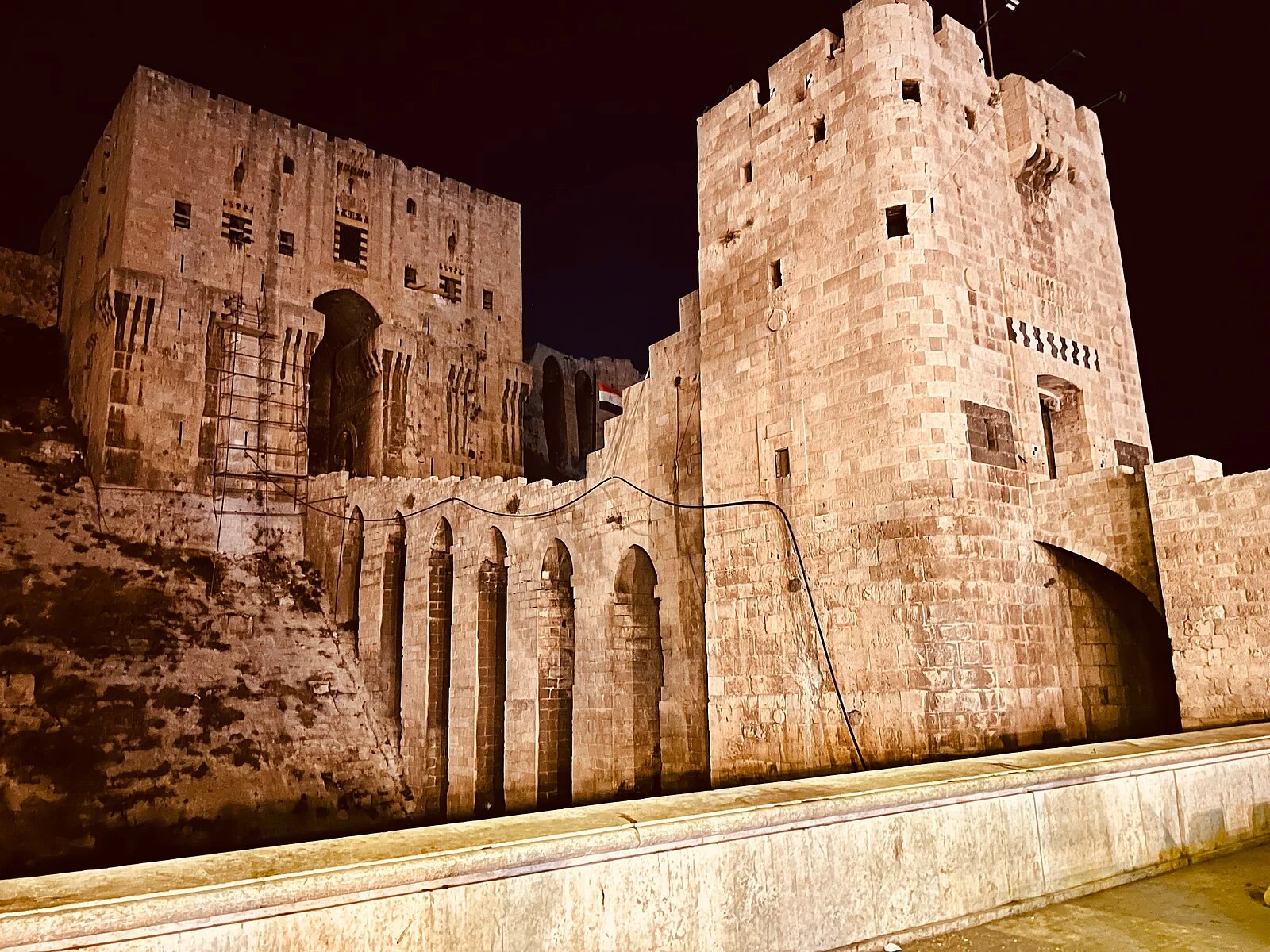
Forts and castles.. their architecture, systems and historical role
Prepared by: Abdul Karim Ibrahim Al-Samak
Few are the scientific historical studies that associated with the topic of forts and castles in the history of human civilization, in a scientific and systematic way, and the library of Arab Islamic history still lacks this type of studies, and the researcher may find in the historical library studies on forts and castles in the content of studies concerned with the subject of military architecture among nations and peoples, as a face of human civilization presence, and the study of the German historian (Wolfgang Müller-Wiener) on the subject of (Castles during the Crusades) may be among the best scientific studies in this aspect, as it dealt in its study with a number of castles that were historically associated with the period of the Crusades. In this vein as well, there are historical studies.
They were historically associated in recent times with their talk about the Ismaili Hashashin sect, and the history of its origin, and because this sect was associated in the origins of its emergence with its own castles and forts directly: through the talk about this sect, the talk was about castles and their importance in the emergence of this sect, and Al-Qalqashandi named it - i.e.: the sect - in his book (Subh al-A'sha fi Sina'at al-Insha) as (State of Castles): for the importance of castles in the history of this sect and its emergence.
Those are the forts and castles in the memory of human history, but in the Islamic memory they represent the military architecture known by Islamic history, which is one of three urban systems that Islamic civilization is proud of, the religious one represented in mosques and their accompaniments, the civil one in houses and homes and the military one which we are talking about.
Forts, Castles and Humans
It is the story of history's memory in human conflict with his human brother, in an issue among the most important issues concerned in his life. It is the permanence of existence, so the story of building forts and castles by humans came as an ideal witness to the story of this existential conflict between humans, so the story of building forts began to secure the most important necessity of his life necessities on this earth, which is security and safety, to live under its shadow in the blessing of stability and prosperity. These construction operations began with the beginnings of his civilization and stability on the land he inhabited. Ancient human civilizations knew forts and castles, and there are many archaeological remains pointing to that human giving, as the Arabs knew them before Islam as other ancient nations knew them, but the interest in forts and castles increased in the Middle Ages period. Especially those in the East of the ancient world, which is known technically as (Near East) which is today the Middle East, especially those in Sham and Iran, and the construction of forts and castles was on two patterns in time and place, the first pattern: is what was defensive and offensive including the Islamic one, or the non-Islamic one. As for the second pattern: it was in the origins of its emergence defensive to achieve security for its inhabitants, and this pattern es back to the Ismaili Hashashin sect, as all its castles were defensive and security ones, and they spread from Iran to Sham, until the state of this sect was known as (State of Castles) as Al-Qalqashandi named it.
Fort and Castle linguistically and technically
Ibn Manzur defined the castle in his book Lisan al-Arab as: the fortification impossible in a mountain. Its plural is Qila', Qila' and Qulu'; and the castle with Sukun of Lam is the overlooking fort, and its definition came in the Global Arabic Encyclopedia as: (an impossible fort built in a location difficult to reach, and it is often built on a mountain peak or overlooking a sea. Some were found standing on flat land, and castles and forts among Arabs and others used to play the role of the house. By what they contain of food, water and life and defense requirements for their inhabitants). In the Islamic Encyclopedia came the definition of the castle as: the fort, and it is derived from the Spanish word that the Spaniards took from Muslims, when they called the Iberian peninsula, which includes Portugal and Spain the name [of castles]. So the Spanish word Al-Cala is in its origin an Arabic word, and here the verbal indication of the fort: the castle is one, and neither of them differs from the purpose for which the castle was built. And castles in the construction system are of three types, either on a mountain or hill, or moated and around them water. Or what combined between moating and elevation, such as Aleppo castle which was surrounded by the Quwayq river.
But the professor of Islamic history and civilization Dr. Su'ad Mahir sees otherwise in her precious book (Art of Islamic Architecture throughout the Eras), as she pointed to the verbal and technical confusion that Arab dictionaries fell into in their old and modern, about the issue of defining both the fort and the castle, and that this confusion European encyclopedias have fallen into.
When she resorted to Arab and Islamic dictionaries in the technical definition for each of the fort and the castle, she defined both names as following:
The Fort: it is the largest of Arab fortification buildings, and it is every building that surrounds an area of land to protect it and fortify it, against any attack from inside the country or from outside it. Hence city walls were known in the Middle Ages as (forts), such as: walls of Baghdad, Kairouan, Madinah, Damascus, Diriyah and other cities, and until today, many cities maintain their walls such as Damascus and German and Omani cities. Walls that cities fortify themselves with differ from others by their height and strength, aiming for the purpose of their construction. The Holy Quran told us in Surah al-Hashr about the exit of Bani al-Nadir from their homes in Madinah, then from their forts in Khaybar. The Almighty said: { And they thought that their fortresses would defend them from Allah; but Allah came to them from where they did not expect } (al-Hashr: 2) within their forts they went out to Sham, and for this every fort is a fort and castle and not vice-versa.
The Castle: is a military fortification built in a strategic area like a mountain, hill or small mounds or on sea coasts, so it is confined to monitoring and defense against any external aggression, so its components are components of the fort in building.
Both buildings serve the purpose in the issue of defense and repelling any external attack, and the castle being a military building, all its residents are military, unlike the fort where the ruler sits and whoever he surrounds from his subjects. To turn into a small city with a mosque, rule palace and other service facilities.
This was what Dr. Su'ad Mahir went to, in explaining the difference between the fort and the castle, in their technical and purposeful indication for each of them, in their direct role in Arab and military works.
And after this definition; the military and warlike purpose for both is one manifested in achieving the als for which the construction was done.
The Castle and its supporting buildings:
Embrasures: openings in the castle walls to throw filth and dirt.
Machicolations: balconies projecting forward in the face of the walls in walls of forts or castles and from them arrows and fires are thrown and also hot oil is poured on attackers.
Muqarnas: an Arabic art in building arches and corners in castles and buildings.
Barricade: a defensive means behind which defenders of the castle or fort stand.
Barbican: it is a large tower, built at a short distance from the fort or castle, and between it and the fort an arch or bridge reaching it in the castle. It is a defensive means for the castle.
Mashrabiyas: projecting wooden balconies on the building wall playing the role of window from upper floors.
Bashoura: zigzag entrances, turning right and left at the castle entrance.
Administrative system in the fort or castle:
Forts and castles in all societies or nations were subject to administrative systems in which the castle or fort is verned, and Muslims knew such systems. So they established them in their forts and castles, and the administrative ladder in the Islamic castle was as following:
vernor of the castle: was called Dizdar. He is the keeper and owner of the castle. A number of military and administrative personnel help him.
Deputy of the castle: is a deputy independent from the authority deputy, and his mandate is done under a sultanic order from the Noble Bureau of Insha, and the deputy of the castle is the one speaking for it, and the one who opens its door for the Sultan. Among his tasks is assigning the drum beater in it. And the drum beater here in his task in the castle is like the trumpet blower of the siren today.
Guardians of the castle: they are two; the first: the guardian of the castle speaking at the castle gate, and he must open and close its door, and under his command a number of individuals.
The second: the guardian of the castle gate and he follows the first and works under his command, and with him ten soldiers of the helpers.
The castle captain: this function and task is specifically for the soldiers: and the captain often substitutes for the castle guardian.
Secretary of the castle: his task is inspecting the castles, and checking their conditions and what they need.
Agent of the castle, he is the one who substitutes for the castle guardian with some works the guardian assigns him.
Overseer of constructions: he is the one in charge of supervising construction works and engineers, and often he is an engineer himself.
Forts and Castles in the era of Crusades
The Crusaders arrived in the Islamic East and found in it the wealth of this East with military architectural arts: like forts, castles and Arab towers, and the fortification of Antioch fort had a role in delaying the first crusade campaign for about a year. And the vernor of the fort was (Baghysian the Seljuk), and were it not for the betrayal of (Fayruz the Armenian) one of the tower guards who contacted the crusade leader (Bohemond) who bribed him to open the fort door for him. And by the fall of Antioch fort Sham became open before the first crusade campaign, dated in year 491 AH / 1098 AD.
The invasion of Antioch was among the direct reasons for the success of the first crusade campaign. And the following crusade campaigns, and in addition to that the Fatimids in Egypt contacted the Crusaders against the Seljuks, thinking that the Crusaders will enable them to receive Jerusalem. But the Crusaders rejected the request of the Fatimid Caliph - Al-Musta'li Billah -. And after the conquest of Jerusalem the Crusaders' interest in forts and castles increased, so they built new forts and castles for themselves, in addition to what they could get hold of and occupy from the hands of Muslims.
So this period is among the most important periods of history in spreading the building of forts and castles, from the Islamic East and until European countries, and therefore researchers and historians cared for those forts and castles in their historical studies concerned with their military and civilizational aspects, through the history of this duration, and the prevalence of the castle and fort building phenomenon in it, being necessities of that period, regardless of their als and reasons for building them.
And also the interest in building forts and castles increased among Crusaders and mercenaries of the Knights Templar and the Order of St. John - for all these forces had practiced mercenary work - as military groups supporting crusade campaigns - being military surveillance and defensive means, and in some cases they used them in attacking Muslims, and they achieved some victories against Muslims, as they gave them - i.e.: the forts - a foothold on the Syrian coast, where they achieved contact with those coming from Europe by sea, as military and human forces supporting the crusade presence in Sham, and when they left it to their countries, the castles were their last homes in the Islamic East, after Muslims' victory over them especially in the Battle of Hattin on the fourth of July 1187 AD, which was among the most important reasons that accelerated the elimination of the crusade presence in Muslims' land.
The State of Castles in the war period
The researcher during the Crusades period, through his talk about castles and forts, cannot drop from his mission or study the issue of "the State of Castles", as Al-Qalqashandi named it - may d have mercy on him - for he is the first to call this name on the owners of this state, and it was one of the active and influential forces, whose birth and emergence came in that period, and it was owner of an esoteric doctrinal activity, based on killing and assassination for Muslim princes, and their judges and scholars, from the people of Sunna and Jama'a, so the owners of this state are the Hashashin sect - children of the Nizari Ismaili sect -, and the preacher of this sect and its founder Hasan as-Sabbah (428 AH-518 AH/1040 AD-1124 AD) found that اعتصام in mountain castles is the best choice for his call success, and for this sake: his choice fell on the invincible (Alamut) castle in the Iranian Daylaman mountains, and in the north west of it, and that was year (483 AH - 1090 AD), and with this call activity the number of his sect's castles in Iran reached more than a hundred castles, scattered in all parts of Iran. And from them they extended to Sham. And the base of this sect was Masyaf castle in the Alawite mountains, and seven other castles follow it. And the sheikh of the sect in these castles was Rashid ad-Din Sinan, who was known as the Sheikh of the Mountain. And their state ended in Iran by the Monl invasion in year 654 AH - 1256 AD, and in Sham al-Zahir Baybars ended their presence in year 672 AH - 1273 AD.
Most important castles in the memory of history
Saladin Castle: he built it in Cairo on al-Muqattam mountain, before his exit from Egypt to liberate Jerusalem from the hands of Crusaders, and its construction came after he ended Fatimid rule in Egypt, and construction started in it year 572-579 AH/ 1182-1176 AD).
Alamut Castle in Iran: and the history of its origin was previously talked about. By the Hashashin sect, and the most important events associated with this castle especially those against Sunni Muslims.
Masyaf Castle: and it was previously talked about and about its sheikh as a base for the Ismaili sect in Sham.
Antioch Fort: and it was previously talked about and how Crusaders took it.
Al-Karak Castle: this castle was built by order from the king of Jerusalem (Fulk). And the one who built it is the crusade feudalist (Lobutaier). Then its matter went to the feudalist (Raynald of Châtillon "Arnat"), in year 1177 AD, and this man was a criminal who cut the pilgrimage road of Muslims, and attacked a caravan in which was Saladin's sister. Saladin managed to kill him with his own hand after he took him prisoner.
Damascus Castle: it is considered among the oldest Islamic military fortifications, as the Umayyads built it, and destruction hit it at the hands of Abbasids. And the Fatimids cooperated with the Crusaders to hand them Damascus, after eliminating the Seljuks.
Aleppo Castle: it was built before Islam, and Sayf al-Dawla al-Hamdani (420 AH 1024 AD) renewed its building, and it was hit by Monls what hit other parts of Sham, those are the castles and forts in the memory of human history, in their origin and in the history of their events, especially those in the Crusades period, in Sham, Egypt and countries of the Islamic East.