The Unified Arabic Catalog and the Unity of Cultural Work
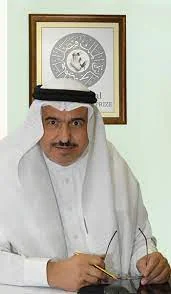
Dr. Abdulaziz Al-Sabeel
In the beginning, I ask the permission of the catalog officials to add that it is also the Unified Arabic Catalog, as it is one of the most prominent Arab cultural projects that sought and succeeded in adding an important building block in the framework of the unity of Arab cultural work.
This Arab project, which was established in May 2001, laid an advanced infrastructure for library and information work in the Arab world, and works to enumerate Arab intellectual production in a single database through an electronic portal, so that it contains a complete bibliographic description for all Arabic books.
The catalog database, which is the largest in the Arab world, has included more than two million three hundred thousand bibliographic records for Arabic information vessels, and the catalog allows the Arab reader to know the location of the book among the participating libraries, which number more than five thousand libraries.
The catalog is not limited to authored books, but includes manuscripts and articles published in various periodicals, as well as university theses, whose registrations reached more than 130 thousand records. As for translated books, they have been limited in one index, the contents of which have reached 162 thousand entries so far, and these numbers are increasing day after day.
Among the major achievements achieved by the catalog is the inclusion of one million two hundred thousand bibliographic records in the global catalog "worldcat", which is considered the largest database of bibliographic records in the world.
The Arabic catalog has created national Arab portals for many Arab countries, and is on its way to completing them all. Each portal represents a unified national catalog that lists the holdings of all libraries in that country, and here comes the privacy that leads to integration. The catalog allows participating libraries to add all the books they contain, including non-Arabic books, and thus the catalog includes all global intellectual production in these libraries.
With the Unified Arabic Catalog, all the library needs is to adopt the catalog techniques and download the bibliographic records, including the classification number in the catalog, and place it on the book. Libraries thus save a lot of money and effort, while ensuring accuracy and unifying standards and techniques among Arab and non-Arab libraries for the Arabic book.
The Unified Arabic Digital Library emerged from the womb of this catalog, which is the comprehensive umbrella for all Arab digitization initiatives. It is a virtual library that worked to monitor Arabic digital content wherever it is found and make it available to the general users.
As part of the catalog's interest in training workers in the field of libraries, the Unified Arabic Catalog Academy was established, which is concerned with holding training courses that focus on catalog practices, descriptive cataloging, and authority control.
Dreaming Arabs speak about the extent to which it is possible to achieve Arab unity while they realize that politics tears their dreams apart. However, this unity can be partially achieved through culture, and certainly this catalog, with its services and various activities covering the Arab region, is one of the important projects in the framework of achieving that, its slogan being: "Towards a common Arab work".
A great salute to the workers on this catalog, and another to the King Abdulaziz Public Library, the incubator of this important cultural project.