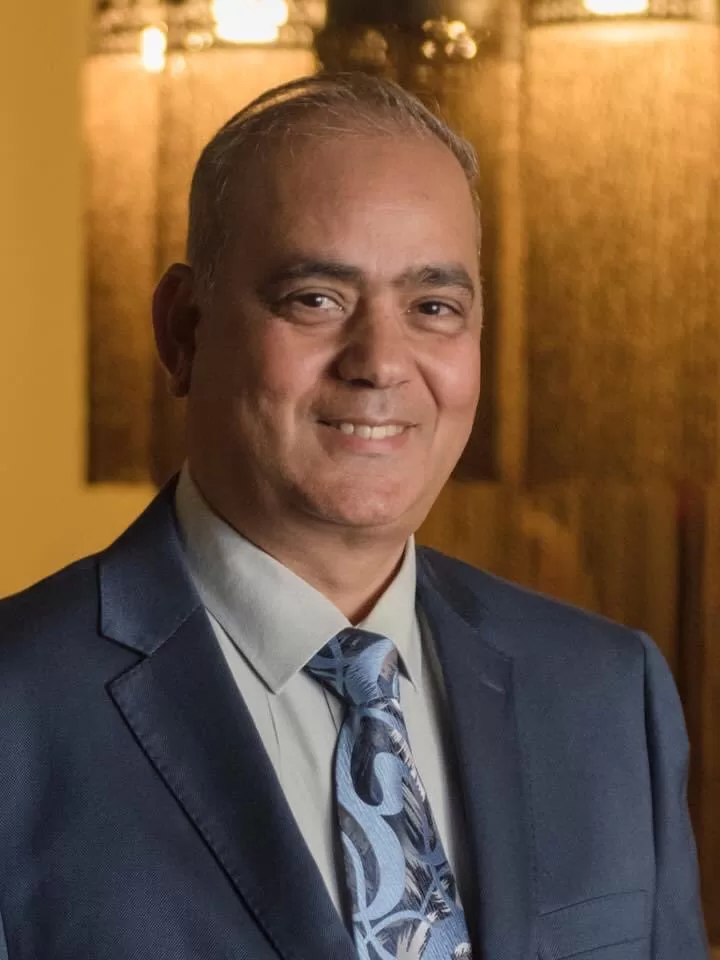
He wrote about his journey from the Tihama plains to the Asir mountains .. Poet and media figure Ashraf Abu Al-Yazid: There is interest in the Kingdom in defining the architectural and historical
Interview: Abdullah Al-Samti
The poet and media novelist Ashraf Abu Al-Yazid clarified that the Kingdom has recently been interested in highlighting the architectural and historical, and confirmed that he is working on issuing a series of books about the Kingdom and the Arabian Peninsula.
Abu Al-Yazid, who has published several books in the field of travel literature, is famous for his international surveys in Al-Arabi magazine. His poetic and novelistic works have been translated into a large number of languages, including: Sindhi, Persian, Korean, Spanish, Malayalam, Turkish, English, German, Russian and Serbian. In this interview, he talks about travel literature and the alternation of his writings between poetry and the novel, the crisis of criticism and the differences between paper and written media and his visit to the Kingdom more than once, and this is the text of the interview:
You moved in the world of writing between poetry, the novel and travel literature, what is the literary genre that you feel has embraced your literary vision?
It is true that moving is gradual, meaning that I started with poetry, followed with travel, and ended with the novel, but I always return to poetry as if it were my true mirror of my vision of myself. As for the critical vision of the world, it has found itself in the novel, because in my novels I intended to enter the world of the expatriate, not just the Egyptian, but the cosmopolitan expatriate, so the characters of my novels, which I wrote and published or those I am currently writing, live in different spatio-temporal spaces, just as they live under more than one sky.
Travel literature I write for the pleasure of traveling and reporting. My ancestors' desire to travel and move runs in my veins, between penetrating geography and deepening into history. And this travel literature will carry the echo of poetry, novel and research as well.
Do you think that the critical focus is on the novel today more because it is the most widespread or must there be a critical balance between all the arts?
I believe that we are an echo and not a voice, in creativity and criticism together, we wait for what spreads to catch up with its train, and I wished that we would read our heritage well to find in it the roots of creative forms that make us pioneers, not to transfer different creative forms and try to mold what we write according to them.
As an example, the construction of the Arabian Nights deserves to be looked at its transparent covers, like an onion, we peel it until we reach the core. These One Thousand and One Nights as a work represents narrative pioneering. And whoever builds on it will have roots farther than Western novels born in the eighteenth century and beyond.
Do you think the crisis of literary criticism is caused by the trend towards theorizing? Or is it a healthy cultural sign?
The crisis of literary criticism is cloning, many rely on what their predecessors wrote, so I don't see – except a few, as I refuse generalization – young generations heading towards criticism, and if they do, they walk in the teacher's coat. If the creative novelist, poet or even painter is rebellious, then the critic should be that rebel, and more.
Literary theories were created so that we could transcend them, otherwise we would pour all the talk of prose and poetry into ready-made molds, and be satisfied with old judgments applying them to new creativity.
What do you see in this media duality: paper and electronic? To which do you triumph by virtue of your long media experience?
Still us, I mean my generation who was born with a paper spoon in his hand, a prisoner of the paper book, and the paper magazine, but by virtue of economy, and the umbrella of spread, the dominance became electronic. I have worked with every medium and platform, from the quarterly magazine (Nizwa), to the monthly periodical (Literature and Criticism), and (Al-Arabi), for all weekly issues, and published in daily newspapers, and was even the cultural editor of an international news agency, and my opinion is that the content is more important than the form, which is what I see today in our digital platforms, and they have become more than can be counted, until there is a digital platform for every citizen!
You wrote a lot in travel literature.. What do you like in the Kingdom of Saudi Arabia in terms of history, antiquities and culture? And is there a coming book for you about it?
I have had more than one trip in the Kingdom, the holy trip to perform Umrah and Hajj, and the research trip in a conference hosted by Riyadh for Islamic crafts. I also had an unforgettable adventure from the Tihama plains to the Asir mountains, and today I see interest in defining new spots, transcending the religious that the Islamic world knows, with the historical and architectural.
After thousands of pages in travel literature, and four books in travel literature (Traveler's Biography), (River on a Journey), (Caravan of Moroccan Tales), and (Damascene Days), I will soon have two books about my trips to India and the countries of the Arabian Peninsula.