
- Full commitment to content confidentiality, ensuring that no material is circulated or published except under strict official authorization.
- Absolute preservation of historical assets, and prevention of unauthorized photography or copying to protect intellectual and material property rights.
- Strict adherence to international restoration protocols and standards to ensure the treatment of assets with the highest level of scientific precision.
- Providing an exemplary working environment that adopts the highest standards of security, health, and occupational safety to protect both restorers and collections alike.
Restoring History for the Future
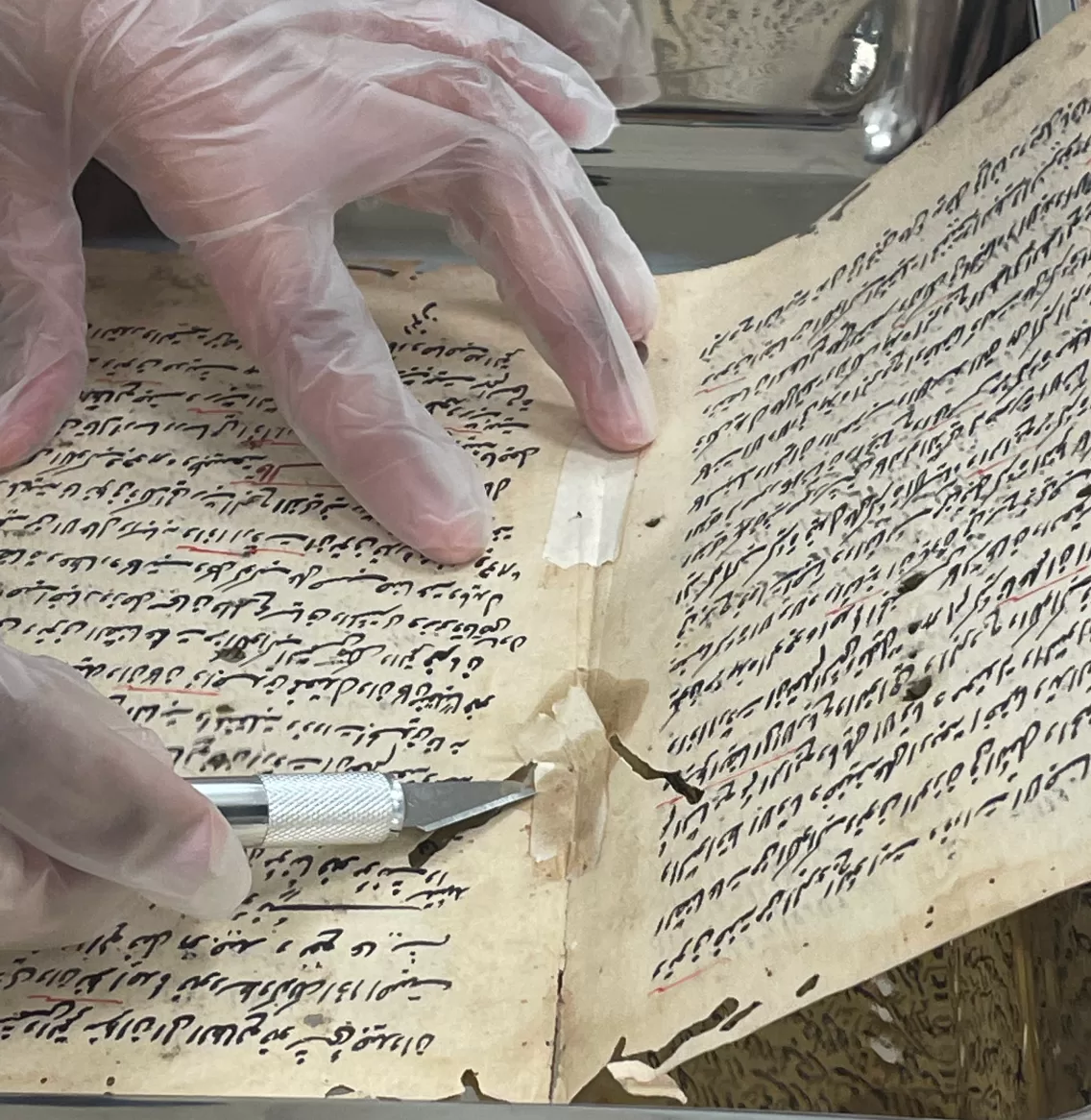
The Restoration Center is a leading national institution whose journey began in 2003 to protect the Kingdom’s visual memory, culminating in its official launch with a comprehensive identity on 21 June 2022. The center combines mastery of traditional manual restoration techniques with the latest global technologies, functioning as an integrated center of expertise that ensures the sustainability of rare collections, including manuscripts, coins, and maps, preserving them as a living cultural heritage for future generations in accordance with the highest international standards.
Through its advanced laboratories and young Saudi professionals, the center provides a comprehensive system that includes preventive conservation, ozone sterilization, and digital documentation, thereby achieving the objectives of Saudi Vision 2030 in safeguarding cultural heritage. Committed to the highest levels of confidentiality and scientific precision, the center opens avenues for collaboration with institutions and individuals to provide treatment and restoration services, enhancing its position as a regional reference in the art of preserving human heritage.
Vision
Global leadership in the sustainability of cultural heritage through mastery of the art of restoration in accordance with the most precise international standards, and the development of specialized national expertise.
Mission
We are committed to protecting and preserving human memory by restoring and treating rare collections—including manuscripts, coins, and artifacts—using the latest scientific technologies, to ensure their continuity as living heritage for the library as well as national and international institutions.
Strategic Objectives of the Center
- National Alignment: Consolidating the library’s role in achieving the objectives of Saudi Vision 2030 related to protecting cultural heritage and preserving the nation’s scientific and cultural legacy.
- Specialized Leadership: Enabling the center to serve as a regional reference in the art of restoration and as a center of expertise providing technical support and assistance to similar cultural institutions and centers.
- Human Capital Investment: Enhancing the efficiency of national talent through sustainable training programs and international partnerships that ensure the transfer of the latest global expertise and technologies in the field of restoration.
- Operational Excellence: Applying the most precise international quality standards across all treatment and restoration processes to ensure the sustainability of rare collections and protect them from deterioration.
Our Mission:
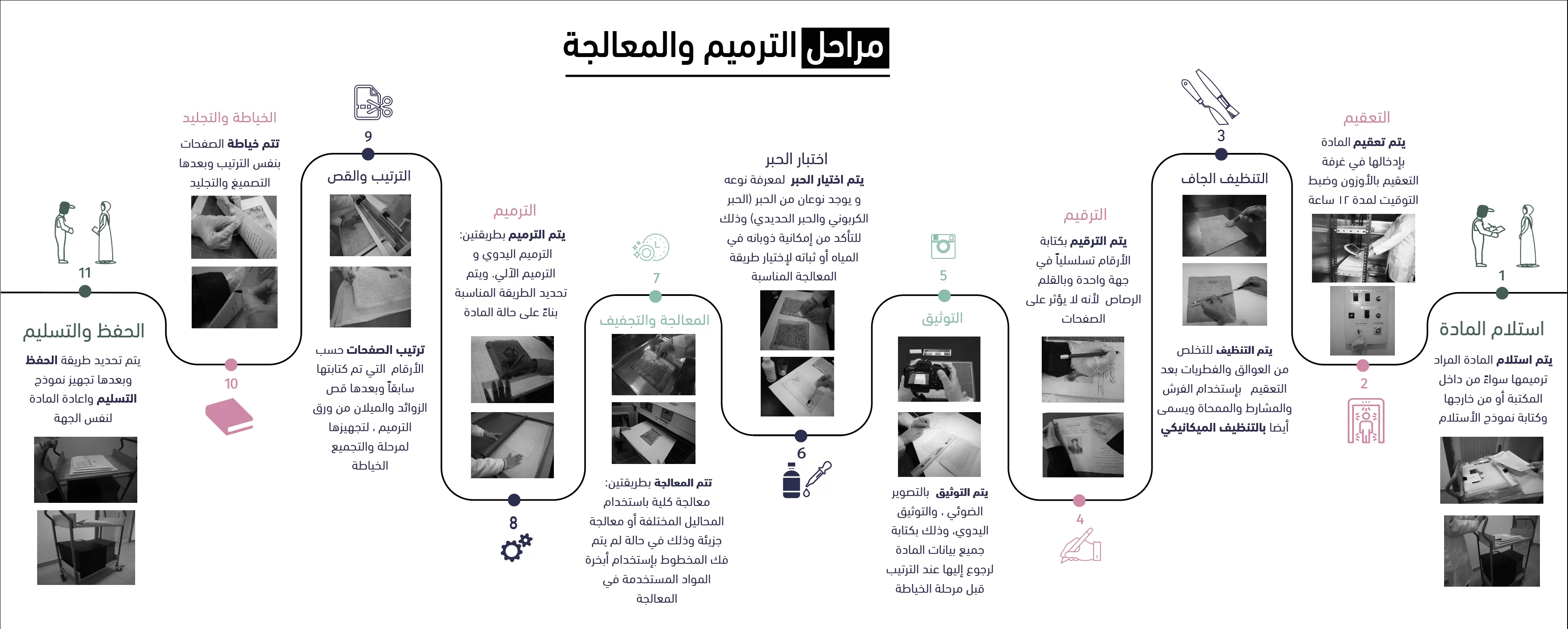
1. Technical Execution of Restoration:
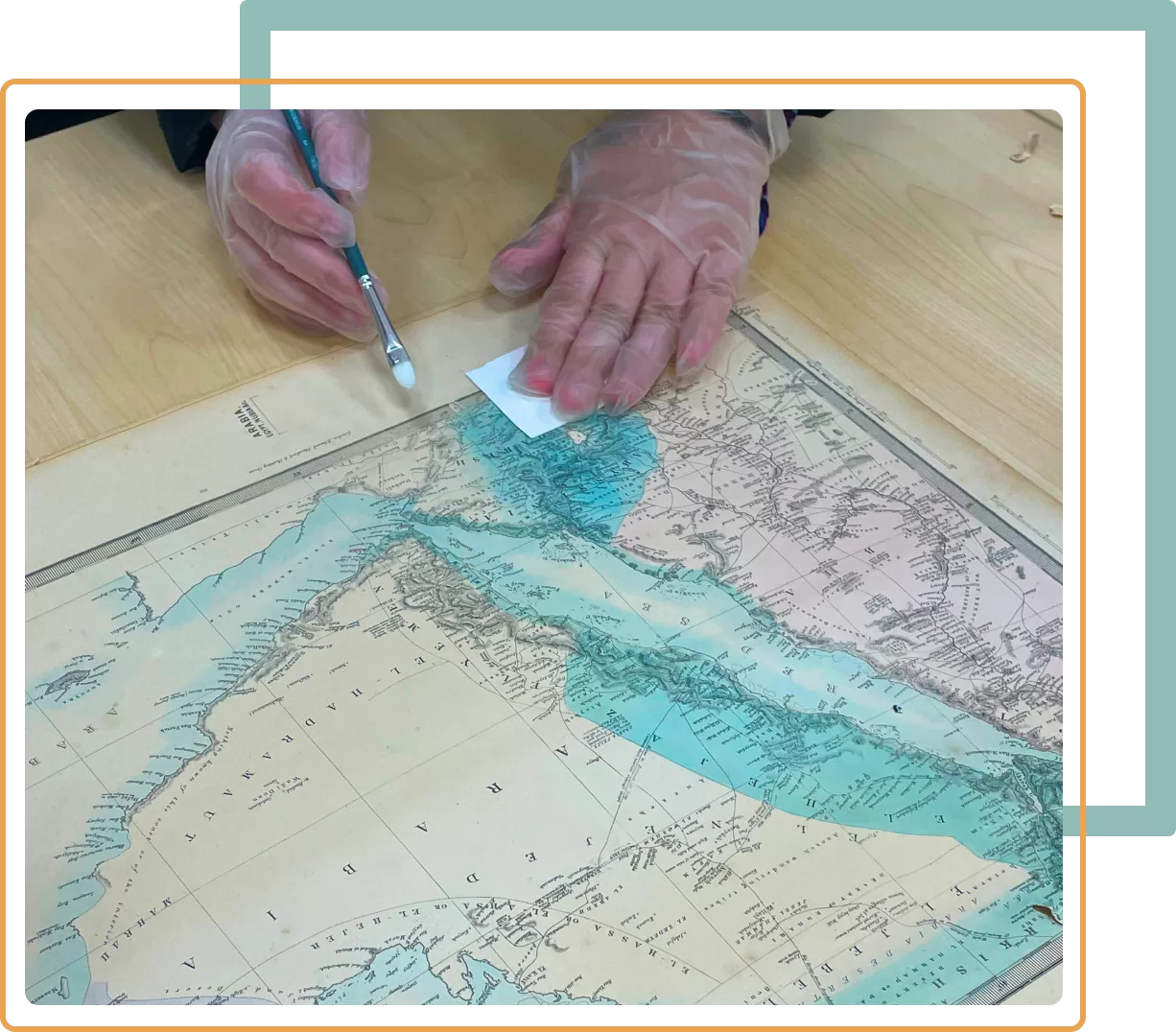
- Conducting precise scientific restoration of various materials and collections (manual and automated).
- Chemical treatment of paper to remove acidity (partial or complete treatment by disbinding sheets).
- Specialized cleaning in two forms: (dry mechanical) using precision tools, and (chemical) using laboratory solutions.
2. Comprehensive Sterilization System:
- Sterilizing collections and protecting them from pests and fungi to ensure the safety of storage facilities.
- Providing different levels of sterilization (standalone sterilization, or sterilization combined with restoration and preservation).
3. Digital Documentation and Archiving:
- Photographing collections before and after treatment in high quality and clarity.
- Electronically processing and storing images to document restoration stages and ensure the existence of a digital archive.
4. Sewing and Artistic Binding:
- Restoring existing stitching or re-stitching manually using the same traditional method as the original.
- Artistic binding of items using leather (natural or synthetic) according to preference.
- Additional services: (decoration, name inscription, logo printing by engraving or gilding).
5. Preventive Conservation and Maintenance:
- Supervising preservation methods and ensuring an ideal storage environment (temperature, humidity, light).
- Providing specialized preservation materials (boxes, folders, plastic covers) that are acid-free and available in various sizes and colors.
6. Training and Knowledge Transfer:
- Organizing specialized training courses for professionals and interested individuals.
- Providing continuous workshops to qualify national personnel for the labor market in the field of restoration.
7. Community Engagement and External Services:
- Receiving and providing restoration services for individuals and external entities (public and private institutions).
- Participation in local and international events through (live restoration demonstrations).
8. Quality Control and Reporting:
- Monitoring workflow in accordance with international standards and submitting periodic reports on achievements.
- Full compliance with the confidentiality of collections and intellectual property rights.
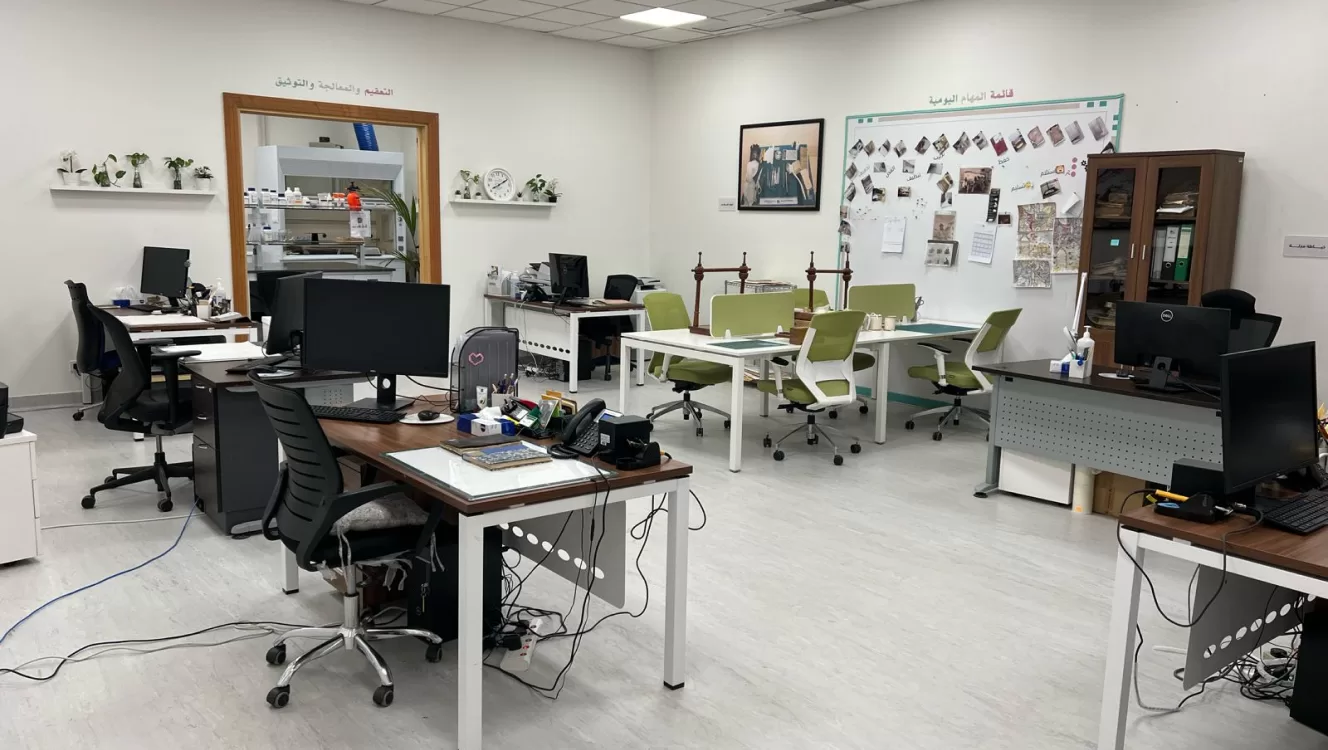
The Restoration Center
Preservation
Sewing and binding
Restoration
Sterilization & treatment
Cultural heritage resources
Manuscripts
Documents
Maps
Photographs and negatives
Books
Periodicals and Magazines
Banknotes and coins
Qur'ans
Wooden panels and frames
Miscellaneous historical acquisitions
Professional values and principles
The preventive conservation system: protecting assets and preserving history.
We adopt an advanced preservation strategy at the center based on classifying collections according to type and size, while ensuring an ideal storage environment that controls influencing factors (temperature, humidity, and light), in accordance with the following standards:
- Historical documents: Placed in dedicated plastic sleeves and stored in gray acid-free archival boxes.
- Photographs: Mounted in acid-free Matboard frames or protective sleeves, and stored in specially designed black boxes to protect them from light.
- Negatives and color photographs: Organized in professional albums divided according to size, and stored in light- and moisture-proof boxes.
- Maps and drawings: Stored in large flat folders specifically designed to accommodate their large dimensions and prevent folding.
- Periodicals and newspapers: Collected in standardized storage units according to chronological and thematic classification for easy retrieval.
- Coins and numismatics: Stored in precise envelopes and specialized coin holders that protect them from oxidation and metal corrosion.
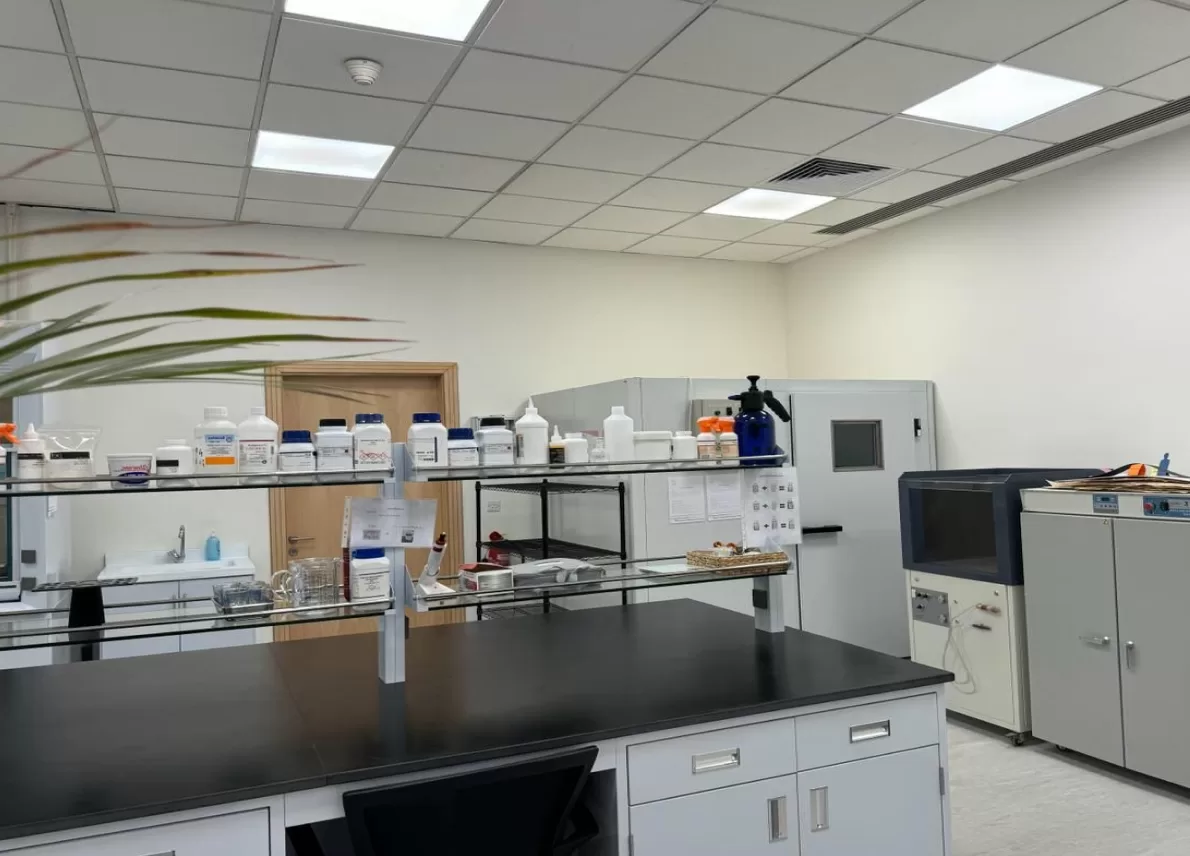
Laboratory equipment:
Ozone sterilization room
Suction cleaning device
Processing table
Drying device
Hydraulic press
Chemical processing cabin
Containers
Photovoltaic panels
Mechanical restoration device
Lamination device
Manual cutter
Laser cutter
Thermal packaging device
Hand press
Steam for dissolving adhesions
Camera with documentation scanner
Glossary of terms: Basic concepts in the art of conservation and restoration
- Restoration: A technical process aimed at restoring the physical condition of an artifact to be as close as possible to its original state, while fully preserving its historical value and authentic identity.
- Conservation (Maintenance): A system of preventive and curative procedures (such as sterilization and chemical treatment) designed to slow deterioration factors and extend the lifespan of items and collections for as long as possible.
- Preservation: The fundamental pillar for protecting collections, involving the preparation of ideal environmental and technical conditions that ensure protection from damage and guarantee long-term sustainability.
- Sterilization: The first proactive step in the conservation lifecycle, aimed at eliminating any fungal or bacterial activity and immediately stopping biological deterioration.
- Manuscripts: Handwritten knowledge-bearing items produced before the age of printing, representing a unique intellectual record distinct from printed books.
- Deacidification: A precise chemical treatment that begins with measuring the pH level, followed by the use of specialized solutions that restore chemical balance to paper while preserving ink stability and material integrity.
- Cleaning: A technical process for removing dirt, residues, and disfiguring stains using carefully selected laboratory materials and solutions appropriate to the nature of the treated material.
Contact Information

Phone number
+966554403167

Email Address
restoration@kapl.org.sa

Address: Library Headquarters
Last Modified Date: 02/10/2026 - 4:02 am Saudi Arabia Time

