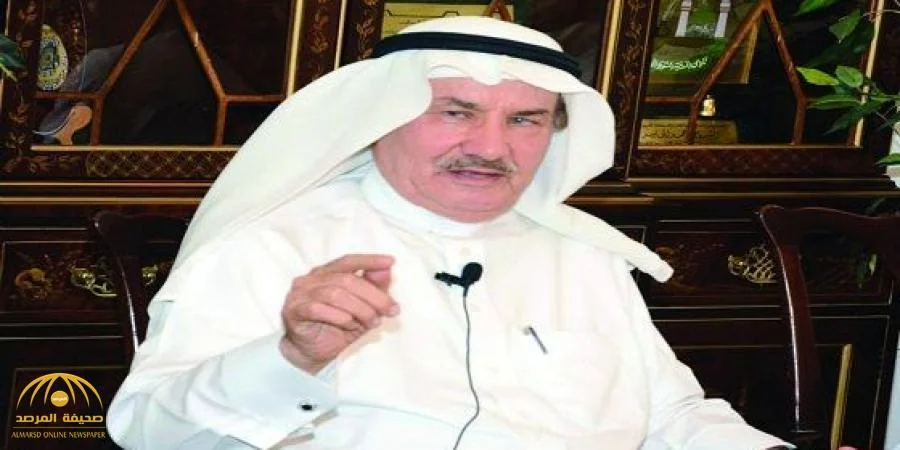
Dr. Abdulrahman Al-Shubaili in His Autobiography: An Exposition of Prominent Media and Cultural Transformations in His Book: Mashaynaha.. Tales of the Self
Abdullah Al-Samti
Memories form an important part of the creative glow, because they are often full of positions, experiences, expertise, and visions as diverse as the experiences of life itself. These memories elevate to become an exciting catalyst for a different creativity, especially if the personality being written is one of the characters who struggled and experienced the fluctuations of life in its various plains and deserts, in order to pave for itself paths to success to reach its ideal als. Thus, it follows rugged paths, difficult ways, and methods in which its effort and perseverance stand out for the sake of achieving high ambitious als.
Awareness of this life and its struggle presents a clear image of the model character. While it makes memories flow upon contemplating the long personal history, the scenes of life manifest one after another. The writer remembers them anew while in another horizon, which makes him remember a joy here or a sorrow there, while he recovers dozens of characters, faces, places, and moments full of late nights, study, travel, migration, wandering, and work.
It is a life system of these memories, in which a person penetrates towards forming his own private life in knowledge and work to become himself a model for other lives.
In light of this awareness, we read parts of the autobiography of Dr. Abdulrahman Al-Saleh Al-Shubaili - may d have mercy on him - for which he chose the title: "Mashaynaha .. Tales of the Self".
Autobiography:
Dr. Abdulrahman Al-Shubaili points out in the introduction of his book (issued by Safeer Press in Riyadh in its first edition 2018) the identity of this book, saying: "Our friend was not attracted to the idea of his book: an autobiography, and he remained in a reserved position before calls to talk about his memories, let alone record them, due to his lack of conviction in principle on the one hand, and his certainty that his merchandise in this life is modest. Recalling them does not have a value that qualifies for narration, and they are not comparable to the experiences of greats, nor do they resonate with the biographies of creative people. He consistently followed the approach of concealing sensitive positions and not revealing them."
Components of the Biography:
This biography written by Dr. Abdulrahman Al-Shubaili consists of eight gateways, as he calls them in the introduction, which are in order: Al-Sunqur, Al-Aziziyah, Between Two Universities, Media, Higher Education, Councils, Documentation, Subjectivities, in addition to a general index that includes (1600) names of various names mentioned in the biography, whether names of characters, places, or ministries, bodies, and councils.
The autobiography includes details of events that the writer lived through part of, such as: the transition of rule from King Saud to King Faisal, the repercussions of the Arab-Israeli War (1387 AH / 1967 AD), the martyrdom of King Faisal (1395 AH / 1975 AD), the impact of the entry of radio and television in a society of diverse spectra between conservatism and openness, diagnosing the phenomenon of weak media professionalism, the growth of private media institutions and the emergence of new media, the coupling of culture with media in one ministry then their separation, and other subjects that provide the reader with cultural and social material that can benefit researchers in reading the transformations of the cultural and media scene in the Kingdom.
The birth was most likely on the evening of the seventh of the month of Shawwal 1362 AH (September 23, 1944 AD) as the writer mentions. The writer was happy that his date approached the National Day, so he took it as a od omen. He lived his childhood in the "Al-Mu'tham" market, of which no trace remains today, in a small clay house that was part of his grandfather "Nasser's" house.
The writer also reviews some popular and national occasions and some folk arts and the Saudi Ardah, Samari, Al-Labuniyat and some folk arts in Unayzah.
A Vision on Media:
The writer graduated from the Faculty of Arabic Language at the age of twenty in 1383 AH / 1963 AD, and two years later he graduated from King Saud University, where he obtained two university degrees. When the General Directorate of Radio, Press, and Publishing turned into the Ministry of Information in 1382 AH / 1963 AD and Jamil Al-Hujailan was appointed Minister of Information, he started working in the radio where his study of the Arabic language benefited him. Arabic language, as the writer mentions, is "the ornament of all professions, councils, and specialties" / p. 102.
The writer followed the path from its beginning as an announcer and assistant director of programs, then director of programs, before reaching a leadership position eight years after the beginnings and the scholarship, and he chose the specialty of media in higher studies.