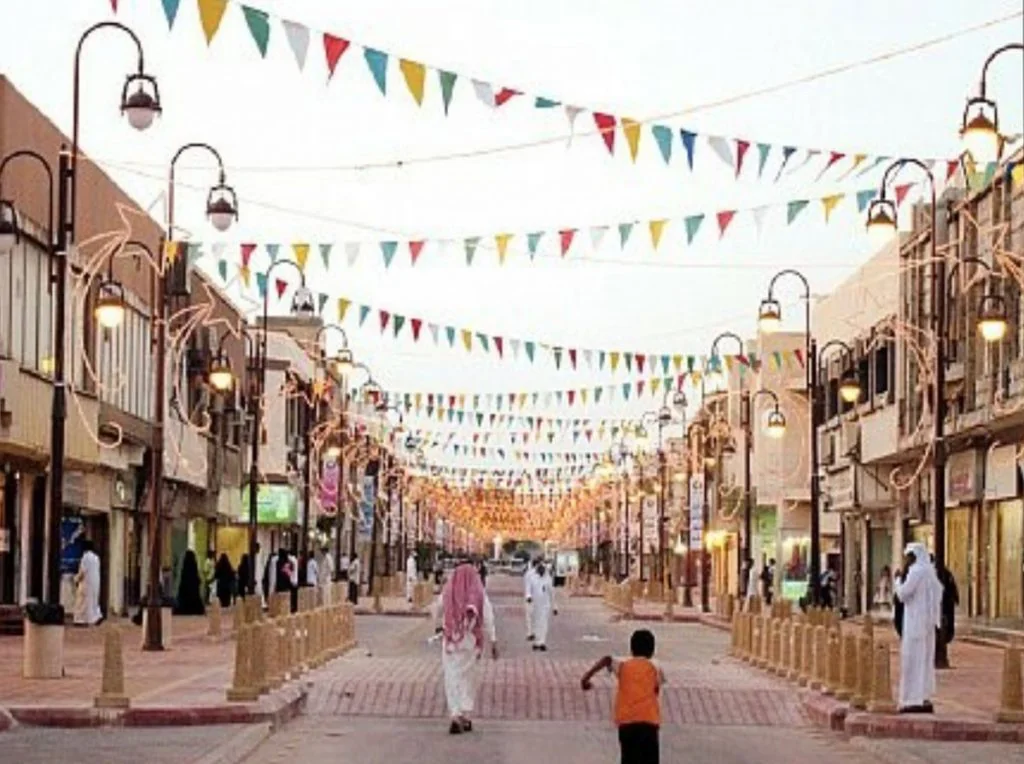
Most notably the poets of Al-Mu'allaqat, Jarir, Al-Farazdaq, Al-Buhturi and Al-Mutanabbi. They were separated by places, times, enmities and satires, and gathered by the streets of Riyadh
Abdullah Al-Samati
To have your name given to a street in the capital, you have gained a great temporal and spatial extension, and it is rare to find a street named after a poet unless this poet has a history and his own unique aesthetic and artistic memory. This is noticed by the contemplator in some names of the famous and secluded streets of the capital Riyadh, where the Riyadh Municipality has given the names of more than 100 poets to some of its streets in a rare gesture, the like of which is rarely found in other Arab and international capitals. A large group of poets' names adorn the streets of Riyadh, as if saying to the world: Here in the Riyadh of Najd, Arabic poetry was born, and here in Najd, the first Arabic poems were authored and poetry was invented, and the Arabic Mu'allaqat were written. Perhaps the Arab poet who praised Najd was truthful in his exquisite expression: "O zephyr of Najd, when did you blow from Najd? Your travel has increased my passion upon passion." So it is the passion of poetry, and the passion of poets, not just the passion of the light, pleasant, clear zephyr wind. The names of the streets of Riyadh include a number of historical poetic names that had a major role in laying the artistic foundations of Arabic poetry, and whose poetry is cited by grammarians, linguists and rhetoricians as being the most eloquent and linguistically pure and the most sound and smooth in its aesthetic and grammatical rhetorical structure. Among these poets are the poets of the Mu'allaqat, where streets were named after them. We find Imru' al-Qais Street (Al-Sulaymaniyah District), Amr ibn Kulthum Street (Al-Faisaliyah District), Antara ibn Shaddad Street (Al-Nahda District), Zuhair ibn Abi Sulma Street (Al-Masif District), Al-Nabigha Al-Dhubyani Street (Al-Zahra District), and Labid ibn Rabi'a Street (Al-Zahra District). However, the most famous street among the poets of the Mu'allaqat is Al-A'sha Street in the old popular Manfuha district south of the capital Riyadh. Al-A'sha mentioned his town (Manfuha) in several of his poems, such as his saying: "Your homelands have yearned for you from Qatla / By the shore, then Al-Watr to Hajir / For the corner of Mihras to Marid / Then the plain of Manfuha dhu al-Hair." Al-A'sha Street cuts through the Manfuha district from east to west, and the Manfuha district is one of the oldest districts in Riyadh and has its historical dimension extending back to before the emergence of Islam, and it is the origin and cradle of the city of Riyadh. Until recently, most of those who built modern Riyadh lived in this district, and most of those who went with the extensions of Riyadh after that north, east and west. The Saudi writer and novelist Badriya Al-Bishr wrote her novel entitled: "The Loves of Al-A'sha Street". The names of the streets of Riyadh are not limited to the poets of the Mu'allaqat, but also include poets in the first Islamic era such as: Ka'b ibn Zuhair Street (Al-Suwaidi District), Hassan ibn Thabit Street (Al-Nasim District), and Abdullah ibn Rawaha Street (Al-Sulaymaniyah District). However, the most famous two large streets in the Al-Malaz district belong to two poets who were enemies and between whom there were famous enmities and satires, namely: Jarir and Al-Farazdaq, where Riyadh brought them closer and reconciled them spatially, not temporally, and gave their names to two nearby streets in one district, which is: Al-Malaz district. Among the poets of the Umayyad era, there are some streets for a number of poets, including: Omar ibn Abi Rabi'a Street (Al-Dar al-Baida District) and Qais ibn al-Mulawwah Street (Al-Sulaymaniyah District). Among the street names also known in Riyadh and bearing the names of poets of the Abbasid era: Bashar ibn Burd Street (Al-Rayan District), Al-Buhturi Street (Al-Malaz District) which is a street branching off the well-known Al-Ahsa Street, Abu Tammam Street (Al-Shifa District), Al-Sharif Al-Radi Street (Al-Khalij District), Abu Al-Alaa Al-Ma'arri Street (Al-Malaz District), and Al-Mutanabbi Street (Al-Malaz District). There have been many calls from writers and intellectuals in the Kingdom to develop Al-Mutanabbi Street and make it a street specialized in books and libraries, as Al-Mutanabbi Street is located in almost the center of the capital, and was once one of the most important commercial streets that attracted shoppers looking for elegance, but the emergence of huge commercial malls in Riyadh affected the popularity of the street and the attendance to it and its shops decreased. A number of intellectuals have previously called for transforming this street into a cultural street that simulates Al-Mutanabbi Street in Baghdad, and the Azbakiyah Wall in Cairo, and hosts bookstores, publishing houses, and sellers to market used books, and this street is being rehabilitated to host intellectuals and writers through salons, cafes, and their gathering places. Especially since Al-Mutanabbi was a lover of the book and in it he says: "The most honorable place in the world is a swimmer's saddle / and the best companion in time is a book." And because Riyadh the capital is the city of poets and the heir to the first Arab art, the (Dictionary of Street Names in Riyadh) which is in more than a thousand pages and issued by the Riyadh Municipality more than 10 years a, the Municipality gave the name (Poets) comprehensively to two streets in the capital: Al-Shu'araa Street (Sultana district) and Wadi Al-Shu'araa Street (Hittin district). Thus, the bright picture of the poets' biography and the presence of their names in one of the largest capitals in the Middle East that carries the scent of poetic art and its beautiful expressive fragrance is completed.