How is Style Formed? .. Presence of the Individual
Dr. Walid Qassab
Impressionist criticism began to retreat since the beginning of the last century before a new critical school based on interest in the literary work itself, and on focusing its attention on this work alone instead of exhausting effort in studying the personality of its author, and the historical, social or psychological circumstances surrounding it.
This new school views the literary work as a linguistic body whose basic component is language, and from this perspective it cares about the literary effect alone and tries to reveal its linguistic secrets and stylistic energies and tries to analyze all of that objectively and deeply.
All of this happened because of the enormous development reached by linguistic studies in the last century, when the historical method was casting its shadow over all human studies, and soon the authority of linguists and what they reached of a far-reaching standard in their studies and research extended to the literary lesson to leave its clear and distinguished fingerprints on it. Modern linguistics – of which the Swiss scientist Ferdinand de Saussure was considered the pioneer – controlled the field of literary and critical studies, so interest in language dominated modernist and post-modernist literary criticism, until it no longer cared about anything from the literary work other than its language.
Linguistics presented a group of critical methods that were concerned with standing at the "interiority" of the literary work, and they are many methods mixed with each other in a mixture that sometimes makes distinguishing between them difficult and not easy. Among these linguistic methods are: Stylistics, Russian Formalism, Czech Formalism, Structuralism, Semiotics and others.
Style and Stylistics:
Some contemporary Arab critics presented stylistics or the science of style as a successor to ancient rhetoric, and that it is the alternative and only heir to it, and it was said that "rhetoric is the predecessor of stylistics" (1),
Some of us were enthusiastic about this new thing, so they rushed into an unbalanced saying, accusing Arabic rhetoric of sterility, and they said that we "still teach our students in schools and universities rhetoric with its three sciences and we do not realize that what we teach them is no longer od for anything, for it is not a critical tool suitable for employment, nor is it a basis for aesthetic knowledge or insight" (2)
The science of style is a Western linguistic science that arose from modern linguistics, and it is an attempt to meet between linguistics and literary criticism, as linguists provide this science to the literary critic so that he can use it to study the linguistic material in the literary work classified in a precise scientific classification that helps – as it is said – to understand the work in his hands in a way closer to objectivity, as it focuses on the nature of literature and its linguistic characteristics and what distinguishes it from ordinary speech.
But the truth is that Arabic rhetoric – with its three sciences – is the science of Arabic style and what is done today under what is called (stylistics) or the science of style is nothing but a new distribution of the various topics of Arabic rhetoric, and this is done most of the time with new terms replaced by well-known old terms.
The science of meanings (Ma'ani) – for example – was concerned with researching the forms of words and structures and organizing them according to a certain pattern for different considerations in which they are subject to the subject, context, requirement of the situation, and so on. As for the science of eloquence (Bayan) – or the science of the image in the expression of today's critics – it is the output of the connotation whose principles were drawn by the science of meanings with a non-direct formulation, i.e., with a metaphorical pictorial formulation. Thus, the speech that was engineered in the science of meanings rises from the level of ordinary or direct speech to the level of literary speech, as in the Bayan one turns away from the familiar expression to the dazzling and astonishing expression. Speech in it es beyond health, safety, and consideration of the situation, context, addressee, and circumstance to add beauty to them, i.e., presenting all of the above in an interesting, attractive, and entertaining style, and thus being more reachable, and more capable of influencing and reaching the recipient, as language in it es beyond the function of reporting and communication only to reporting and enjoyment together, and to communication and influence at one time.
Then comes the science of embellishment (Badi') to offer the style other aesthetics that improve it verbally and meaningfully and provide it with rhythmic means and different ways that make it more linked and paradoxical.
These three sciences work together to form the style and achieve its aesthetics. Neither is considered – as some have ne to that – of lower rank or less importance, but rather they are all important in speech, and each of them performs a specific function or is assigned to achieve a purpose that the other science does not achieve.
Factors shaping style:
But style is multi-faceted and in its formation according to a certain pattern it is subject to a set of factors, the most prominent of which are: the author, the situation, the text, and the recipient. It is consequently not the property of only one of these elements. Traditional Arab rhetoric – before the modern science of style – was aware of these factors.
Hazim al-Qartajini clarified the different directions to which styles and paths of speech are subject and what should be taken into account. He said: "Poetic sayings also differ in their paths and the ways of relying on them, according to the direction or directions in which the poet takes care to effect the ruses that are the pillar in stimulating souls to do something or leave it or those that are assistants to the pillar, and those directions are what refers to the saying itself or what refers to the speaker or what refers to what is said about or what refers to whom it is said to" (3)
Hazim clarified what refers to each direction of these directions, then said in another place: "And since it has become clear that speech is prepared for acceptance from the direction of what refers to it, and what refers to the speaker, and what refers to what is said about, and whom it is said to: it is mandatory to know that speech in every take of those takes by which souls are deceived for its acceptance has forms from the direction of what attaches to it of expressions and what is repeated in it of sounds" (4)
This is what modern stylistics points to, saying: "The element of style cannot be stripped from the text, nor from the author, nor from the recipients" (5)
There are various definitions of style depending on looking at one of these elements, and there are forms of rhetorical stylistic studies that deal with each of these elements and highlight its role in forming the style and directing it in a certain direction.
Willy Sanders says: "Style generally has a totally organized hierarchical structure, distinguished by two clear ways of classification: stylistic levels representing the individual stylistic level resulting from the psychological and social conditions of a person, and stylistic patterns referring to the collective, contextual, functional and textual stylistic aspects, given the individual's collective belonging in a society that has its rules, standards and private habits" (6)
Style and the creative individual
The author is the creator of the style and its owner, and the style is a sign of his genius and distinction. It is – in one of its aspects – an individual phenomenon that represents the speaker and points to him. Abdul Qahir Al-Jurjani pointed to the individual aspect in the process of literary creation and to the amount of personal effort exerted in it, and to the direction from which eloquent speech is added to its owner, and it is not in the souls of the speech that everyone owns, but in the style of its formulation. He says: "When we add poetry or non-poetry of types of speech to its speaker, our adding of it was not from where it is words and language settings, but from where order was intended in it which we explained that it is intending the meanings of grammar in the meanings of the words. Just as it is not doubted that brocade is not specific to its weaver from where silk and jewelry are specific to its designer from where silver and ld but from the side of work and craft, so it should not be doubted that poetry is not specific to its speaker from the side of the souls of the speech and language settings" (7)
There is a type of modern stylistic studies concerned with the speaking individual from the perspective of Buffon's famous phrase "style is the person himself" (8). It is called individual stylistics or the author's stylistics and it sees that language is an individual phenomenon and it is formed in every speaker in a certain way, expressing his personality, nature, class and belonging. "Style generally is the precise expression of what is inside him" (9). Just as every person – while agreeing with the rest of creation in humanity and its different manifestations – differs from them after that in form, nature, taste or what resembles this, so is the case in language. The speaker – while being subject to the general rules of language that all speakers of this language commit to – has his own taste in using and shaping it and choosing what he wants of its words, symbols and terms in a way that reflects his environment, culture, personality and the features of his self.
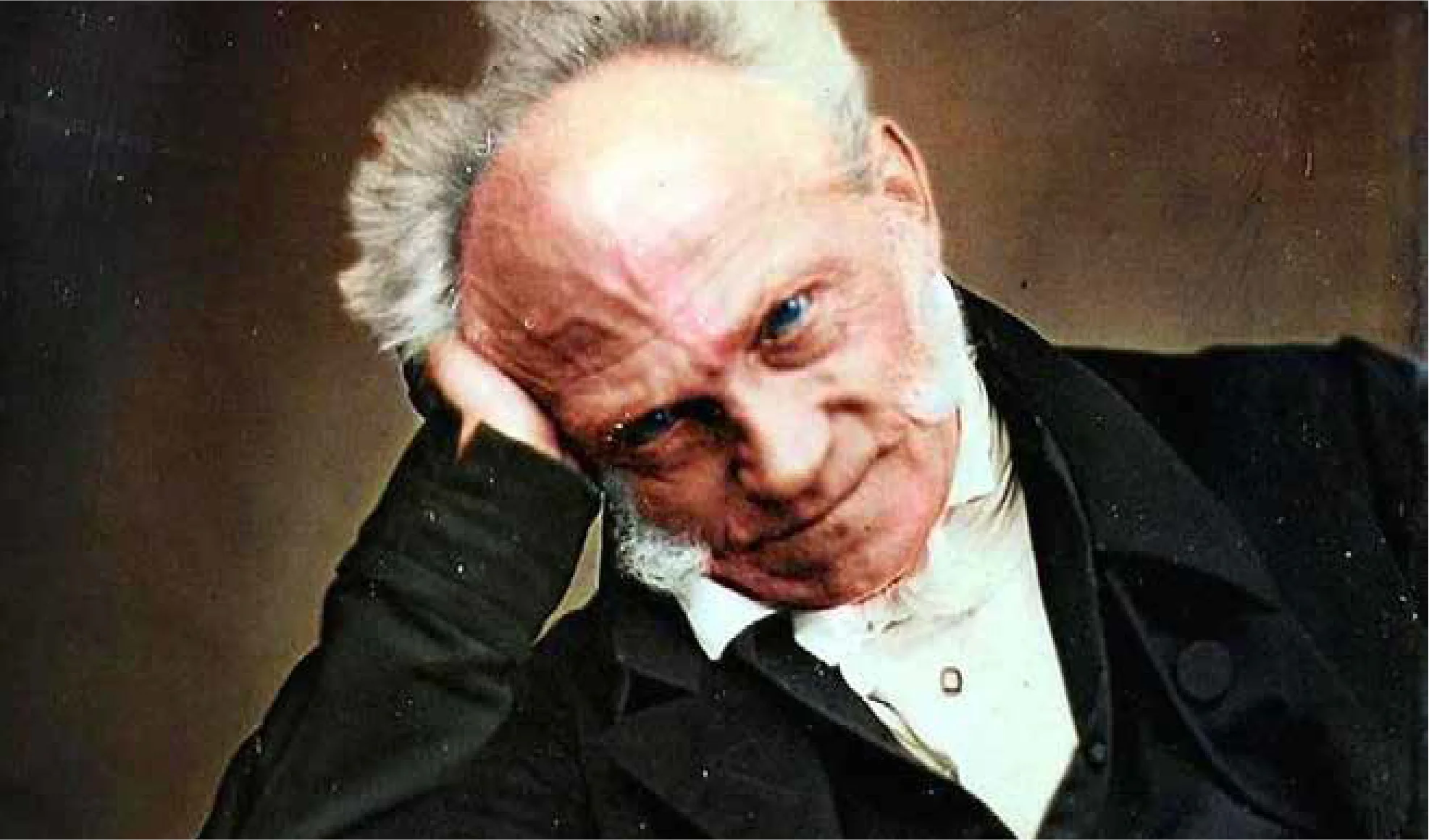
Style here is a choice or selection. It is a "personal linguistic usage" (10) reflecting the speaker's personality and is as Schopenhauer says: "the expression of the features of the soul" (11), and "let me hear how you speak and I will tell you who you are" (1),
The author has his presence in Arabic rhetoric and criticism. Judge Al-Jurjani pointed to a clever and clear indication – which preceded contemporary stylists – to the link of style with the nature of its owner and the features of his personality, until – as he says – "one of them's poetry softens and the other's poetry hardens and one of them's expression is easy and the other's logic is difficult, and that is only according to the difference of natures and the structure of creation, for the safety of words follows the safety of nature and the gentleness of speech as much as the gentleness of creation, and you find that visible in the people of your time and the sons of your era, you see the coarse and dry one of them has dry words, complicated speech and difficult discourse, until you might find his words in his voice, tune, ringing and dialect" (13)
The words of the language and its structures available to the individual user of the language can be monitored in three fields which are:
- Words and forms that the individual knows and uses or uses frequently in what he creates of speech, until it is said that they are his own linguistic dictionary.
- Words and forms that the individual knows and realizes their connotations but they are not of his linguistic dictionary, so he does not use them and they do not form a presence or a clear presence at least in what he creates of speech .
- Words and forms that the individual does not know and perhaps does not know their meanings, so they consequently have no presence in his dictionary at all .
There is no doubt that monitoring these three types of words and structures is one of the indicators of connotation on the personality of its owner, his culture, environment and creed.
Thus the style in this color of study appears as an expression of the personality of its owner, and it is formed in light of the qualities of this personality and its different features .
But the creative individual is not alone – as passed – the only factor influencing the formation of the speaker's style, and I might deal in a next article with some of the other elements that control the formation of style and its formulation according to a certain pattern .
Footnotes
- Towards a Linguistic Stylistic Theory: Willy Sanders, translated by Khalid Mahmoud Jumaa p. 95
- Cultural Criticism or Literary Criticism: Abdullah Al-Ghadami and Abdul Nabi Isstif p. 12
- The Way of the Eloquent p. 346
- The previous p. 347
- Stylistics: Communication and Impact: Musa Rabayaa, Alamats Magazine, Dhu al-Qi'dah issue, March 1418 AH 1998 AD
- Towards a Linguistic Stylistic Theory p. 190
- Signs of Inimitability p. 339
- Towards a Linguistic Stylistic Theory p. 29
- The same previous
- The previous p. 32
- The previous p. 30
- The previous p. 163
- Mediation .