Those Lurking for Books and Manuscripts....
Hosni Abdel Hafez
There is a long line of natural enemies, lurking for books and manuscripts, and waiting for the right opportunity to attack and destroy them. Although most of these enemies practice their destructive activities in secret and bet on the time factor, there are many means that can be relied upon to confront them and protect books and manuscripts from their evils.
What about the enemies of books and manuscripts?
And what are the ways to confront them and eliminate them ....?
It is worth noting, first and foremost, that all material aspects of life consist in varying proportions of three main elements: carbon C, oxygen O, and hydrogen H. By the interaction of these three elements, carbohydrates are formed, which in turn turn into protein and fat materials under complex chemical reactions.
Paper, being one of the materials of life and the main component of books and manuscripts, is represented by carbohydrates in cellulose. Also, leathers, scrolls, and parchment, which are among the materials used in making manuscripts and books, contain a percentage of proteins and fats. All of them are affected by nature factors, which work to oxidize them, hence the appearance of paper in yellow color, and the fading of colors and inks, whether on the outer cover or inside. Neglecting them without preservation and maintenance in a od way makes them a target for rodents, and a line of insects, parasites, bacteria that find their pleasure in tampering with the environment of the manuscript and book, devouring parts of it, and leaving their effects and the consequences of their battle on it before they leave. If they do not find a deterrent, the manuscript or book becomes a thing of the past....!
Lurking Enemies
Natural enemies of books and manuscripts can be classified as follows:
First: Rodents, examples of which are mice and rats, which are found in the cracks of ceilings, floors and walls of neglected cabinets and libraries. They have the ability to quickly hide when feeling danger, and they are characterized by their wide range in withstanding variations in heat and humidity and other environmental influences that we will mention later, which increases their danger and the ability to spread and adapt in various conditions. Usually, rodents attack manuscripts and books and devour paper and leather, starting from the heels to the edges, and then entering into the middle of the pages.
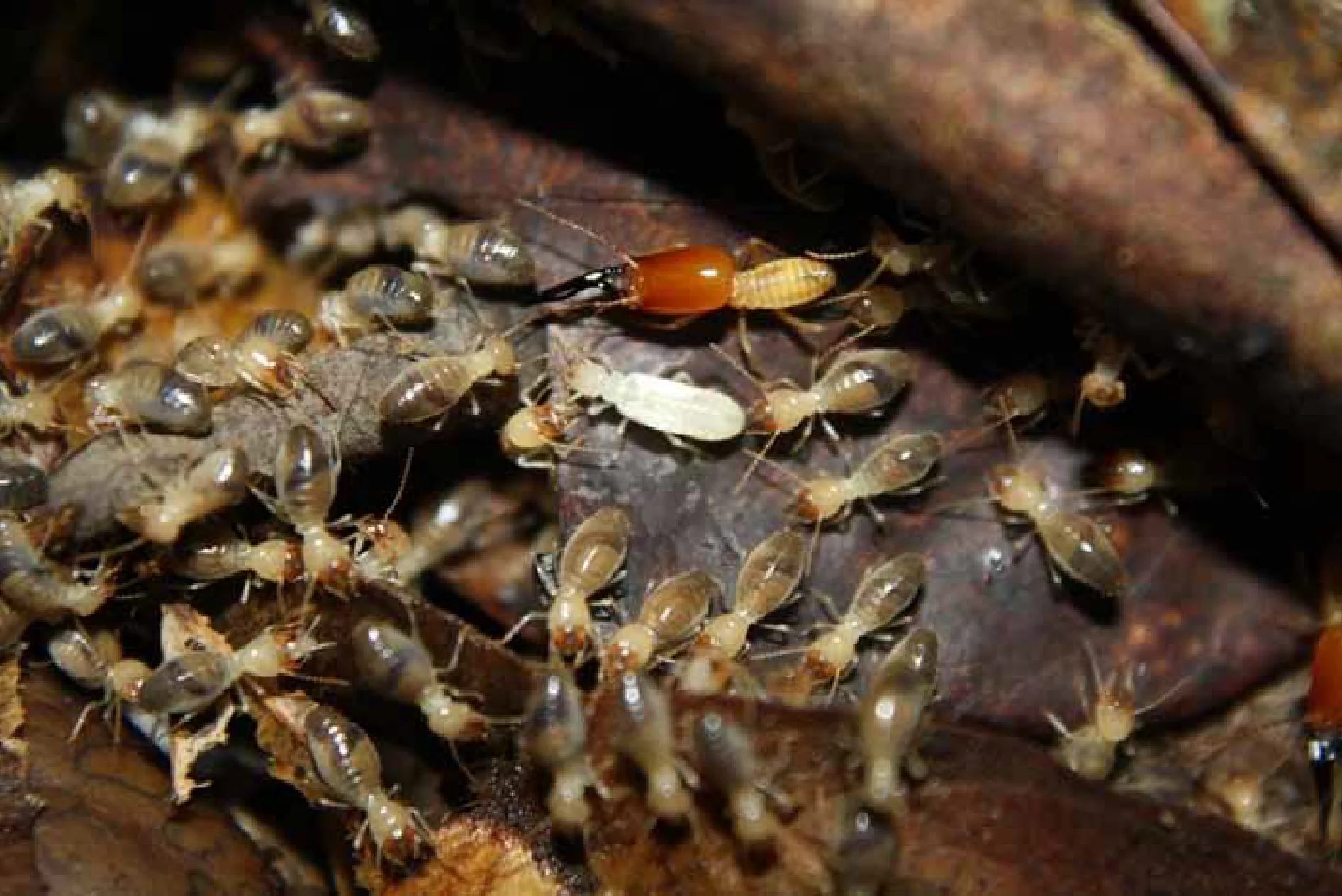
Second: Insects, of which more than seventy species have been counted that attack books and manuscripts. Examples include: Termites Isoptera, which are lethal not only to books and manuscripts but also to wooden shelves, leathers and many other organic materials.
Silver Fish, pearl grey in color, many-legged, characterized by speed of movement and stealth. It lives mainly on general organic materials, especially paper, wood and acids, and causes holes and gnaws in books, manuscripts and leathers. It is a dark-dwelling insect that flees with the first light.
Book lice, sometimes called the "gnawing insect" (Corridentia Book-Lice).
Book Worm - Book Moth, which is white and relatively thick-bodied, about one centimeter long, fast-moving, and greedy in eating paper books and manuscripts, and often starts devouring the heels then drills towards the inside.
Celoptra worm, which is a class of small Beetles, its length ranges between 2:5 mm. Its destruction of books and manuscripts is not only limited to devouring parts of them, but also by deliberately laying its eggs before its death inside the holes it creates, especially in the heel areas.
Black Beetles, which are one of the fiercest natural enemies of books and manuscripts, devouring reinforced paper covers, leathers and parchment (Parchment).
Cockroaches, which are often attracted by the starch adhesive material of the cover, then move towards the inside.
Third: Microorganisms, which are those that are difficult to see with the naked eye and can be divided into three cateries:
Fungi, which are in the form of very thin threads known as Hyphae, with a diameter ranging between 1:5 microns. They grow in the form of a spider web, forming what is known as mycelium. Some call them "lower plants" to distinguish them from higher plants that contain green chlorophyll. One of the most dangerous types that attack books and manuscripts are Saprophytic fungi, which decompose paper in the presence of a humidity percentage of more than 80% and a temperature ranging between 24:30 degrees Celsius. Examples include Penicillium and Aspergillus.
Bacteria, which are extremely small, single-celled living organisms with a diameter ranging between 0.5:1 micron. They are characterized by speed of division and reproduction, and their shapes vary between rod-shaped, spherical, cylindrical and spiral. Their danger to books and manuscripts lies in the fact that they decompose cellulose, and they need a high humidity percentage exceeding 90% and a temperature higher than 30 degrees Celsius.
Actinomycetes, a family of microorganisms that were previously classified among bacteria, but have recently been classified to form a separate family that combines many characteristics of fungi and bacteria together. They grow in the ceilings of warehouses and cracks of neglected walls, and attack books and manuscripts that have been exposed to water and neglected, where they grow and multiply on cellulose and protein materials and secrete enzymes that cause severe mold, which is difficult to treat in the late stages, and appears in the form of colored spots.
Stimulating Factors
Natural enemies of books and manuscripts usually become active in the presence of one or more stimulating environmental factors, the most prominent of which are:
Humidity, which is considered a highway taken by the line of enemies of books and manuscripts. Owen Agrawal says: "The main reason for the appearance of these attacking organisms, led by fungal organisms, is high humidity, which reaches 75% or more, while the permitted and safe limit should not exceed 68%".
• Heat: It is closely linked to the previous factor, and its danger in book and manuscript cabinets begins if its percentage increases beyond the permitted limits, as it works to accelerate all chemical reactions in organic materials and then dismantle them into smaller units. Low temperature also has its consequences and effects ... knowing that the ideal temperature for preserving books and manuscripts ranges between 18:24 degrees Celsius.
• Direct Light, from natural and industrial sources, as it works to oxidize organic materials by reacting with paper impurities such as lignin. This oxidation appears in the form of yellow and brown spots. Short light waves, such as violet and ultraviolet rays, also affect colored images and drawings and the news used in writing, and also work to break cellulose molecules.
• Dust and dirt, which are small particles with a diameter not exceeding 76 microns, carried by air and stick to book and manuscript leathers, then spread among internal pages, carrying with them different types of fungi, bacteria and insect eggs that quickly grow once humidity and heat reach the appropriate level for their growth.
• Pollutants emitted from industrial areas, which are among the most dangerous stimulants for the damage of books and manuscripts, and their types are many, including sulfur dioxide gas, which the book or manuscript pages absorb from the surrounding air. When high humidity is present, it unites with water vapor, forming sulfurous acid, which in turn turns into sulfuric acid, known for its destruction of paper and leather together....
Including hydrogen sulfide, which affects drawings and decorative shapes and obliterates their features, forming black spots..... including nitrogen oxides, which are one of the main sources of paper acidity.. also ozone gas, which targets paper cellulose where it works to break it... including smoke, which has the ability to spread in book and manuscript cabinets and its suspended matter causes black spots and unwanted reactions on paper pages.
Among the most prominent disease symptoms that books and manuscripts suffer from as a result of the spread of these stimulating factors that attract a large group of natural enemies:
((Drying of papers and brittleness of their edges)).
((Spread of holes and cuts on the margins and texts of the manuscript)).
((Spread of chemical and biological color spots on written pages and cover leathers)).
((Sticking of pages and petrification of manuscripts)).
((Corrosion of papers under writing letters)).
((Fading of ink color and writing materials)).
((Warping and shrinking of leathers and written scrolls)).
((Fragmentation and fragility of heels and side covers)).
((Hardening of external covers and tearing of their joints)).
Ways of Confrontation
These risks surrounding books and manuscripts can be confronted by following a comprehensive preservation and maintenance strategy that includes using modern techniques in control operations and fumigation with pesticides according to the permitted safety and security conditions and standards.
• Adjusting the humidity level as well as the temperature in book and manuscript cabinets... advanced air conditioning units are used for this. • Using special lamps equipped with filters that have the ability to block harmful radiations, as well as using glass that serves the same purpose on cabinet windows.
• To preserve precious manuscripts, iron cabinets that are very tight and equipped from the inside with movable shelves can be used, on which manuscripts are placed according to the size of each, provided that these cabinets are opened regularly for ventilation and to ensure their safety.
• Paying attention to the cleanliness of the cabinet in a comprehensive and regular way.
• In case of detecting any damage, one must hasten to take the ideal method in treating this damage, and in light of modern science data, the issue of treatment is no longer a difficult matter.
• Necessity of using environmental monitoring devices capable of accurately monitoring pollution rates inside the book and manuscript cabinet and even in its outer surroundings.
• Treating the cracks of ceilings, floor and walls so that there is no shelter for rodents and insects, visible and invisible, that lurk for books and manuscripts.
Main References
Na'issa, Hassan Salim: Library Studies, Ministry of Culture Publications, Damascus 1995 AD.
Youssef Mustafa Al-Sayed:
Science and Conservation of Manuscripts, Okaz for Publishing and Distribution, Riyadh 1404 AH / 1983 AD.
Manuscript Maintenance, Scientifically and Practically, Alam Al-Kutub, Cairo 1422 AH / 2002 AD.
Al-Mashukhi, Dr. Abid bin Sulayman: Effect of Natural Factors on the Manuscript Arab Islamic Heritage, Arab Journal for Security Studies and Training, Volume 22, Issue 43, Muharram 1428 AH (January February 2007 AD), a quarterly issued by Naif Arab University for Security Sciences.
Hamouda, Dr. Mahmoud Abbas: Security of Documents Preservation, Photography, Numbering, Maintenance, Maktabat Gharib, Cairo (undated).
(6) Al-Taba', Prof. Abdullah Anis: World of Libraries Management and Organization, Dar Al-Kitab Al-Arabi, Beirut (undated).
Mahmoud, Prof. Hossam El-Din Abdel Hamid: Technology for Maintenance and Restoration of Cultural Collections, General Book Authority, Cairo 1979 AD.