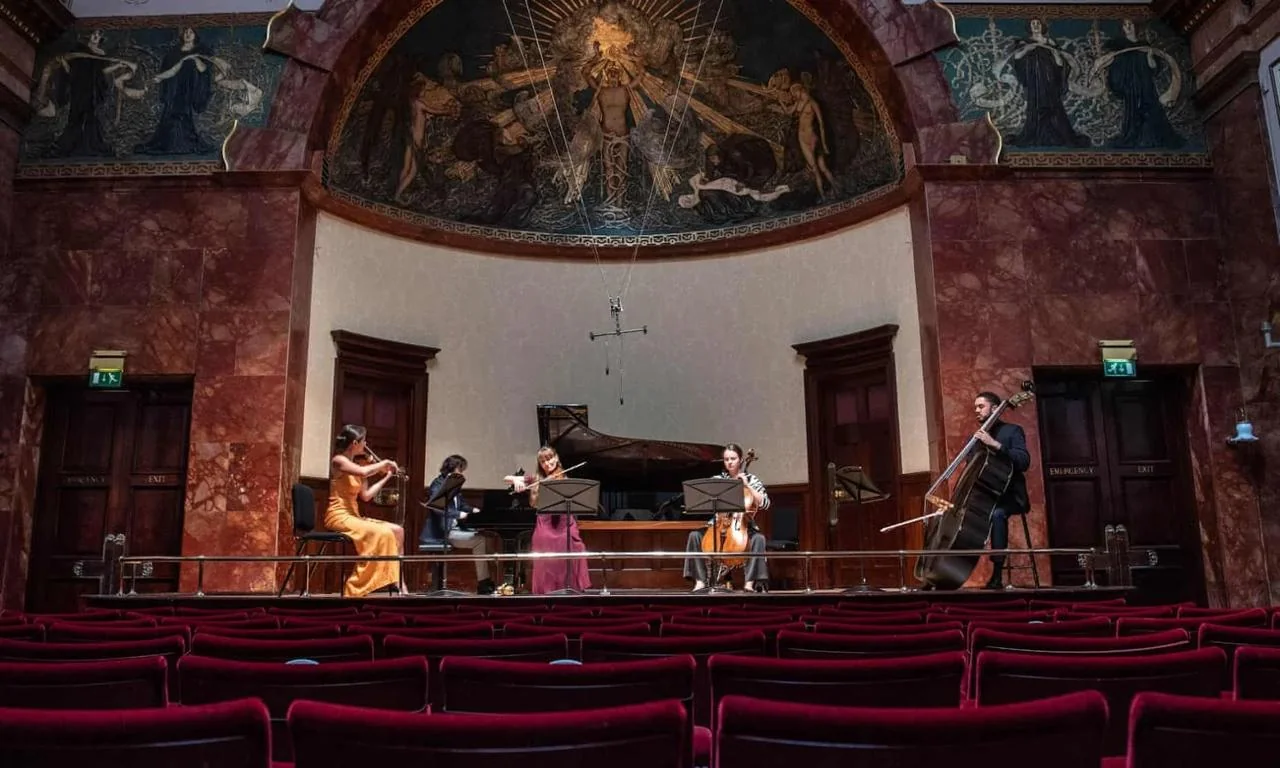
A year after the silence of its concert halls, what is the future of classical music in Britain?
As British cultural life looks forward to a slow and cautious return to its suspended activities, what can we expect from Britain's opera houses and orchestras, many of which failed to seize digital opportunities in the past year.
The Guardian writer Andrew Clements says that after a year of brave efforts across the country to maintain at least some remnants of live performance culture, it seems that a return may be in sight, although it is likely that the "normal" state of packed concert halls and long queues is still far off.
In an article translated by Ahwal Al-Ma'rifa magazine, the past few weeks have seen a massive number of announcements, mostly about a new series of concerts, both live and pre-recorded, in addition to promises
of performances with socially distanced live audiences in the near future.
It is clear that the collection of press releases this month has been somewhat coordinated, but there is generally no agreed-upon roadmap for how to restore musical life across Britain.
Some ambitious plans already announced for summer and beyond by festivals and opera companies seemed like a victory for the hope of a near return of concerts.
Summer opera festivals will certainly be in the best position to move forward: Longborough and Nevill Holt have already announced they will hold performances in temporary halls, while Opera Holland Park and perhaps Garsington too will be able to adapt their theaters to make them more ventilated and safer for audiences.
While the Aldeburgh Festival will not continue in its usual form, Britten Pears Arts took every opportunity last year to hold live concerts and has already announced that it will launch a program of events as soon as it is permitted to do so.
Those seasonal festivals may emerge somewhat unscathed from the devastation of the past 12 months. But for year-round organizations – concert halls and opera houses with much higher overheads – the future is far less guaranteed.
It has been more than a year since Welsh National Opera gave any staged performances and none of the UK's permanent opera companies have announced any firm plans, though there is plenty of odwill.
English National Opera intends to reveal its 2021-22 season in May and has already announced a new Ring cycle, starting with Die Walküre this autumn, although dates or cast are not confirmed.
The Royal Opera has so far only been able to reveal a new production specially staged for Mozart's La Clemenza di Tito, directed by Richard Jones (who will also stage the ENO cycle), and a "summer festival" of some kind.
Even this is more than we have heard from what is supposed to be the capital's main concert venue, the Southbank Centre. Its resident orchestras, the London Philharmonic and the Philharmonia, have been streaming their own concert series whenever possible since last autumn.