The authenticity of the dialogue experience in cultural salons in society
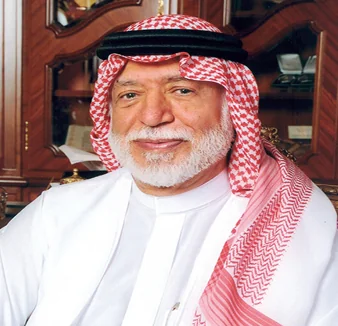
By Sheikh Abdul Maqsoud bin Muhammad Saeed Khoja
The definition of "dialogue" in what we are in I think that it means (review or discussion or understanding between two individuals or two groups or more to reach satisfactory results) and falls under the name of dialogue: boasting and debate and circulation, and understanding, and discussion, and quarreling, and argument, and questioning, and whispering, and advice).
And it is known intuitively that dialogue is known in all societies, and its beginnings arose with the beginnings of languages, and it was known in the societies of the Peninsula starting from the "tent" where the people meet with the leader of the tribe consulting and talking in their affairs in peace or war, and their arena is not empty of poetry purposes like pride and satire and elegy and others, which were managed in it known forms of prose and poetry dialogue, where the narrators were contributing in transferring what es around in these cultural seasons to the parts of the Arab Peninsula.
As the period before Islam witnessed ancient houses of dialogue like the house of Abdullah bin Jud'an in which the Honest Messenger was known by Abu Bakr Al-Siddiq may Allah be pleased with him, and the House of Al-Nadwa, and the House of Al-Arqam bin Abi Al-Arqam, and with the appearance of Islam the mosque took its vanguard role in attracting the dialogue.
And considering that for every matter there is a beginning then let the talk be about the beginning of the Saudi era in the Hijaz i.e. the year 1343 AH corresponding to 1923 AD, and considering that the mosque represents the pivot of life for every individual in the society, especially in the Two Holy Mosques in Makkah and Madinah, where the people without exception were performing the five prayers in the Haram, and by the nature of the situation a dialogue es around between the worshipers before and after the prayer, especially the period that takes the larger share of the dialogue and it is between the two evening prayers as it extends for more than an hour, so the worshipers seize the quietness of the night and the spirituality of the place to form groups of specialty in handling what concerns them of cultural and intellectual topics.
And on another side we find that what is known as "Al-Bishk" were gathering some with close inclinations in the house of one of them and various talks and entertainment of the soul and innocent fun were managed in it, and some of these "Bishk" were of literary inclinations its regulars handle the cultural matter, and among its most famous what was for the professors Muhammad Saeed Abdul Maqsoud Khoja, and Muhammad Saeed Al-Amoudi, and Muhammad Omar Tawfiq - may Allah have mercy on them - and of the known Bishk in Madinah what was for the two masters Obaid and Amin Madani, and the two masters Ali and Othman Hafez and Hassan Sairafi "may Allah have mercy on them".
As well what was known in that time was called "The Sessions" in Makkah, and "The Benches" in Madinah, and they were held in front of the houses between Asr and Maghrib, and there were some for some intellectuals like the great poet Ahmed Ibrahim Al-Ghazawi and Abdul Rahman Babasil, and the great poet Hussein Arab - may Allah have mercy on them - in Makkah, and from its most famous in Madinah "The Benches" of Ahmed Al-Rifa'i and Diab Nasr and Abbas Qumqumji (may Allah have mercy on them) and coincided with them what is called "Al-Marakiz" in Makkah, and "The Councils" in Madinah, which are cafes on the edges of the cities people gather in it to have tea between Asr and Maghrib, and various social classes frequented it including the big writers, where the intellectuals split into groups for each of them his "Markaz" and there were "Marakiz" for big poets and writers like Hamza Shehata and Muhammad Saeed Abdul Maqsoud Khoja, and Al-Qandil, and others - may Allah have mercy on them - and such "Bishk" and "Councils" produced the book "Wahy Al-Sahra" in the year 1355 AH and the Umm Al-Qura calendar and "Bilad Al-Saudia" newspaper in 1365 AH and others.
And Madinah was singular in what Allah gifted it with of orchards surrounding it, which allowed its intellectuals to hold a number of literary councils, in it like the council of the poet Abdul Jalil Barada Al-Madani "may Allah have mercy on him" in addition to the council of Sheikh Omar Kurdi Al-Kurani, who is one of the judges of Madinah and its prominent poets, and the councils were held between Maghrib and Isha, as for the council of Professor Abdul Quddus Al-Ansari "may Allah have mercy on him" it moved to Jeddah in 1360 AH and those councils produced cultural projects like the "Al-Manhal" magazine which started in 1355 AH and followed by the "Madinah Al-Munawwara" newspaper in 1356 AH as there was a council held in the house of Professor Ali Al Mubarak in Al-Ahsa.
As well that cultural movement accompanied literary councils held in the offices of the editors-in-chief of the newspapers starting from the year 1355 AH and specifically what was held in the editor-in-chief of "Umm Al-Qura" and in the vernment press when Professor Muhammad Saeed Abdul Maqsoud Khoja - may Allah have mercy on him - took its editor-in-chief, and then "Sawt Al-Hijaz" and "Bilad Al-Saudia" the first daily newspaper in the history of the Kingdom, in the office of its editor-in-chief Professor Abdullah Arife - may Allah have mercy on him - and this journey continued with the issuance of newspapers: Al-Nadwa, Hira, Quraish, Okaz, and Professors Muhammad Hussein Zaidan, Yas Taha, Ahmed Al-Qandil, Hamza and his brother Muhammad Nour Shehata, Abdul Salam, Al-Sasi, Ahmed Abdul Ghaffour Attar and others "may Allah have mercy on them" participated in these meetings as well "Al-Yamamah" magazine was issued in Riyadh in 1372 AH and the "Al-Riyadh" newspaper sprung from it in 1385 AH and the scene was not missing big writers like the two professors: Abdullah bin Khamis and Abdullah bin Idris, and during the preparation periods for issuing the newspaper a dialogue es around between the intellectuals about various matters of the hour, and literary, cultural and intellectual issues that were on the scene then, and the remarkable thing is that the visitors of the Kingdom of scholars and writers and poets and leaders of some Arab and Islamic countries, were frequenting these councils, and meeting its writers and participating in what es around of various literary and cultural and intellectual dialogues.
And the momentum of what I mentioned was centered in the capital Makkah where all affairs as the capital of the Kingdom of Saudi Arabia were managed then, and when part of this administration moved to Jeddah in the middle of the sixties AH, many of the literary and cultural features in Makkah specifically started to change considering that most of the state employees were of big writers and poets like the professors Mr. Hassan Kutbi, Muhammad Omar Tawfiq, Muhammad Hussein Zaidan, Ahmed Qandil, Hamza Shehata, Aziz Dia and others.
And the councils started to be held in Jeddah and from its most famous and oldest the council of Al-Afandi Muhammad Nassif, in Dar Nassif, which King Abdulaziz stayed in it when coming to Jeddah for more than once, and it was a council frequented by the men of literature and culture and science and others for the knowledge and culture of its owner and the luxury and space of the house, in addition to the council of Sheikh Al-Basti Al-Sabahi which Prince Abdullah Al-Faisal and some writers like the big poet Mr. Muhammad Hassan Faqi "may Allah have mercy on him" frequented it, and the council of Professor Abdul Aziz Al-Rifa'i which was held in the evening in his home and others.
And these councils crystallized into forums - and I hope to point always to them with the word forums instead of salons - and by the move of the capital to Riyadh in 1375 AH corresponding to 1955 AD Professor Al-Rifa'i moved to it and the first literary forum in the Kingdom crystallized and was held weekly and was named "Al-Khamisiya" because it is held every Thursday evening, and every regular frequented it from who witnessed that era and who visited the Kingdom from the Arab and Islamic world and from here these beautiful oases started to appear for these forums in our scattered cities, and of the most prominent forums of Riyadh the morning session of Sheikh Hamad Al-Jassir, and the Monday session of Sheikh Othman Al-Saleh - may Allah have mercy on them - and the literary and cultural and poetic forums spread in a big way in various cities of the Kingdom, and there is no doubt that the economic and urban and civilizational renaissance had a big role in this praised spread, and all of them are od oases and windows of giving however its frames and activities varied, and its giving types differed, this experience and communication between the intellectuals did not create quarreling or hatred between the various literary currents, and there is no doubt that these forums played a big role in framing the dialogue between the intellectuals.
And there was also the forum "Al-Ithnainiya" which I was honored to hold in my home in Jeddah since 1403 AH and it is the only literary forum in the Kingdom and the world through history whose activities were documented in voice and image, and the monitoring on the internet, then it was published in a series of volumes there issued from it until now twenty two parts in twenty four volumes, and in compact discs (CD) in addition to other books whose total is sixty nine titles in one hundred and twenty five volumes.
And if we want to talk about the experience of this cultural dialogue we can say that it resulted in literary debates famous on the pages of the newspapers, since the era of the newspaper "Umm Al-Qura" between Muhammad Saeed Abdul Maqsoud Khoja and his close friend the big Professor Ahmed Al-Siba'i "may Allah have mercy on them" in some episodes of "Al-Ghurbal" and "Al-Mansaf" and the topic of "Jeem Jeddah" between the two big professors Abdul Quddus Al-Ansari and Hamad Al-Jassir - may Allah have mercy on them - and a series of articles "Al-Bahaa Zuhair - a Hijazi Poet" and the newspapers witnessed skirmishes between the two big professors Ahmed Abdul Ghaffour Attar and Muhammad Hussein Zaidan - may Allah have mercy on them - and the literary battles that Sheikh Abu Turab Al-Zahiri used to invent - may Allah have mercy on him - except that it is noticeable that all these battles were cultural dialogues leaning on the ethics of the dialogue and on the scientific sources, moving away in its total from scratching the foundations of the civilizational dialogue, and the od word and the eloquence of the argument and the proof and the evidence was framing it, and all of them were od cultural motors.
The issue of authenticity in this context is a relative issue and I believe that the prevailing dialogue language that I pointed to represents the thresholds of authenticity, and that the agreement and unified visions confirm that the success of the dialogue leans towards the agreement in the ideas and principles and visions, and not necessarily the match of the viewpoints, as it should not be consensual or split on itself or different entirely in all proposals, because this leads certainly to the abject failure, and at the same time we welcome the civilizational difference, and it is the difference of viewpoints with its respect, and it forms the valuable part and the basic entry to the field of authenticity.
And if we want to benefit from this experience, and mix from it the spirit of authenticity for this dialogue then we by this elevate it to reach the al of the degrees of civilization, and there is no way except if we follow the paths of the required dialogue and the traditions and the ethics framed by the Book and the Sunnah which there is no disagreement on them until the dialogue is straight on its light, which from its most important:
First: The difference is a reality no escape from it, and an innate and natural matter, there was mentioned in it His Almighty saying (And if your Lord willed, He would have made the people one nation and they still differing)
Second: Dialogue with the other does not mean the attempt of one of them proving that he is on the right, but it is a tool for a hoped al which is the coexistence and exchange of respect.
Third: Taking your role in showing your viewpoint then leaving the chance for the other to show his opinion.
Fourth: The end of the dialogue might be with persuasion and the dominance of the right, as for taking the dialogue as a type of toppling the other then this is a rejected matter.
Fifth: od listening, because the ability of the human to listen and control his nerves and his hearing grant him the saying with what agrees with the mind.
Sixth: od thinking of it by putting it before its bad, and tolerance between the participants in the dialogue.
Seventh: The advice must be performed secretly, and not be publicly so as not to spread the alienation between the advisor and the advised, and for keeping the privacy.
The educational incubators and the centers of the neighborhoods and the media with all its sides, and the municipal councils, and the commercial chambers, and any gatherings were, are responsible for the development and maturity of the mechanisms of the dialogue culture, for all are responsible for controlling the language of the dialogue, and staying away from all the colors of tension and emotion and exchange of charges until we reach a sophisticated and honest society.
And it is certain that for every owner of a forum there is a share of the responsibility assigned to him, and all of them are capable by Allah's will of maintaining the constants and the importance of returning the dialogue to its objective form if a coming out of the agreed foundations of the dialogue happened.
And as it is understood then listening to the various viewpoints does not mean necessarily taking by them, but it is of the od that we stand on the thresholds of each other and knowing each other, with keeping the privacy of these forums without the interference from any side it was, and that it be given a space enough and suitable through the media tools with all its faces considering it a part completing the cultural fabric building for its reliance on a broad base, and for being an important segment of the segments of the society.