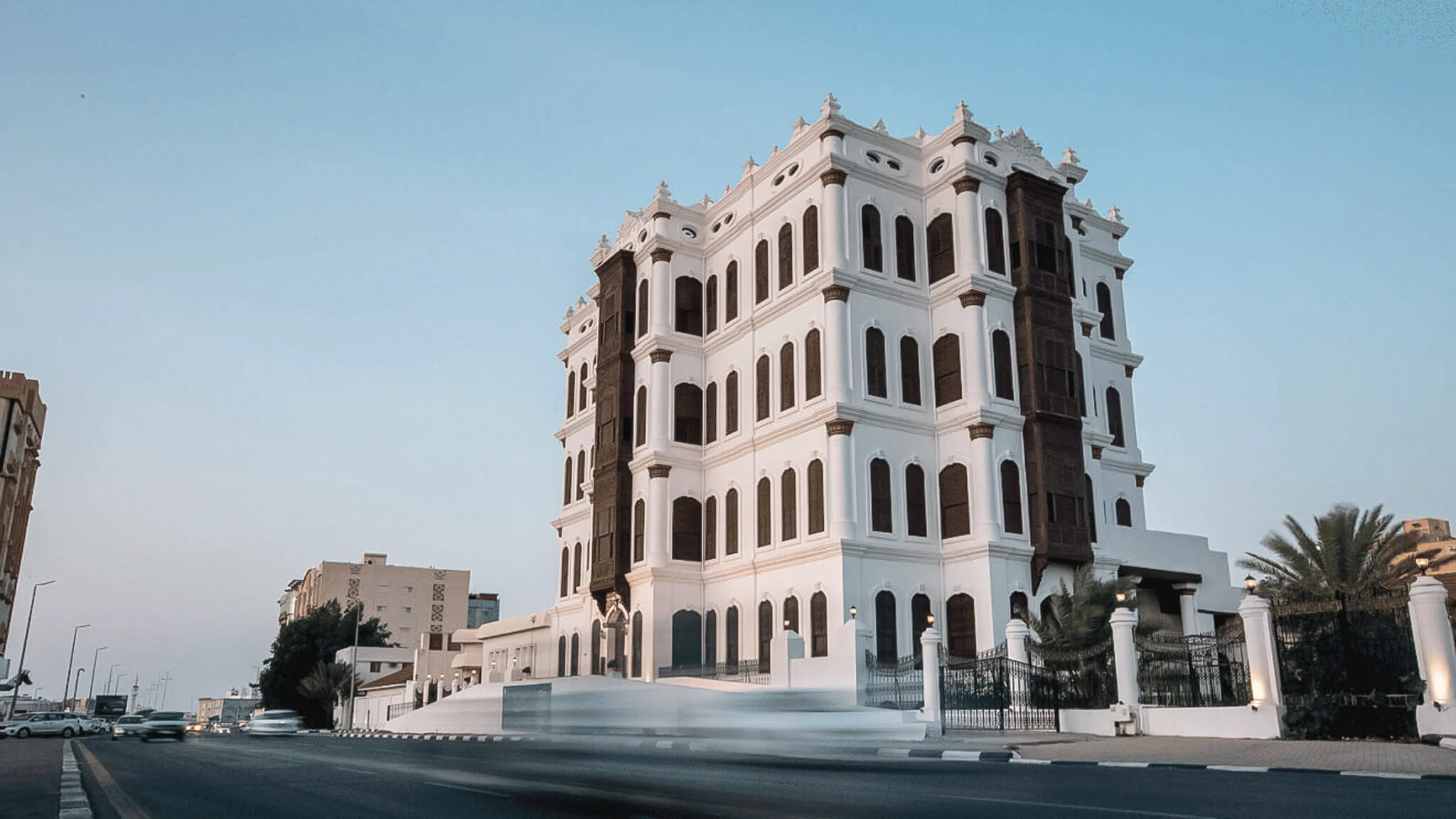
Shubra Palace Museum .. An Architectural Masterpiece and Historical Legacy
Knowledge Affairs: Special
Shubra Palace Museum is originally one of the historical palaces located in Shubra district in the city of Taif. Built by Ali Abdullah bin Aoun Pasha in 1323 AH (1904 AD), it was completed within two years in 1325 AH (1906 AD). The importance of the palace increased as King Abdulaziz Al Saud, may d rest his soul, took it as his palace and used to manage the affairs of vernment from this palace during his summer stay in Taif. Then the palace became an office for King Faisal bin Abdulaziz during his tenure as Crown Prince. Then an office for Prince Sultan bin Abdulaziz, may d have mercy on him. The palace also witnessed the birth of two sons of the Founding King: His Royal Highness Prince Nawaf bin Abdulaziz, may d have mercy on him, and His Royal Highness Prince Talal bin Abdulaziz Al Saud. Since 1407 AH, King Fahd bin Abdulaziz, may d have mercy on him, converted it to be a museum of Arab and Islamic heritage under the supervision of the Saudi Ministry of Education, and it was opened to receive visitors.
Description of the Historical Museum
The museum, which is considered one of the archaeological landmarks in Taif, is distinguished by an architectural style that mixes Roman and Islamic characters with traditional architecture methods of the Hijaz region. It is a beautiful architectural masterpiece from the inside and outside, surrounded by trees, and its rooms and ceilings are decorated with wooden carvings.
The museum consists of four floors and includes about 150 rooms. It has several entrances, and its main gate is located on the western side and is made of decorated wood. The museum has four similar facades interspersed with columns made of lime (Noura) and stone (Noura: a construction material used in making types of tiles and paint). In the main hall "Salamlek" in the palace, there is a large, marvelous wooden double staircase with an alabaster floor, extending to the second floor which has two wings containing large rooms and other small ones. The arches of its inner walls, columns and corners have colored decoration in the form of plant leaves with gilded edges. The palace windows and doors are made of carved wood with artistic touches. The museum ceilings are wooden embroidered with decorative shapes and carvings, and the palace roof fence ends with decoration dominated by the Roman character. The museum is located on one of the large streets in Taif called Shubra Street.
Museum Halls and Annexes
A visitor to the museum notices it contains 8 annexes to the main building. One can up to the first floor via a wide staircase that turns into two paths in its second part, while access to the other floors is through two side staircases starting from two entrances overlooking the courtyard, with the main entrance overlooking the street in the middle. In the palace, on the first and second floors, there is a large Turkish bath. In the ground floor there is another similar in design but smaller. The first consists of one floor with a total area of 290 square meters, including a rectangular hall with an area of 85 square meters, and another with multiple sides with an area of 50 square meters that has an entrance on the main street.
The second annex is used as a museum on an area of (465) square meters, consisting of three halls and four attached rooms. It contains many archaeological evidences, which enable the visitor to learn about the history and civilization of the Kingdom in general and Taif vernorate from ancient times to the present, through a museum display combining information, photos and illustrative drawings with archaeological and historical evidences.
The first hall of the museum deals with (pre-Islamic eras) starting from the Stone Ages to the pre-Islamic era, displaying a collection of stone and pottery pieces and panels of stone inscriptions and writings, in addition to texts and photos telling about each of the pre-Islamic periods. The second hall displays (Islamic heritage) which narrates the stage of the Prophet Muhammad's migration - peace be upon him - to Medina, and the era of the Rightly Guided Caliphs - may d be pleased with them -, and successive Islamic periods, besides displaying a collection of different archaeological pieces and panels of texts, photos and manuscripts belonging to this period. While the third hall deals with (the story of the Kingdom's unification) from the beginning of the first Saudi state to our present time including panels, photos and documentary films talking about the periods of the Saudi state and the heritage pieces of the Kingdom.
The Folk Khan
The museum also includes the Folk Khan for museum displays, and the fine arts hall. The third annex of the palace consists of a hall, four rooms and narrow corridors, separated from the second annex by a narrow corridor. The architectural style suitable for the palace was taken into account in its design, where the ceiling is made of tiles in the form of (trusses) and the walls contain bright columns with decorated capitals resembling the palace capitals. The fourth annex consists of one floor with an area of (185) square meters used as a mosque, while the fifth annex with an area of (200) square meters contains one floor, with three-meter wide paths, and ten rooms from the sides, each room with an area of eight meters, used as an exhibition for folk crafts. The sixth annex comprises two floors used as offices for museum staff, consisting of six rooms and long distributed paths built with concrete.. The seventh annex rises to form two floors, the first forming a laboratory for restoring archaeological pieces, while the upper floor is used as a photography lab. The eighth annex consists of a (basement) used as warehouses and two upper floors dedicated to the library.
Museum Contents
The museum came expressing all historical and political stages it witnessed. The museum gives an overview of the palace's establishment, and the historical and political stages it witnessed. It also contains a collection of stone tools, pottery pieces and panels of stone inscriptions and writings. There is a section about crafts and industries in Taif like extracting Taif roses and another section about the old market (locally called Khan). Inside the Palace Museum, archaeological remains, inscriptions and drawings on stone rocks are kept, regularly arranged and hung on wooden shelves and stands, as these remains were discovered in Taif vernorate and belong to Islamic and pre-Islamic eras, including:
• Stone slabs with Arabic writings showing Arabic script and its types through the ages.
• Different types and sizes of ancient millstones used in grinding grains.
• Ancient archaeological weapons from swords, shields, daggers and spears and guns and pistols. .
• Precious stones, jewelry and ancient seals.
• Archaeological ld and silver coins.
• Household utensils, stone, pottery and glass lamps belonging to pre-Islamic eras.
• An old distillation device for Taif rose water and perfume which Taif has been famous for since ancient times.
• Iron locks and ancient coins.
• Ancient agricultural tools and an archaeological cart for transporting stones and rocks used in building the historical Samalgi Dam built in the time of the Umayyad Caliph Muawiya bin Abi Sufyan in the land of Thumala in the outskirts of Taif
The Museum and Attracting Tourists and Visitors
As the museum is an architectural masterpiece inside and out, it attracts a large number of visitors and tourists annually. Social and tourist activities, programs and many exhibitions are held in it. For this reason, the General Commission for Tourism and Antiquities provided a tourist information center at the museum to serve visitors and introduce them to the exhibits, within the framework of the Commission's interest in encouraging visits to local museums and archaeological sites to learn about the Kingdom's monuments and its civilization extending through history.