The Utopia in Saudi Poetry
Dr. Imad al-Din al-Khatib
- Pronouns and their counterparts in linguistic discourse, a disassembled image of the fluctuation between dream and imagination.
The city fluctuates for the Saudi poet (as an artistic subject) between subjectivity and objectivity reflected by the poet. Its existence can be felt directly through the senses, or implicitly through mutual senses. The city may die, it may speak, and it may have a sufficient answer to the poet's questions. Then the Saudi poet's invocation of the city reflects his crisis regarding the mythologizing of certain positions, the most famous of which is (his position on death). Our article will monitor the aspect of fluctuation in the Saudi poet's invocation of the city between two dreams: the first is his dream of the existence of a utopia, which is a dream that did not come true; and the second: his dream of the existence of a city innocent of what it is accused of, and this is another dream that will not come true either. After all, invoking the city tempts the invocation of its components, and this is an article there where the place and what surrounds it are an aesthetic poetry of a special type.
Critics recognized the utopia through the writings of the famous philosopher (Plato). It is a city that Plato wished to be ruled by philosophers, because they are wise and will make everything surrounding the city normative, and based on that normativity, the city would be virtuous.
Our article will stand at four models of Saudi poetry that fluctuate between depicting the ideal city and the realistic city whose concerns they feel.
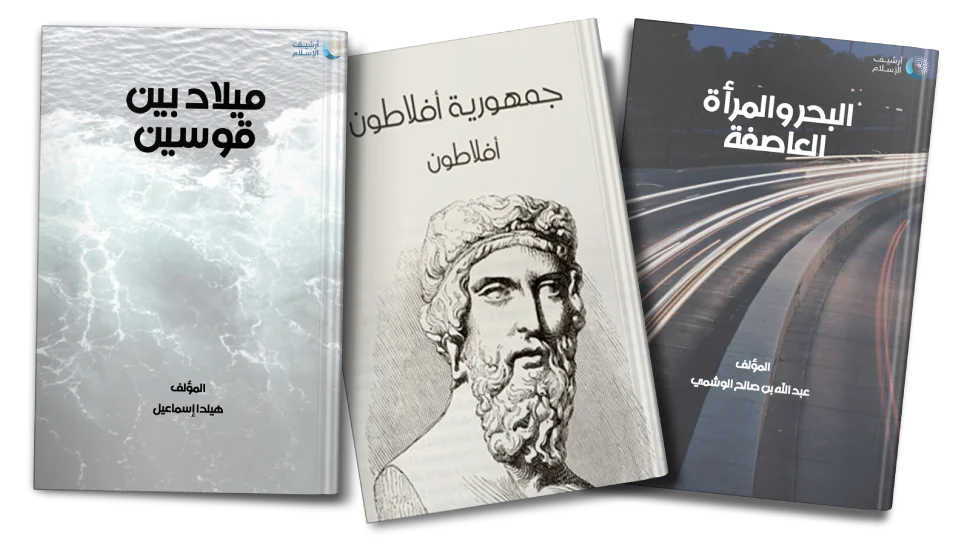
The first model is a feminine model for the poetess (Hilda Ismail) in her collection (Birth between Two Brackets). Her city transforms by the power of its magic into the only city that fills the man's vacuum. It comes from the female poetess as an objective equivalent to the possession that the man seeks in his ideal vacuums. Thus woman = city = possession. This is what the poetess said:
And he felt that I was the only city he possessed.
If (she) = the city, and if (he) = the one who felt + possesses it, then the city is not a traditional city, but a city with a special character, and a city of a special pattern. It is his sanctuary, and it is the only one he possesses, while many of them have left him and he lost his possession of them. What is linked to the queen of cities? It is what the poetess said in the section she ended with the previous verse, and this is her depiction of the scene in which her man is present:
Stained with the perfumes of females
And also stained with: their hearts.
Look at (stained), which is an exaggeration of the amount of perfume carried by the man's clothes, as if it were the blood surrounding his clothes from a battle he fought. Then the image is completed through our knowledge of the verb used by the poetess as she depicts the state of his coming to her, which is her saying (you come to me). Then if we follow the verbs that follow in successive images, line after line, to complete the image with his ownership of the utopia, by which I mean = the woman who forgives his mistakes with others.
Look at the sequence of returning pronouns and the verbs falling on them:
|
Pronoun |
Verb |
|
He |
You come to me |
|
She |
I receive you |
|
He |
I carry |
|
She |
I try |
|
She |
I restore |
|
She |
I wait for you |
|
He |
Ends |
|
He |
You give me |
|
He |
You touch |
|
He |
You tuck |
|
He |
Lost |
|
He |
Felt |
|
He |
Possesses it |
The table shows the dominance of the pronoun (He), the owner of the city, over the pronoun (She), the owned city. Why?
Because the utopia endures its children, forgives their mistakes, and receives them with a smile no matter what they do to it or how they betray their covenant with it. Just as you will not feel safe unless you breathe its air and touch all its parts while you know every single detail about it.
Utopia = Virtuous Woman
The scene turns from a daily scene to a general human scene, and female perfumes become those temptations present everywhere that may lead you to insult your city and what you own. Those perfumes of which you only own the enjoyment of smelling them, and the enjoyment of an immediate moment of inclination that has no value in the long run.
We stand with the image of (the Knight) in the poetess's words:
Like a knight who lost everything he had
So why was the image of the knight present?
And why did the (woman poet) compare the loss of (her man) to the loss of a (battle), which is her saying (like a knight), and she had provided a clue to the battle by saying (stained)?
The poetess mixed her imagination and depiction with reality, creating her utopia and his utopia, and they are two different cities. He wants it as a city surrounded by women, and she wants it as a city where no one else but them exists.
She sacrifices for his sake and only opens her heart to him, while he is a playful man inclined to every woman he sees, and in the end he returns to her, and she accepts his return and he sees in her his only city that he owns as the poetess said:
You tuck your head in my chest