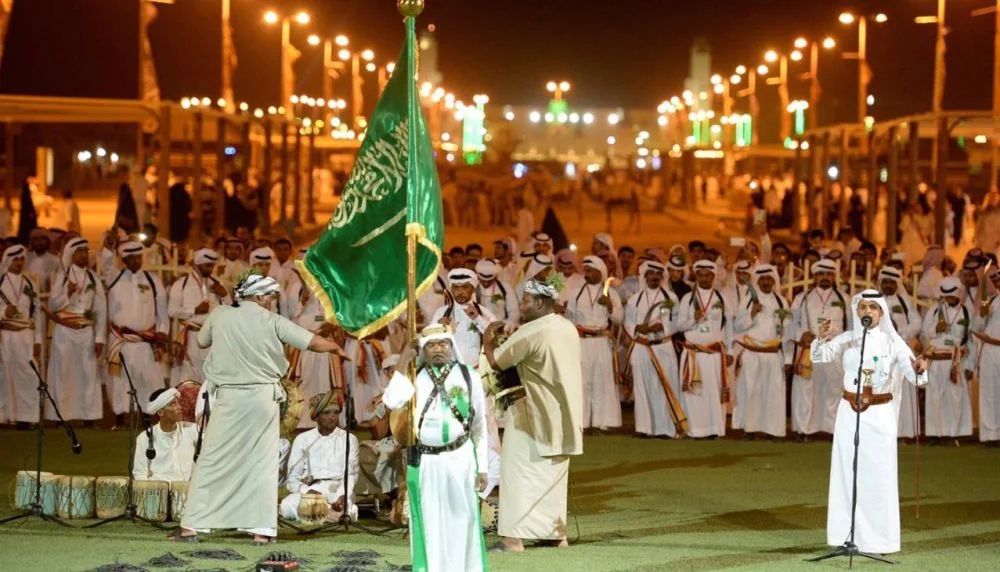
On World Music Day: How do Musical Rhythms, Singing, and Folk Performance Arts in the Kingdom Evolve and Move to Global Status?
Simon Mandy says: "Music is a tool as much as it is an art; it can alleviate poverty and conflict, give confidence to the excluded, give comfort to the bereaved, and it can add importance to the marginalized, and provide companionship to those who suffer from loneliness. It can light up the past and enrich the future." Thus, music has its human, civilizational, and global dimensions. On World Music Day (which falls on June 21 of each year), it is pleasing for observers to put forward visions and questions regarding singing and music in general.
The Kingdom of Saudi Arabia possesses an enormous vocal and musical heritage, but the consequences of its internationalization still raise issues and visions, especially in the light of the era of technology and global communication that requires a great deal of production, distribution, and marketing, both Arab and global.
The Importance of Music and Singing:
The musician Tariq Abdul Hakim sees that "attention to music, singing, and folk dance is a preservation of the psychological balance among the youth of Saudi society, as proof against the noise of imported rhythms in global media."
In a significant expression he clarifies: All types of our folk music are characterized by rhythm, and rhythmic instruments are more widespread and common among the people, who adapt to their rhythm by dancing and repeating many songs with them, including: love, longing, the joy of meeting parents, and bidding farewell to relatives and loved ones, accompanying them in their joy in welcoming life, and in their emotion. Rhythm accompanies humans from the moment they welcome life, and its echo continues until the moment they leave life.
Tariq Abdul Hakim calls for: collecting folk music and songs, and what is related to folk dance from every region of the Kingdom, by various means of audio and visual collection with care for field collection from original environments, and setting a unified plan for collection methods and agreement on a unified scientific method for classifying and documenting them, and establishing a special museum for ancient musical instruments of a popular nature, and establishing a sound archive for music and folk songs and working on circulating them throughout the Arab world and the world.
Singing as an Economic Institution:
Thus, these requirements will have their weight in activating musical work in the Kingdom, as the poet, novelist, and publisher Abdul Rahim Mutlaq Al-Ahmadi points out that singing has developed through the innovation of music since its reliance on the product of the local environment until it reached the stage of modern technologies in tools, melodies, and voice control. Today, singing has become an economic institution contributing to income. Music and singing have reached such importance that they are used in treatment and in spreading psychological comfort, relaxation, and escape from anxiety and mental fragmentation. Al-Ahmadi represents this with a popular verse saying:
Do not think that on the day I sang I was merry,
But rather I am amusing myself and driving away the worry from me.
He emphasizes that "singing is a resource that significantly enhances many civilizational achievements and contributes to psychological refinement." He adds: "Our country is one of the richest parts of the world in the experience of the art of singing and music because of its location in the center of the continents of the old world, and because of the pilgrims who come to it from ages dating back to historical antiquity for the existence of the first house established for people there. It is the meeting point for the caravans of the Incense Route and the two journeys of winter and summer, up to what we witness today of communication with the parts of the world, which has earned our culture many tributaries and experiences. But it is regrettable that we import from the cultures of other nations more than we export from our culture as an alternative to satisfy our need for singing and music."
The entry of music into Saudi educational curricula and the establishment of a Music Commission at the Saudi Ministry of Culture will significantly enhance the development of Saudi musical activity.
Al-Ahmadi calls for working methodically and with an academic spirit in preserving the Saudi musical and artistic product. We need to rid documentation records of the errors of diligent researchers and return them to their origin and to studies on methods of performing songs and the musical instruments used, academic studies supervised by universities and specialized research centers.
Ahmed Al-Wasil identifies three questions in this context: Can peoples lose their cultural memory including their arts and literature? What are the problems facing traditional performance arts and songs of all kinds? And how can we make arts a civilizational building tool for humans? He concludes by setting a "Strategy of Continuous Memory" through the establishment of a research center for performance arts: singing and dances...