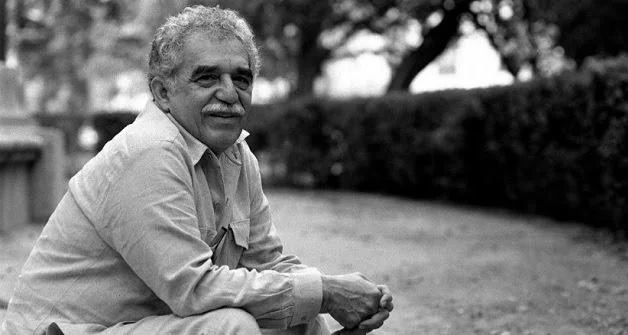
The first flame of writing for the international novelist Gabriel García Márquez
Some of the first flame of writing for the international novelist Gabriel García Márquez, in an article about the journey of beginnings, republished by the famous American magazine The New Yorker.
In this article, translated by #Ahwal_Al_Ma_rifa_Magazine, are glimpses of the wonder that attracts the writer's ray, so that new worlds open before him. We leave you with Márquez talking about his beginnings:
I never imagined that nine months after completing high school, my first story would be published in Fin de Semana, the weekly supplement to El Espectador, in Bota, the most interesting and famous literary publication at the time.
42 days later, my second story was published. What was most surprising to me was an introductory note by the supplement's editor, Eduardo Zalamea Borda (whose pseudonym was Ulysses), the most outspoken Colombian critic at the time, and the one most attentive to new trends.
The way all this happened was so unexpected that it is not easy to re-enumerate. In February 1947, I enrolled in the Law School at the National University of Bota. I lived in the heart of the city, in a pension on Calle Florián, mostly occupied by students from the Atlantic coast like me.
In my free afternoons, instead of working to support myself, I would read either in my room or in the cafes that allowed it. The books I read were obtained by chance and luck, and they depended on chance more than any luck, because friends who were able to buy them lent them to me for periods so limited that I stayed up all night to return them on time.
But, unlike the books I read in school, in Zipaquirá, these books were like warm bread from the oven, printed in Buenos Aires in new translations after publication had ceased due to World War II.
In this way, I discovered, fortunately, Jorge Luis Borges, D.H. Lawrence, Aldous Huxley, Graham Greene, G.K. Chesterton, William Irish, Katherine Mansfield, and many others.
These new works were mostly displayed in the windows of inaccessible bookstores, but some copies circulated in student cafes, which were active centers for the dissemination of culture for university students from the provinces.
Many of these students reserved their tables year after year and received cultural mail even in the cafes. The services provided by the owners or their trusted employees were instrumental in providing a large number of university positions, and quite a few specialists in the country owe more to their cafe dialogues than to their almost invisible teachers.
My favorite cafe was El Molino, frequented by older poets, which was only two hundred meters or so from the pension, on the corner of Avenida Jiménez de Quesada and Carrera Séptima.
Students were not allowed to reserve seats at El Molino, but we could be sure to learn more from the literary conversations we eavesdropped on while huddling at nearby tables than we could from textbooks.
It was a huge, elegant Spanish-style cafe, its walls decorated by painter Santia Martínez Delgado with scenes from Don Quixote's battle against windmills.
Although I didn't have a reserved seat, I arranged with the waiters to place me as close as possible to Mr. León de Greiff – bearded, stern, charming – who would begin his literary talk at dusk with some of the most famous writers of that day.
Ulysses by James Joyce was a premature scream. Years later I set myself the task of reading it again in a serious way, and it not only led to the discovery of a real world, but also provided me with invaluable technical help in editing language and dealing with time and structure in my own books.
Domin Manuel Vega, one of my roommates at school, was a friend of mine since our childhood days in Sucre who shared my passion for reading. One night, Vega came with three books he had just bought, and lent me a book chosen at random, as he often did, to help me sleep.
But this time the effect was exactly the opposite: I never slept peacefully again. The book was "The Metamorphosis" by Franz Kafka – in the translation published by Losada in Buenos Aires – and it set a new direction for my life from the beginning of his book, which is known today as one of the greatest tools in world literature.
.. Grer Samsa woke up one morning from disturbing dreams to find himself transformed in his bed into a giant insect.
These were mysterious books whose dangerous slopes were not only different from everything I had known until then, but often contradicted it. They showed me that it was not necessary to prove facts.
It was enough for the author to write something for it to be true, with no evidence other than the power of his talent and the authority of his voice. Scheherazade had returned again – not in her millennial world, where everything was possible, but in an irreparable world, where everything was already lost.