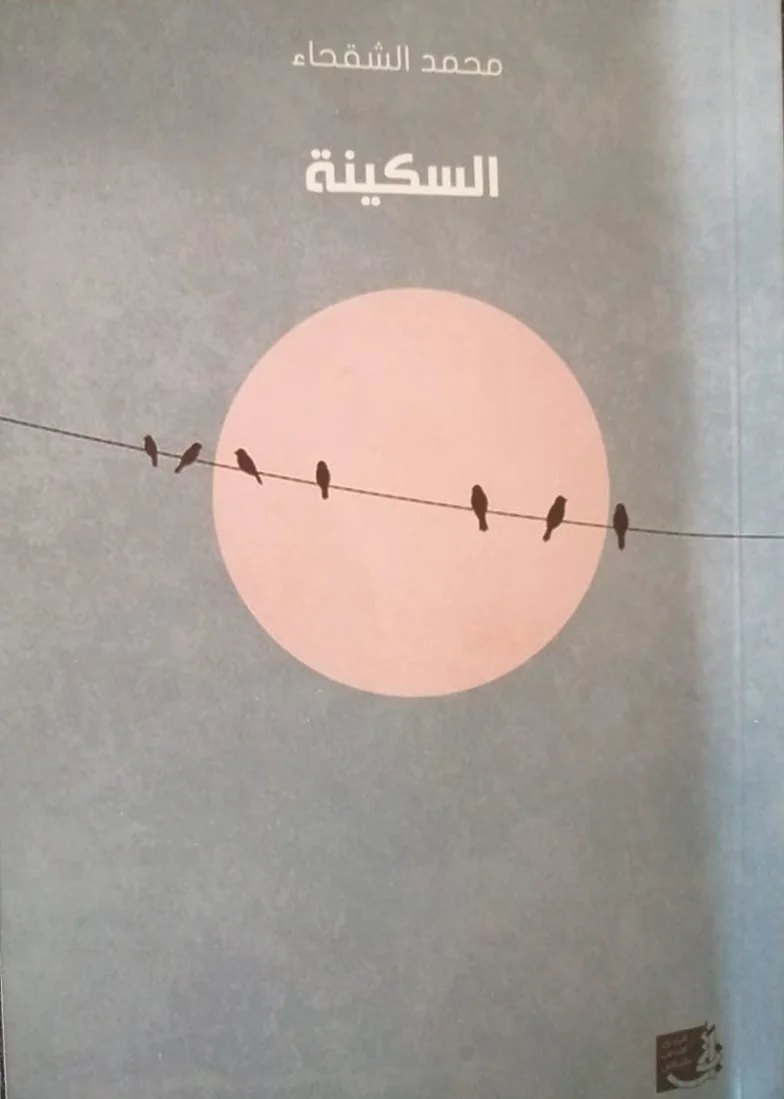
From the aesthetics of the narrative horizon of Mohammed Al-Shaqha – a reading in the collection: 'Al-Sakina'
Abdullah Al-Samti
The creative narrative experience of the storyteller Mohammed Al-Mansour Al-Shaqha is long, which he began with his collection of stories: "Searching for a Smile" (1396 AH / 1976 AD), following up on his publications such as: Suffering, Remnants of Existence, A Naive Love Story, Waiting for the Canceled Trip, Yellow Flowers, She Said She is Coming, The Stranger, The Descent, until: Desert Mirror, and Oh Eternal One, Do Not Resist the Desert, and other works. Since this stage, Al-Shaqha's works have followed in publishing until they reached more than (40) narrative works, all of which fall in the field of the short story and poetic prose sometimes.
This experience, filled with various narrative manifestations, and technical and aesthetic transformations, reveals that the narrative discourse in Al-Shaqha's work is full of various aesthetics, and multiple levels of narrative horizons that involve examples, experiences, expertise and diversity that he captured from reality full of dozens of characters, and from the narrative imagination that creates stories, contemplates them and questions the world with them.
In light of this awareness, we read the new collection of stories: "Al-Sakina" which was published by the Literary Club in Riyadh in its first edition (2020), and it is based on this narrative legacy in which the storyteller experimented with various patterns, styles and visions.
The collection includes (25) short stories with various narrative orbits in different subjects and fields, ranging from realistic daily issues in which the storytelling self expresses the details of daily life, its concerns and its problems. Content-wise, the stories belong to the details of reality and its multiple social experiences in which the storyteller highlights a narrative reality. it will definitely under a degree of creative vision that changes, shifts and creates artistic paradoxes in the stories, which gives them other dimensions besides their realistic social process, and merges them into the stream of storytelling art.
Storyteller Mohammed Al-Shaqha begins his collection with a story titled: "Citizen" and focuses on daily concerns, and preoccupation with the daily obsession of life's sorrows, through the story of a citizen who es to pay an exaggerated water bill that made him lose consciousness: "I suddenly felt a painful need for a hand to support me, so I withdrew in silence. At the outer door of the water company office, the sidewalk saved me. I sat on its dusty edge contemplating the street and the passing cars, and I kept chasing the bodies of passers-by from other worlds. Some staring at me and some waving their palm" / p. 9
The story expresses this daily anxiety and life concerns, which is what overflows in many stories in the collection such as: The Traveler, Departure, Orphanhood, Papers, The Book, Dancing in Wasted Time, and most of the stories in the collection in truth, in which the storyteller focuses on the realistic social dimension, with mixing it with some bizarre visions from the world of dreams and imagination, and making some narrative phrases poetic as if they transport consciousness to another station where stray reflections and questions open up.
In the story (The Traveler), the storyteller narrates the facts of the transformation of time and travel, and the surprises of love. In the story: (Departure), the whispers and obsessions play their semantic role in the decomposition of the self through confession and questions through a set of scenes making up the story: "When I felt calm and the darkness increased in the corners of the room, where I was slowly dying, I imagined someone opening the door, and a thread of light snaking through the gap that my obsessions had formed its space. I stood looking for the place that enables me to hide in it, anticipating who would push the door and break into the room, but nothing happened" / p. 18
Al-Shaqha in his stories in this collection relies on a set of aesthetics in forming the narrative horizon represented in moving between adjacent scenes, whether harmonious or paradoxical, between one scene and another in the story, and on a direct language interspersed with a poetic cover sometimes in the subjective confessional scenes that require that. Adopting narrative paradoxes forms a permanent vision in Al-Shaqha's stories because he always expresses what is realistic and social and the contrasting or sometimes surreal situations that occur.
From among the subjective confessions come the beginnings of the story: "Dread": "What will you say in response to yesterday's questions, I am not interested in knowing what is ing on inside you, and I will not know for a long time, I am not that miserable, what happy life might we find together, yes, I broke down when I misunderstood matters I did intentionally and they accumulated in my depths, while I feel the bitterness in my tongue, I will collapse under the weight of loss, while I endure with a fake steadfastness. Are you leaving Taif?"
Places have their presence in Al-Shaqha's stories, and they are presented with all their aesthetics and narrative legacy, especially between (Taif) and Riyadh, and for travel, and for daily concerns. Simple characters have a presence from which the storyteller inspires his vision of the realistic, in a narrative language in which the narrative mixes with the poetic, especially since the storyteller published three collections in prose poetry, which makes his narrative have a dimension that has its concentrated poeticism that did not diminish from it his care for the daily and the realistic.