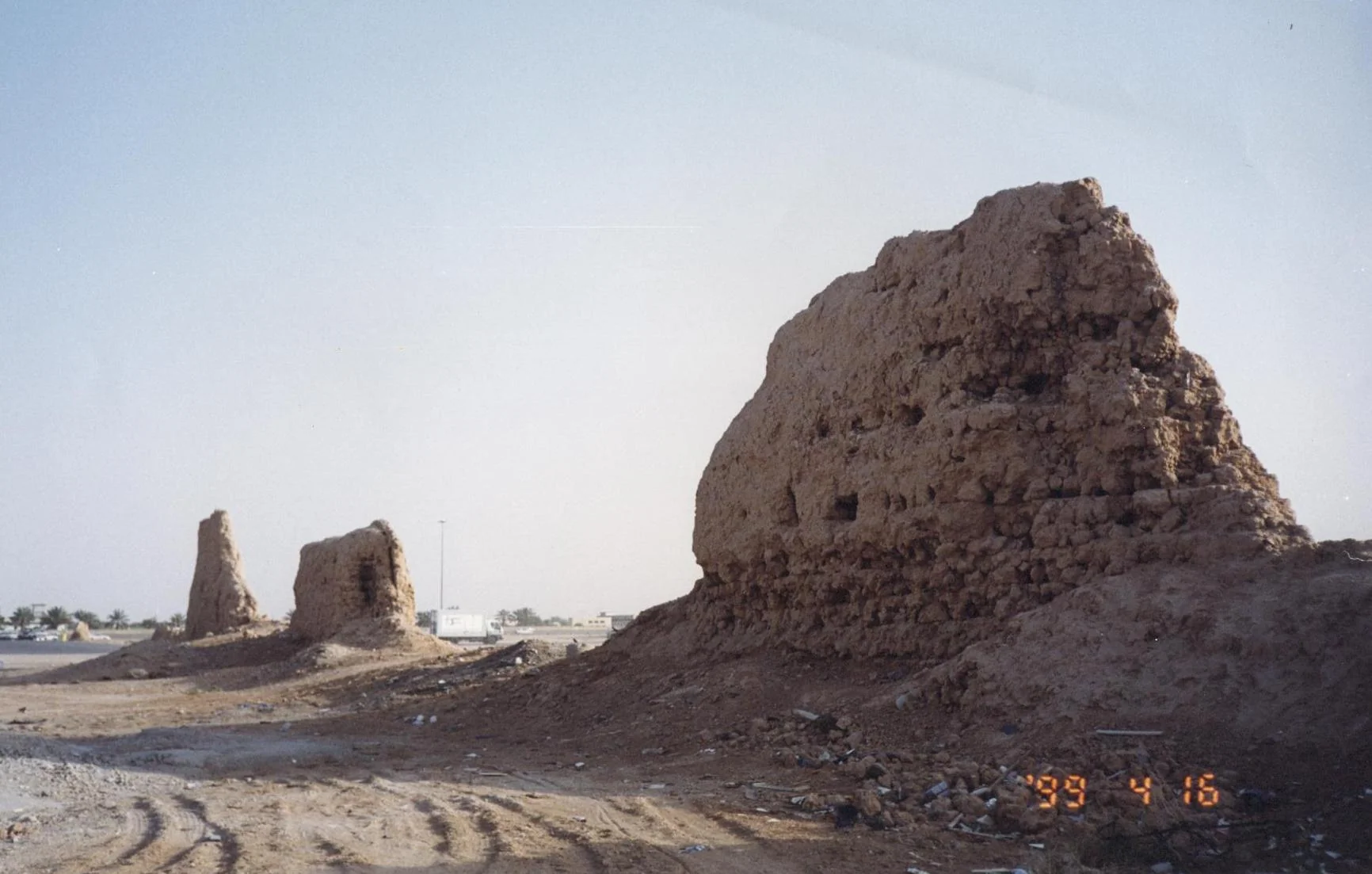
Manfuha Al-A'sha
Manfuha Al-A'sha
The emergence of Manfuha Al-A'sha coincided with the beginnings of the founding of the city of Hajar al-Yamamah (currently Riyadh). Among the most prominent neighborhoods of old Manfuha was a place called Durna, where the poet Al-A'sha lived. Its historical places include Qusayr Marid, Mihras, Nadra, Al-Zarah, Al-Khabiyah, and Ain Al-Rayya. "Al-Qa'" is considered one of the historical places in Manfuha Al-A'sha, and it is the place where the poet Al-A'sha died and is still known in the south of the Manfuha walls to this day.
On the soil of the village of Manfuha with its long history lived the poet Maymun bin Qais, nicknamed Al-A'sha, the Sanajat al-Arab. It was stated in "The Detailed Book of the History of the Arabs" by its author Dr. Jawad Ali, that Al-Asma'i, the narrator of the Arabs and one of the imams of the language, said: Zuhair is sufficient for you of the poets if he desires, and Al-Nabigha if he fears, and Al-A'sha if he is joyful.
An Ancient History
In ancient times, Manfuha was a village with its independence and long history, and its emergence coincided with the beginnings of the founding of the city of Hajar al-Yamamah. This happened after the migration of the Bani Hanifa tribe, the Wailiya Al-Raba'iya, from the outskirts of Najd, Tihamah, and Hijaz, which came to the land of al-Yamamah as a settled place for the extinct Arab tribes such as Tasm and Jadis. Bani Hanifa settled in the historical capital called Hajar al-Yamamah, which is Riyadh today. After a period of time, the Bani Qais bin Tha'laba tribe came to their cousins Bani Hanifa and their leader called Ubaid al-Hanafi and asked to stay with him in his lands, but he refused. However, he gave them a place, so this place was called Manfuha or Al-Manafeeh, from Nafh (giving), and they lived in it.
Al-A'sha mentioned it in his poetry by saying: (Poetry verses translated: Your heart yearned for the ruins of Qatla.. By the riverbank and Al-Witr to Hajar / At the corner of Mihras to Marid.. In the plain of Manfuha, the one with the basin)
Castles and Forts
Manfuha includes evidence that has historical depth. Manfuha is surrounded by old walls, castles for security protection, war forts, old neighborhoods, farms, and old wells. Among the historical places mentioned in ancient sources is "Al-Qa'", which is the place where the poet Al-A'sha died and this site is still known in the south of the Manfuha walls to this day.
Al-A'sha was nicknamed as such due to weakness in his sight. He is one of the poets of the first class of pre-Islamic poets, and he was famous for reciting his poetry by chanting and therefore they nicknamed him Sanajat al-Arab. Because of his poetic talent, doors were opened for him and he visited kings and princes to praise them and recite his poetry, as some of the kings of Persia and the princes of the Ghassanids were among his most prominent praisers. He was one of the famous and well-known Mu'allaqat poets through his poem in which he says:
Farewell to Hurayrah, for the caravan is departing.. and can you bear a farewell, O man?
It is one of the most important pre-Islamic poems famous for its quality and the brilliance of its verses. Some literary historians also mention a poem he wrote about the Messenger of d, may d bless him and grant him peace. Al-A'sha lived until the advent of Islam, but died without converting. Al-A'sha says at the beginning of this poem:
Your eyes did not close on the night of ophthalmia.. and you were visited by what visits the sleepless one
The characteristics of his poetry do not differ much from the characteristics of the great pre-Islamic poets, as he uses carefully selected words to express his idea and vision, using a linguistic formation that relies on stylistic displacement from the level of everyday spoken language, whether at the level of rhythm, structure, or meaning. Images overflow in his poems, lavish with movement and life, drawing these images from his environment and rich life experiences. Some Persian words also seeped into his language due to his frequent visits to the land of Persia and his mixing with its people. His poems are emotional and full of various human feelings. His affiliation with Manfuha had a clear impact on his poetry, as the image of the desert and its people, trees, and animals appears prominently and present in his poetry.
Historical Landmarks of Manfuha
Among the historical places of Manfuha are Qusayr Marid, Mihras, Nadra, and Al-Zarah, which the people of Manfuha take pride in. Al-A'sha mentioned them by saying:
If they hear the scolding, they head forward.. Upon them are the lions of the two Zaraths, the brave ones
Al-Zarah is still known next to the town walls from the east. This is in addition to ancient landmarks such as Al-Khabiyah and Ain Al-Rayya, which are among the