King Abdulaziz's Private Library is an Important Source of Modern History
Since the dawn of the cultural renaissance in our Islamic world, caliphs and princes have cared for science and scientists and encouraged the authorship of books, their transcription, and their distribution with the aim of making these books available for circulation among people so that the largest sector of them can benefit from them.
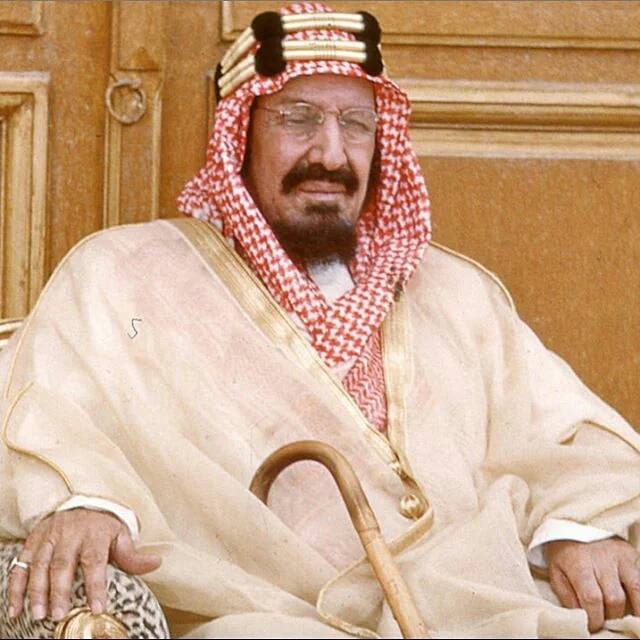
The endowment of books has also been known in the history of the Saudi state since its founding in its first era, and many books were issued documenting this cultural approach in national history. According to this approach from caliphs and leaders, the founding King Abdulaziz bin Abdulrahman Al Saud – may d have mercy on him – cared about collecting scientific works during his life despite his preoccupation with the stage of state-building at that time, in an affirmation of his passion – may d bless his soul – for science and for reading Arabic books concerned with various sciences, especially Sharia sciences, and even printing most of them at his own expense and distributing them to the public in general and to students of science in particular inside and outside the Kingdom. He also helped some authors to continue their scientific activity through purchasing many copies of printed books and distributing them at his own expense.
These books that were printed included works of creed, interpretation, and jurisprudence by leading figures of the predecessors such as: Sheikh Ahmad ibn Hanbal, Sheikh al-Islam Ibn Taymiyyah, his student Ibn al-Qayyim, and Sheikh Ibn Qudamah al-Maqdisi. Among these are the books: "Al-Mughni" and "Al-Sharh al-Kabir" which were printed at the expense of King Abdulaziz in 1340 AH. The books also included specializations in the Arabic language and its literature, Islamic history, and geography.
Among the most important printing presses in which works published at the expense of King Abdulaziz – may d house him in his spacious gardens – were printed are: the Mustafawiyah Printing Press in Bombay, India, the Quran and Sunnah Printing Press in Amritsar, India, the Al-Manar and Al-Nahda printing presses in Egypt, the Al-I'tidal and Al-Taraqqi printing presses in Damascus, the Salafiyah Printing Press in Makkah Al-Mukarramah and Cairo, and the Umm al-Qura Printing Press in Makkah Al-Mukarramah.
The Founding King's Private Library:
The books that the Founding King ordered to be printed at his own expense formed the precursors of the formation of his private library, which consists of a rare collection of works and periodicals exceeding three thousand books, collected during his lifetime – may d have mercy on him – based on his continuous keenness to read books and supply himself with their sciences. King Abdulaziz was known for his love of knowledge and his patronage of scholars from the beginning of his life.
As a result of this interest in science and knowledge, the size of King Abdulaziz's private library increased until it became an important part of the Al-Murabba Palace and was located on the first floor. it included rare valuable manuscripts that King Abdulaziz inherited from his fathers, in addition to what came to him through gift or purchase to meet the needs of this library.
The library was moved to the King Abdulaziz Foundation for Research and Archives (Darah), where its contents witnessed distinguished care under the direction of the late King Fahd bin Abdulaziz, who ordered the restoration of the library's books, their rebinding, and their preservation. The books kept in this library are diverse and numerous, and carry in their pages and on their covers historical phrases and testimonies that reflect the status of science in King Abdulaziz's soul. The contents of King Abdulaziz's private library are still distinguished by their od condition despite the passage of more than a hundred years since the printing of some of them, after the revival and renewal process witnessed by the library's contents.
King Abdulaziz's private library witnessed a renewal process for its contents that suffer from the deterioration of their binding or the erosion of their paper as a result of their age within a scientific project whose expense was donated by King Fahd bin Abdulaziz – may d have mercy on him – where the books were restored and technically treated, in addition to binding them with luxury leather compatible with the importance of this library and its historical value .
All the volumes of this library were also re-indexed, and summaries of the contents of each volume were prepared, whether it was a book or a periodical, and data on endowments, ownerships, and gifts recorded on them were recorded, and re-classified in a way that reflects their subjects. Also, the library data was entered into the computer and its volumes were indexed to serve researchers and those interested.
Its sections were distributed between volumes related to King Abdulaziz's patronage of science and knowledge and his tangible efforts in printing books at his own expense, and between a number of books gifted to him – may d have mercy on him – carrying personal signatures recorded by Arab and Muslim writers in King Abdulaziz's name in appreciation and gratitude from them to him for his interest in science and support for scholars.
The contents of the library were monitored and its conditions studied and a special book titled "King Abdulaziz Al Saud's Private Library" was issued which surveyed its contents and analyzed the most prominent works in it.
A book titled: "Printing Books and Their Endowment under King Abdulaziz" was also issued for the researcher Abdulrahman bin Abdullah Al-Shaqir, which is an analytical study and a bibliographic list documenting King Abdulaziz's care for printing and endowing books.
Given the importance of the content of King Abdulaziz's private library and what it includes of national heritage, it was considered a source of modern history in the Kingdom of Saudi Arabia, especially what relates to King Abdulaziz's relationship – may d have mercy on him – with science and knowledge. Its books also carry in their pages and covers historical phrases and testimonies written by many well-known historians and authors in the Arab and Islamic worlds at that time.
Notes:
1- Saudi Press Agency "SPA" start of Muharram 1439 AH
2- The previous source 4 Rabi' Al-Awwal 1440 AH
3- Asharq Al-Awsat newspaper 15 Jumada Al-Ula 1425 AH