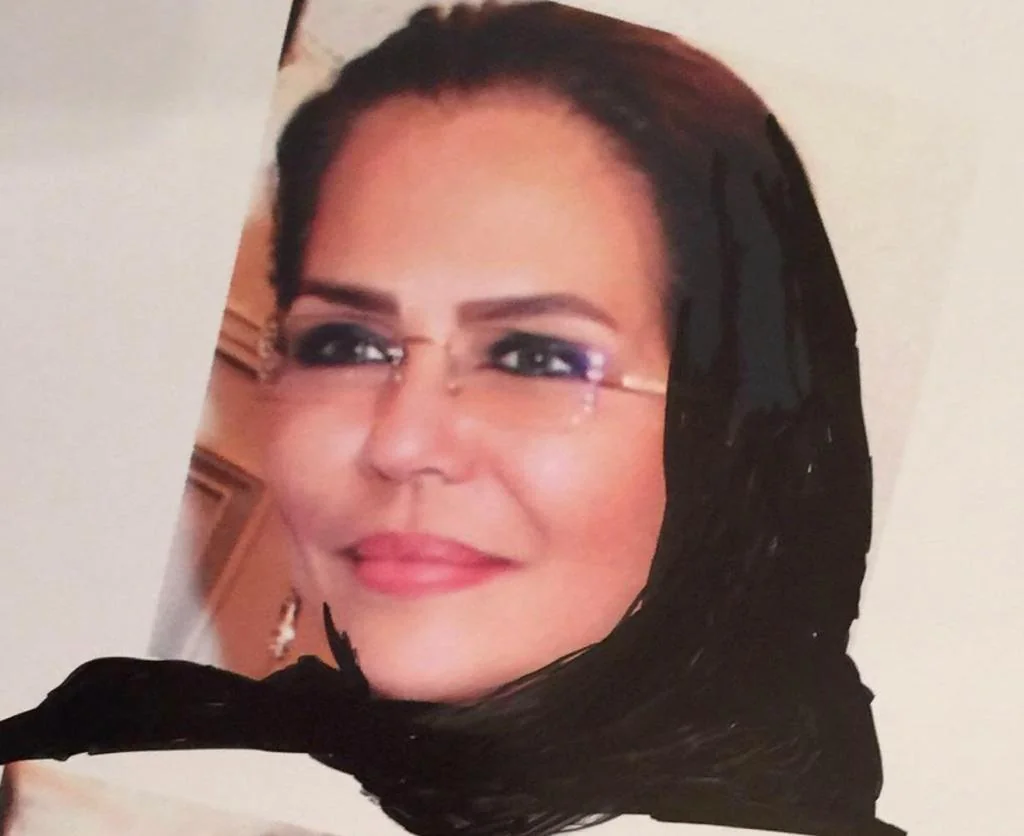
Princess Hessa bint Salman Opens the Exhibition of Visual Artist Mona Al-Qasabi
Her Royal Highness Princess Hessa bint Salman bin Abdulaziz sponsored the fourth art exhibition (Haneen) by visual artist Mona Abdullah Al-Qasabi, which includes a number of paintings of artistic and cultural value.
HRH Princess Hessa bint Salman stressed that visual art has become an important part of the Saudi cultural system today, witnessing its brightest times under the support and care of our wise vernment led by the Custodian of the Two Holy Mosques and his loyal Crown Prince, may d protect them.
Princess Hessa added that the Royal Approval of the proposal of HRH Prince Mohammed bin Salman bin Abdulaziz, the Crown Prince, regarding directing vernment agencies to acquire national artworks and craft products in their headquarters, comes within the framework of the state's support for visual art, which he - may d protect him - made part of the strategy for Saudi Vision 2030.
Her Highness pointed to the importance of the word (passion) mentioned by HRH the Crown Prince, which is the best criterion for selecting a person for work to present to his country, land and the world a work that is non-stop. Artists and writers will have a role in translating (passion) into reality in their choice of subjects, so that the work reaches the souls, addresses them in places and atmospheres, gives positive energy and enriches inspiration to the souls around them to move forward in life and various works.
Princess Hessa said, "Today we see art in all regions of the Kingdom, manifested to purify our souls and make us affected by this general atmosphere. It has spread awareness for the audience to evaluate the artist. If his work is valuable in terms of individual distinction in his artistic language, then the artist draws from his soul a language deeper than words or writing for a symbolic language that precedes the idea into inspiration."
Her Highness added that the quality of art is not measured by whether the visual artist is educated in schools or universities, or by being a child. It is measured by the artist's distinction by adding his individual expression to an existing expression or his style and tools emanating sometimes randomly from the soul and feeling for himself and others, reaching the people indirectly and broadcasting communication and cosmic unity and understanding the other, whether it is art with beautiful images or not.
Princess Hessa bint Salman stressed that universities embrace young men and women in the artistic field, where the curriculum has become supported by thought and culture, and the study of philosophical schools and art criticism rather than a matter of aesthetics or craftsmanship as was the case in the past. I hope the sons and daughters of the nation make Saudi Arabia, which is the Qibla of Muslims and the cradle of the Qur'an, a niche of light that shines to the world pure religion, spirituality, science, technology, culture, peace, love and unity of feeling for others in the world. Her Highness pointed to the efforts of Prince Faisal bin Fahd, may d have mercy on him, President General of Youth Welfare, to establish the first center for teaching visual arts for men, women and children with an accredited certificate in 1402 AH corresponding to 1982 AD, opening the field for men and women to practice visual art in all its schools, which graduated more than 1,200 male and female students annually.
Princess Hessa said, "I am honored to open the fourth personal exhibition (Haneen) for Ms. Mona Al-Qasabi, which includes types of impressionist expressive art and others, and her development in the artistic schools she progressed through from the beginning of her artistic career full of originality and starting from roots and heritage, and at the same time some are images that touched her soul from a global cosmic language."
Princess Hessa stressed that the artist Mona Al-Qasabi is a pioneer of expressive visual art and the first to open a painting gallery in Jeddah for women and men to display visual works for Saudi and foreign artists and graduates of the Saudi Center for Visual Arts. I used to notice the inclination and attraction of women towards symbolic and surreal art greatly, and I interpreted this perhaps as hiding the features of her inspiration behind it and because of the ability of this type of art to express indirectly. Perhaps it was considered a vent for them until we have reached this time where there are no obstacles limiting the horizon of the different Saudi woman and her launching in the field of expression in visual art and direct literary writing of novels and plays and others. Women also became in all fields of art active in different dynamics such as abstract art (installation), statues and photographic art.
Her Highness concluded with first and last thanks to the patron of our renaissance, the Custodian of the Two Holy Mosques and his loyal Crown Prince, may d protect them. Her Highness also offered thanks and appreciation to the veteran artist Mona Al-Qasabi and the first generation of visual artists, scholarship and non-scholarship recipients, who contributed and struggled for us to see their paintings in Biennales and Jax galleries that Riyadh is proud of today. May d have mercy on those who did not see this artistic celebration of their work like Mr. Mohammed Al-Saleem and artist Abdul Halim Radwi, and many others, and also the supporter of culture, art and youth Prince Faisal bin Fahd bin Abdul Aziz, may d have mercy on him, who brought us their paintings which are now acquired in the most prominent exhibitions around the world.
Visual artist Mona Al-Qasabi expressed sincere thanks and appreciation to HRH Princess Hessa bint Salman for her generous sponsorship of her fourth personal exhibition. Al-Qasabi added that one of the most beautiful moments an artist encounters is the opening of a personal exhibition with the participation and presence of lovers and those interested in visual art.
She pointed out that the exhibition contains paintings full of longing for everyone I miss by my side in this exhibition, and longing to meet all those who loved my work, wishing that the exhibition would gain everyone's admiration.
Dr. Ahmed Mater says that the Saudi Center for Visual Arts is considered one of the first centers that contributed early and prominently to the renaissance of the visual arts movement. On a continuous pace, artist Mona Abdullah Al-Qasabi contributed through her art and her establishment of the Saudi Art Center for Visual Arts in adopting art as a form of human expression, and a means to enrich human experience, cultural expression, education and even social change. It affects life in one way or another, and artist Al-Qasabi's exhibition comes for us to celebrate her work at a time when art has become a celebration and a mirror of our history, culture and diversity of our heritage in this unique moment.