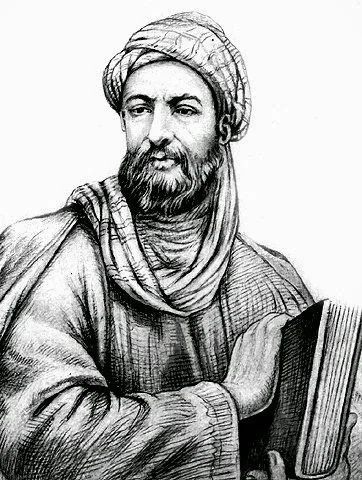
Avicenna the Chemist
Avicenna (Ibn Sina) occupied a prominent place in science and philosophy, especially in medicine and psychology. He wrote in physics, geometry, and mathematics, and was a great philosopher. Born in Bukhara (370-428 AH), by age ten he had memorized the Quran and studied literature, arithmetic, and law. By 18, he was a successful physician. In medicine, he relied on observation and anatomical descriptions. He was the first to recognize infectious diseases transmitted by water and soil, particularly tuberculosis. He was the first to describe meningitis and detect the Ankylostoma worm. His medical encyclopedia "The Canon of Medicine" was a primary reference in Europe until the Renaissance.
Prof. Dr. Barakat Mohammed Murad *
Ibn Sina also excelled in chemistry. While he agreed with Jabir ibn Hayyan on the theory of elements, he disagreed with the possibility of transmutation (turning base metals into ld). He believed the basic structure of elements in nature cannot be dismantled and reassembled by humans. As a pharmacist, he prepared medicines using distillation, filtration, and sublimation. He was the first to describe sulfuric acid and alcohol and innovate their preparation methods. He classified minerals into four groups: stones, fusible materials, sulfurs, and salts. He concluded that it is impossible to transform one element into another through alchemy, a view supported by modern science. His work in mineralogy involved detailed study of chemical reactions and observations, which he documented in his book "The Shifa" and "The Canon."