Includes 4400 Islamic manuscripts and 175 rare Qurans .. Munich Library is a global research center
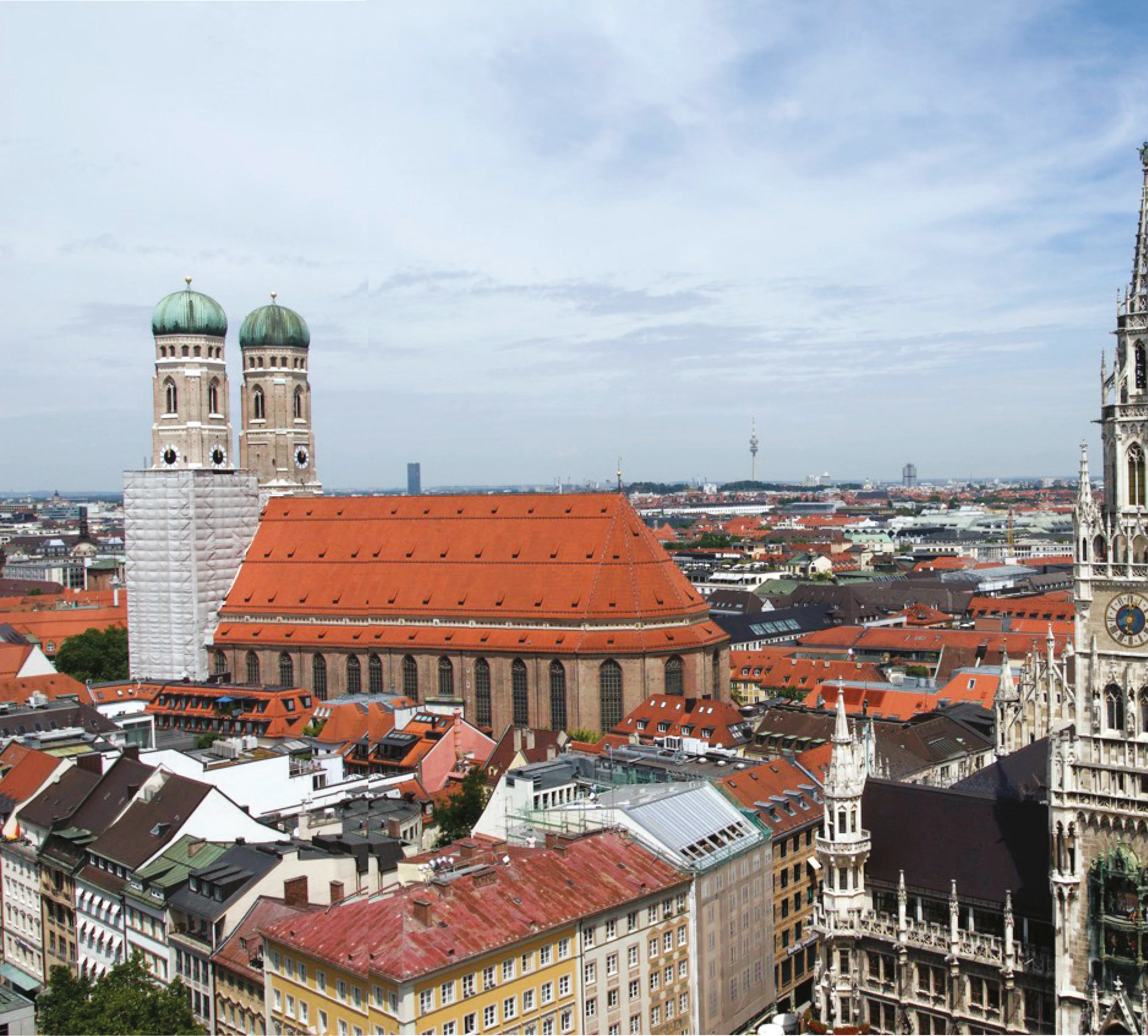
Munich or München is Germany's third largest city and the capital of the state of Bavaria. The city is located in southern Germany on the Isar River, 103 km from the Alps. Its population living within the city limits is about 1.31 million people. Its distinguished location in Central Europe has historically made it an important station and center on the continent. Today, Munich with its economy forms one of the richest and strongest cities in Germany. it is an important center for fashion, culture and literature in Germany, where the headquarters of a number of television and radio stations and about (300) publishing houses are located. About three million tourists visit it annually. According to statistics in German, Munich is considered the first preferred city to live in in Germany.
Munich Library
This beautiful city includes among its cultural institutions a luxurious and huge library, in fact it is one of the largest libraries in the world ever, and the second largest library in Europe after the British Library.
We are talking about the Munich Library or the ancient Bavarian State Library, which is nearly five centuries old. The credit for founding the library es to Duke Albrecht V in his old court at his residence in Munich in 1558 AD.
The library initially included two collections of books, one of which was: the personal papers and works collected by the Austrian judge and orientalist Johann Albrecht Widmanstetter, and its contents began to grow and magnify. The law issued in 1663 AD, which obliges the delivery of two copies to the library of any work printed or published, contributed to enriching its shelves and cabinets, and this law is still in force today.
Library Contents:
The Munich Library derives its importance from being an international research center and for its valuable and rare holdings throughout the ages and from various civilizations, as it includes 10 million books, 59,700 periodicals, 1.1 million electronic books, 93,800 manuscripts and 20,000 books printed in the early stages of the art of printing.
The number of printed books in its possession from the 16th century is approximately 140 books in history and the classics of ancient times, including Eastern Europe and sciences.
The library also provided 0 complete manuscripts from the Orient collection on the electronic program with "iPad" and "iPhone" applications for free. Among the most prominent books of this collection: the book "The Miracle of Creation" which was written in 1280 AD.
Islamic Culture:
The library is proud of its important collection consisting of precious parts and pages of the Holy Quran and other Arabic manuscripts. Due to the rarity of what this library owns, its management holds exhibitions from time to time to display them, which visitors from all over the world come to see, especially those interested in oriental affairs, Islamic arts and the Islamic religion who also participate in lectures and seminars held in the library.
The library includes a rare manuscript of the Holy Quran, along with books in art from 1558. The collection of oriental manuscripts available in it includes approximately 17,000 manuscripts, among them 4,400 manuscripts dating back to various stages in Islamic civilization along with 260,000 printed works.
Among those who collected Islamic manuscripts was the German orientalist Johann Albrecht Widmanstetter (1506-1557) in the Renaissance era. He was more open to new ideas and the cultures of the other, and his mastery of the Arabic language facilitated his study of manuscripts with the utmost care. He later wrote a book about the Holy Quran and after his death the ownership of his library passed to Duke Albrecht V, Duke of Bavaria, to turn his library into a nucleus for establishing the current Bavarian State Library. The largest deal was in 1858 when the management bought from the French orientalist (Etienne Quatremère) 1250 handwritten Islamic manuscripts and many oriental and Islamic publications. This was followed in the nineteenth century by purchasing collections of orientalists including Marcus Joseph Müller, Marin Haug and the Italian Giuseppe Caprotti who was known for his tours in Yemen.
Among the rarest items included in the Bavarian library are (130) handwritten Qurans dating back to the period between the ninth and nineteenth centuries when the printing machine replaced handwriting, which leads the library management to believe that the manuscripts and copies of the Holy Quran it has are the most important collections existing outside the Islamic world.
Rare Arabic Publications:
The number of Arabic publications amounts to more than 90,000 volumes, while the manuscripts number 3,100. The history of the Arabic holdings es back to the year the library itself was founded, specifically 1558 AD, when Duke Albrecht V obtained the cabinet of the orientalist Johann Albrecht Widmanstetter, who was one of the first orientalists in his country, and his collection included about fifty manuscripts.
Among the holdings of the library in its first establishment: an Andalusian Quran (Seville 624 AH), a Moroccan Quran (Fes 705), the Book of Weeks by Hippocrates with the commentary of Galen, translated by Hunayn ibn Ishaq (Morocco 471), the Book of: Prayer of the Hours (Fano 1514), Wonders of Creation and Oddities of Existence (Al-Qazwini 678), and Kalila and Dimna (Egypt or the Levant, eighth century AH). Since 1965, the library has included several important models, including: a Kufic Quran (thirteenth century), a lden Quran (Iraq 600 AH). The library includes a number of books that were printed in the Medici Press in Rome, which is the first Arabic printing press in Europe and printed a number of books in the late sixteenth and early seventeenth centuries AD, including: Nuzhat al-Mushtaq (Al-Idrisi, Rome), The Canon of Medicine by Avicenna, and Al-Ajrumiyya in grammar.
The library began to develop its electronic presence in 1997 so that its archive catalog would include documents and volumes since 1841 until 1952. As for the electronic archive of printed books in the early stages of the art of printing, it included works from 1450 until 1500 AD and all of them are available on the Internet. Rolf Griebel, the General Director of the library, announced in 2007 that the library would grant the "ogle Book Search" site the rights to copy the works available digitally in 2008.
References:
The Free Encyclopedia (Wikipedia)
Al-Bayan Al-Emiratia, written 31/7/2015
Previous source
Asharq Al-Awsat, July 7, 2015
Previous source
Al-Kitabdar website 2012