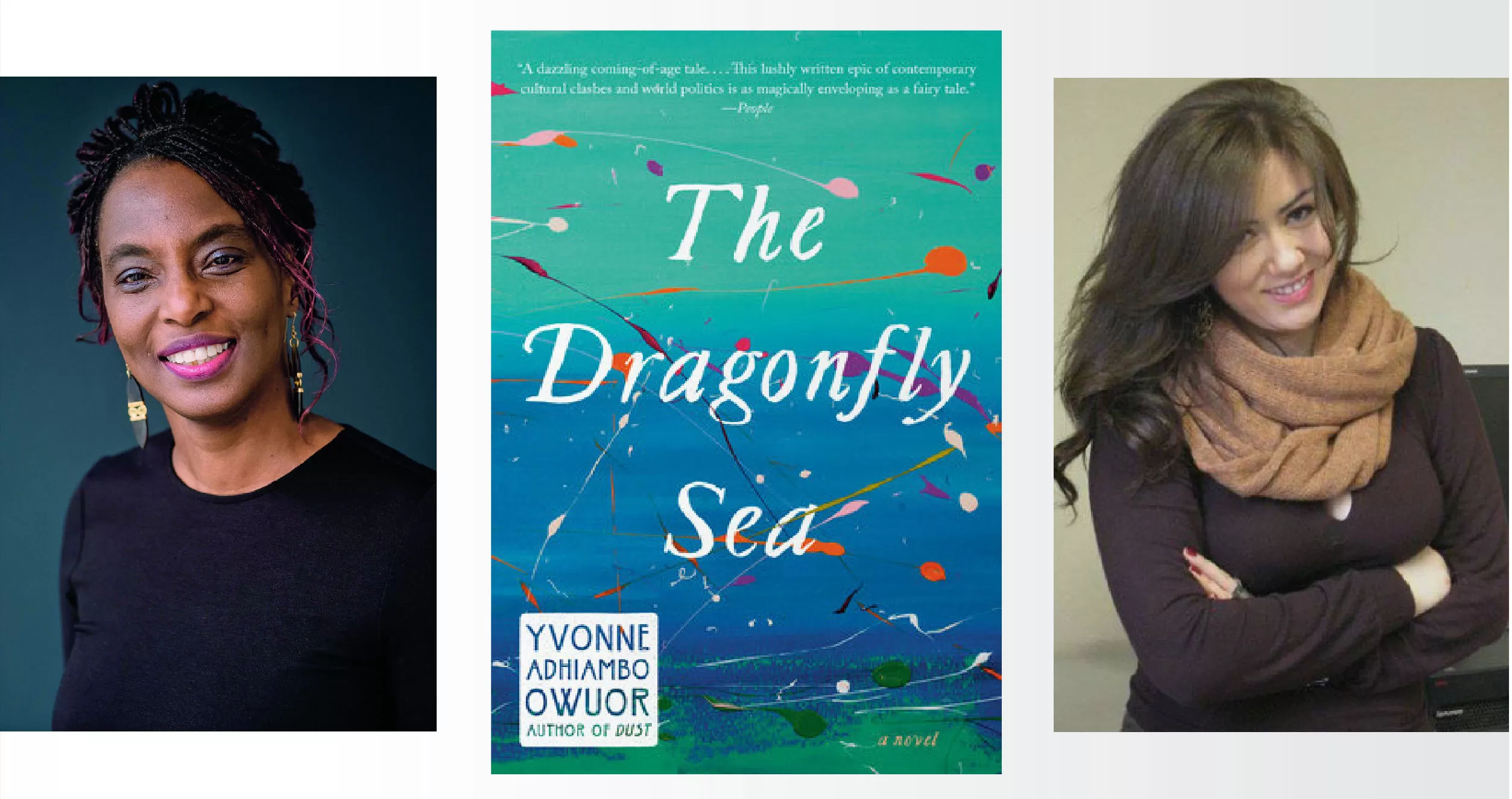
The novel "The Dragonfly Sea" from Kenyan literature was translated by Jana Al-Hassan for "Ahwal Al-Ma’rifa": The novel shows the mixing of original African culture with the culture of Arab and Muslim immigrants, and shows the influence of the Swahili language by the Arabic language
Interviewed by: Abdullah Al-Samti
The writer and translator Jana Fawaz Al-Hassan translated the latest novel issued in the Kenyan literary scene entitled: "The Dragonfly Sea"
By Kenyan writer Yvonne Adhiambo Owuor, to be published soon by Kalimat Group.
The novel, in its poetic language, follows Ayana's journey in search of self, starting from Pate Island in the Indian Ocean off the coast of the African country of Kenya, passing through China, Turkey and other stations. The novel raises many questions about belonging, roots, religion, authority, and the marginalization of parts of the country in favor of central cities and dreams of building great nations.
The wonderful thing is that the African novel referred to the poems of Hafez Shirazi and Rabia al-Adawiyya and a song by Amr Diab. In some places, it seemed very close to our Arab culture, and highlighted the problems of religious extremism. Hundreds of years ago, Arab immigrants from the peninsula settled on Pate Island, which produced a mixing of the original African culture with the culture of Arab and Muslim immigrants, and this is evident in the influence of the Swahili language by the Arabic language.
Jana Al-Hassan spoke to Ahwal Al-Ma'rifa about her translation of the novel and whether this constitutes a return to the translation of African literature on a large scale, saying:
I do not think that this translation specifically is the beginning of a new return to the translation of African literature, especially after Tanzanian novelist Abdulrazak Gurnah received the Nobel Prize in 2021, because the translation was completed in the previous year, and during the current year, the revision and preparation of the translation for publication took place. Therefore, chronologically, the translation was completed before this event, as was the choice of the book. But it is a happy coincidence that the date of the release of the translation coincides with the controversy created by a writer of African descent winning the Nobel, because it may give a greater opportunity to other African writers to reach the Arab readership. There is interest by the Kalimat Group in African literature, before the Nobel shed light on it, so more than one book will be released soon in this context, and these translations will be available at the Sharjah Book Fair.
Regarding her familiarity with Kenyan literature and its presence in the African and international scene, Jana Al-Hassan explained, saying:
I cannot claim to be extensively familiar with the African literary scene. What I know is that there is a consensus that it is somewhat modern in its origin and development; in the past, it relied on oral communication and what was recorded was little. But through what I have read of African writers, beginning with the novel "Things Fall Apart" by Nigerian writer Chinua Achebe, and recently the works of the writer Chimamanda Adichie, including the novel "Half of a Yellow Sun", and then my translation of the novel "The Dragonfly Sea", there is high poeticality in the language, and there is a different and striking civilization worthy of attention in these countries, including the role and strength of women in these civilizations.
Jana Al-Hassan added: There are human themes that I believe are similar between various peoples and cultures. I also believe that part of the African coast, which has seen many Arab settlers and merchants, resembles us as Arabs in one way or another, and therefore there is an impact of Arab culture in these places. Also, many Africans embrace the Islamic religion, and it is interesting to delve deeper into their experience and compare its aspects of similarity and difference with Arab Muslims, to see the extent of religion's influence on society or even vice versa, how religion is influenced and how its practice differs in a particular civilization.
Finally, novelist and translator Jana Al-Hassan introduces the Kenyan writer
Yvonne Adhiambo Owuor, who has won several awards for her writings, including the Jomo Kenyatta Prize for Literature for her book "Dust", which was also shortlisted for the Folio Prize. The writer touched on various topics in her novels, including historical violence in Kenya during the second half of the twentieth century and also the story of a refugee to Kenya from the Rwandan aristocracy. The novel "The Dragonfly Sea", although fictional, is inspired by a real event in 2005, where a young woman from the island of "Pate" in Kenya received a scholarship to study in China, based on family claims and DNA tests that indicated she was actually descended from a sailor from the Chinese Ming Dynasty, who survived a shipwreck destroyed by a storm and found, with others, refuge and a sense of belonging on Pate Island.