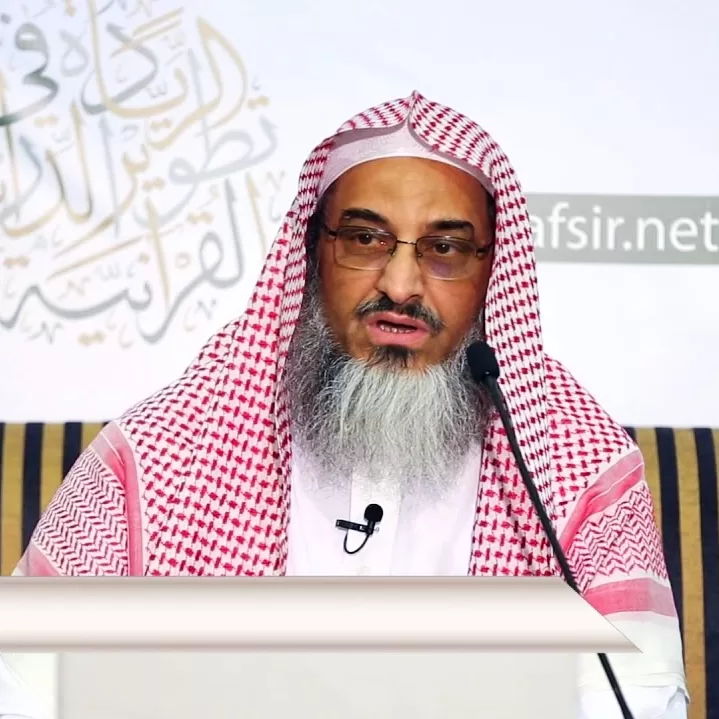
Historian and Geographer Sami Al-Maghlouth: This is the Era of Historical Atlases too!
Interviewed by: Mahmoud El-Deeb
He was honored by Prince Salman bin Abdulaziz, Emir of Riyadh Region, in the Governance Palace, who asked him to expand the scope of field research and supported him financially and morally. Sheikh Mohammed bin Nasser Al-Aboudi, Assistant Secretary-General of the Muslim World League, described one of his books saying: (A unique book in its field in form and content. As for the form, it is the presentation of subjects supported by maps and diagrams, which are subjects that were not known by such a style in the past, since the beginning of recording our Islamic history to the present era). He is a pioneer of historical atlases in our Islamic world, and one of the most prominent Saudi authors specialized in composing and designing historical atlases. Since his early years, he hoped to issue historical atlases concerned with the prophets, messengers and Rightly Guided Caliphs through the Holy Quran, the Sunnah and books of Islamic heritage. Just as this hope haunted him, Arab libraries were eager to receive the first historical atlas of this blessed series, especially Saudi libraries. His books received great public acceptance, so he issued more than one edition of his famous atlas series. Their publications contributed to creating a cultural debate, which created a qualitative leap in dealing with history not through narration, but by adding maps supported by images, tables, shapes and diagrams to bring the reader closer to full coexistence with events, place and time.
In the Frankfurt International Fair three years ago, international publishing houses demanded Obeikan Bookstore to translate his books into international languages, including: (English, German, French, Turkish and Indonesian). He is Sheikh Sami bin Abdullah Al-Maghlouth, the preacher and historian; orator of Al-Maghlouth Mosque in the city of Al-Mubarraz in Al-Ahsa, author of the Islamic historical atlas series, member of the educational atlases team in the King Abdulaziz Foundation in Riyadh, and member of the social sciences curriculum authorship team in the Qassim educational region in the Ministry of Education. Ahwal Al-Ma'rifa interviewed him about his story with these historical atlases, his beginning and his achievements in authorship, and the result was as follows:
History of Atlas Science
What is the science of the atlas? What is its past and present?
This era was characterized by a qualitative leap for scientific atlases similar to other knowledges. The science of atlases is a science in which the world excelled in drawing maps and charts since the days of (Claudius Ptolemy) in the second century AD; however, the real personality of these atlases emerged in the sixteenth century AD, during the geographical discoveries. In our current era, atlases took steady steps that led to what they reached of creativity, development and distinction. To tell the truth: historical atlases in the Arab world took their share of this interest, where Dr. Hussain Monès - may God have mercy on him - and the group that worked with him of engineers and artists in his book (Atlas of the History of Islam), which has been printed for more than two decades, exploded a new style in Islamic historical atlases.
Scientific Institutions and Atlas Projects
Mr. Sami! We are used to seeing scientific atlas projects adopted mostly by scientific institutions due to the resulting scientific, technical and technological overlap and the need for diversity in expertise to show the atlas in the required form; how did you overcome that?
Yes; therefore I tried since the early stages of the authorship and atlas preparation idea to have a strong knowledge in my main specialization, which is history, and the minor is geography, in addition to my religious culture as a former Imam and current orator of Al-Maghlouth Mosque in Al-Ahsa Governorate. This made it easier for me, so I blended these various sciences to launch strongly towards this art in the fields of authoring and designing maps, which I find it important for people to get to know the philosophy of its presentation, not to mention my self-learning of electronic drawing programs and artistic design; so the matter became - by the grace of God - a kind of familiarity in these specializations, which made it easier for me to prepare and design these atlases from A to Z, and then the publisher printed and published them.
Best-selling Books
The historical atlas series you prepared was distinguished by being among the best-selling and most widely distributed books; to what do you attribute that?
This is due to the success from God - Glory be to Him -, then to the selection of these great titles that I wanted to have the honor of writing about of prophets and messengers, and the Rightly Guided Caliphs, in a new unprecedented presentation that mixes the map, the image, the drawings, the tables and the explanations; which gave this blessed series acceptance and spread in this limited period of time.
Translation and the Difficult Decision
There are constant demands for you from various countries and some foreign publishing houses to translate this series; so what is the reason behind your deliberation in making the translation decision?
It is known that translation needs serious follow-up and accurate review, especially in the field of atlases. Also, the nature of my work, which requires me to move between three regions within our beloved Kingdom weekly, made me deliberate on the subject of translation until the completion of the comprehensive curriculum project belonging to the Ministry of Education.
Prince Salman bin Abdulaziz is a Lover of History and Fan of Literature
Tell us about the honoring of HRH Prince Salman bin Abdulaziz to you for your book (Atlas of the History of Prophets and Messengers).
HRH Prince Salman bin Abdulaziz - may God protect him - is a lover of history and a fan of students of knowledge. Despite the heavy duties on his shoulders, the historical taste that HRH specialized in made him feel the necessary role in making atlases dealing with periods of human brilliance. It was by the success of God that He eased for me the output of my first book (Atlas of the History of Prophets and Messengers) in a style that combined scientificity and creativity, so the design came meeting the nature of this technical stage we live in, which caught HRH's attention, so he invited me to his office, strengthened my resolve and smoothed all the difficulties that were in my way. He asked me to expand the scope of research, by a task and support from him, and after two years of work I finished rotating the scope of work in the atlas, and then presented it to him in the form he ordered; he was pleased with the research style and the presentation method, and HRH directed another letter of thanks to me for that. Then the book became - by the grace of God - among the best-selling and most widely distributed books, and this indicates the keenness of the rulers in this blessed land on encouraging science and its students.
Historical Atlases and Fighting the Campaign of Insulting the Messenger ﷺ
Why did you re-formulate your second book, The Historical Atlas of the Prophet's Biography ﷺ, in its fifth edition?
After the unfortunate events that occurred by the fanatics of the Danes and Norwegians and those in their orbit, I wanted to address them with the tongue of reason, wisdom and logic for the Prophet of mercy and guidance. So I - praise be to God - covered all the events of the biography; for the reader to discover that this fragrant biography is the biography of the greatest messenger and noblest prophet, who snatched people from slavery, injustice, oppression and tyranny, to a world of equality, justice and mercy, confirming the word of the Truth: {And We have not sent you except as a mercy to the worlds} (Al-Anbiya 107).
What are the most prominent steps you would like to present in your future projects?
Focusing on the leading role of the march of our Islamic history in spreading the message of heaven: {It is He who has sent His Messenger with guidance and the religion of truth to manifest it over all religion, although they who associate others with Allah dislike it} (As-Saff 9).
A Fiery Historical Coin
You mentioned in your previous answer that you have a special section for antiquities and coins; so what is the most distinct old coin you possess in your library?
Rare coins are few; however, the Sassanid coin on which Muslims in the caliphate of our master Umar bin Al-Khattab, may God be pleased with him, wrote Islamic phrases on the edge is one of the rare and valuable coins, for it is from the first monetary reforms in the era of the Islamic state, and I have included it in the Atlas of Caliph Umar bin Al-Khattab, may God be pleased with him.
Adventures of the Atlas Documentation Journey
What difficulties did you face across the documentation journey you carry out in the field of historical atlases? Mention one situation in this regard.
One of the most difficult situations that passed by me during documentation journeys was that after a whole month I spent in Turkey moving from one place to another I obtained a large set of historical and archaeological images, reaching more than (3000) digital images of high accuracy; however, a situation happened to me at one of the checkpoints where the official demanded to examine the hard disk of these images; I was then coming from photographing some historical ruins in the Kurdish regions, which led me to preview these images to the inspector, then he in turn presented them to his boss; who saw fit to present them to officials after the prayer. Between the boss and his reference it lasted more than six hours, the order finally came to delete them and when I discussed it with him he alluded to the sensitivity of the region I came from and that the matter might cost me a lot if I insisted on demanding them! So I sought help from God, and thanked God for this situation that killed many of my aspirations that I wanted to present in my coming atlases, so I preferred safety over escalating the matter! Especially since the family was with me during this journey.
The Atlas of Religions: A Call to the Religion of Fitra
Tell us about your next atlas (Atlas of Religions).
The Atlas of Religions introduces every heavenly and man-made religion from both the religious and historical-geographical aspects, through maps, photos, texts, tables and diagrams for the discerning reader to discover the elevation of the Islamic creed among all creeds.
What is the most distinct article written about some of your books?
The article written by Sheikh Mohammed bin Nasser Al-Aboudi, Assistant Secretary-General of the Muslim World League, and the traveler of the Islamic world, in the Arab Magazine issue (279) on 25 Rabi' al-Awwal in the year 1421 AH, where his excellency wrote an article about my book (Atlas of the History of Prophets and Messengers) which he concluded by saying: This scientific artistic work deserves for the researcher from the scientific research circles a great award {and what is with Allah is better and more lasting}.
Were your books nominated for scientific awards?
The Dean of Literati in the Eastern Region, his excellency Mr. Abdullah bin Ahmed Al-Shabbat, in an article in (Al-Yaum) newspaper on 19/4/1422 AH nominated my previous book for the award of the Arab Bureau of Education for the Gulf States.
What books possessed your thinking and mind and had a major role in operating your intellectual life?
In the historical field I was greatly influenced by the writings of a group of historians such as Prof. Ahmed Adel Kamal, Dr. Jamal Abdul Hadi, Dr. Imad al-Din Khalil, Dr. Abdul Halim Owais, Dr. Shaker Mustafa, Dr. Hussain Monès and the military historian Major General Mahmoud Shit Khattab and the writings of Sheikh Mohammed bin Nasser Al-Aboudi in travel fields and in descriptive geography and countries Lieutenant Colonel Atiq bin Ghaith Al-Biladi. As for the field of Da'wah, I was greatly influenced by the works of Sheikh Mohammed Al-Ghazali and Sheikh Ali Al-Tantawi, may God have mercy on them, and Sheikh Dr. Aaidh Al-Qarni and Sheikh Dr. Salman Al-Ouda and Dr. Abdul Rahman Al-Ashmawi as well as my close relationship with the books of glorious Islamic heritage by nature of my relationship in the field of Islamic historical atlases.
(That the book performs the interrogation of the map, image and shape idea, far from the traditional and oil-like way. The map philosophy now is based on developed patterns to highlight the essence of the map) this is one of your famous sayings about the map, so how did you achieve this saying in your publications and your practice of the teaching profession?
I achieved it - by the grace of God - in the way of my work in the field of historical atlases that I presented to the intellectual arena, in addition to my method of presenting lessons in a way that deviates from the traditional patterns in the field of presentation; which caught the attention of the former Minister of Education, Dr. Mohammed Al-Ahmad Al-Rashid, who saw in turn - may God protect him - the necessity of benefiting from my modest experience in this aspect. His kind directives came to release me completely to participate in the major project the Ministry is currently adopting (The Comprehensive Curriculum Project) and the other project (The Educational Atlas Project) currently implemented by the King Abdulaziz Foundation.
How many books are in your library?
Perhaps more than (5000) titles, and there is a large group of software and electronic books.
What are the most important libraries you benefited from young and old?
After moving to Riyadh, the King Abdulaziz Public Library and other libraries were the best place to shade in the shadows of knowledge and reading, where all means of old and modern knowledge are available in these libraries. I would not be exaggerating if I said they provided us with the means of travel to search for knowledge sources to foreign countries as was the case in the past! As for the secondary and university study stages, it was the library of the Arabian Oil Company in Khafji, where the former editor-in-chief of Khafji magazine, Mr. Hassan Al-Matroudi, was the director of public relations in the company, and the library was under his management. He used to entrust me with the task of supervising this library during the summer vacation period, where the company picks a group of school students to work in it. I worked in it for about six years at a rate of three summer months each year, where I benefited from this library greatly, so I would stay in it until after the end of work, and only leave at ten in the evening. Also, the libraries of the Ministry of Education scattered across our beloved Kingdom dyed in us the love of reading and reading since the first years of study; in them we find our consolation and spend from them our needs.
The more one's reading increases, the more their production increases; how do you look at that equation?
I see that - praise be to God - through the development of authoring and designing the historical atlas series that I had the honor of doing, so I am keen with every edition to update and develop this set of maps and photos in every atlas.
How do you see the future of scientific atlases amid this technical progress?
This confirms the inescapable truth, which is that as a result of interest in this science which can abbreviate a group of sciences and arts in a page that enriches you from much explanation and elaboration, in light of many people's aversion to reading; hence the atlases play an important and decisive role in this aspect as they mix between authenticity and modernity through focusing on the summary of the textual idea and then translating it via a map, photo, diagram or shape for the required idea. For example: when you read a book about the Days of the Arabs, the atlases can play a prominent role in introducing the summary of what came in the book via a single map showing on it the places and most famous days with short definitions at the same time bringing the most important photos related to that.. The field in this is much, and I have presented numerous models in this aspect through my historical atlases.
What are your most important works that were shown on satellite channels?
First: Atlas of the History of Prophets and Messengers, its photos and maps were shown in the History of Prophets and Messengers program throughout the month of Ramadan in the year 1425 AH, and I participated in some of its episodes. It was prepared by Mr. Nasser Al-Mulhan Al-Otaibi and presented by Mr. Abdul Aziz Al-Owaid. Second: The Historical Atlas of the Prophet's Biography ﷺ, where its maps and photos were shown throughout the episodes of the special program about the biography, prepared and presented by Mr. Abdul Aziz Al-Owaid, in the month of Ramadan in the year 1426 AH.