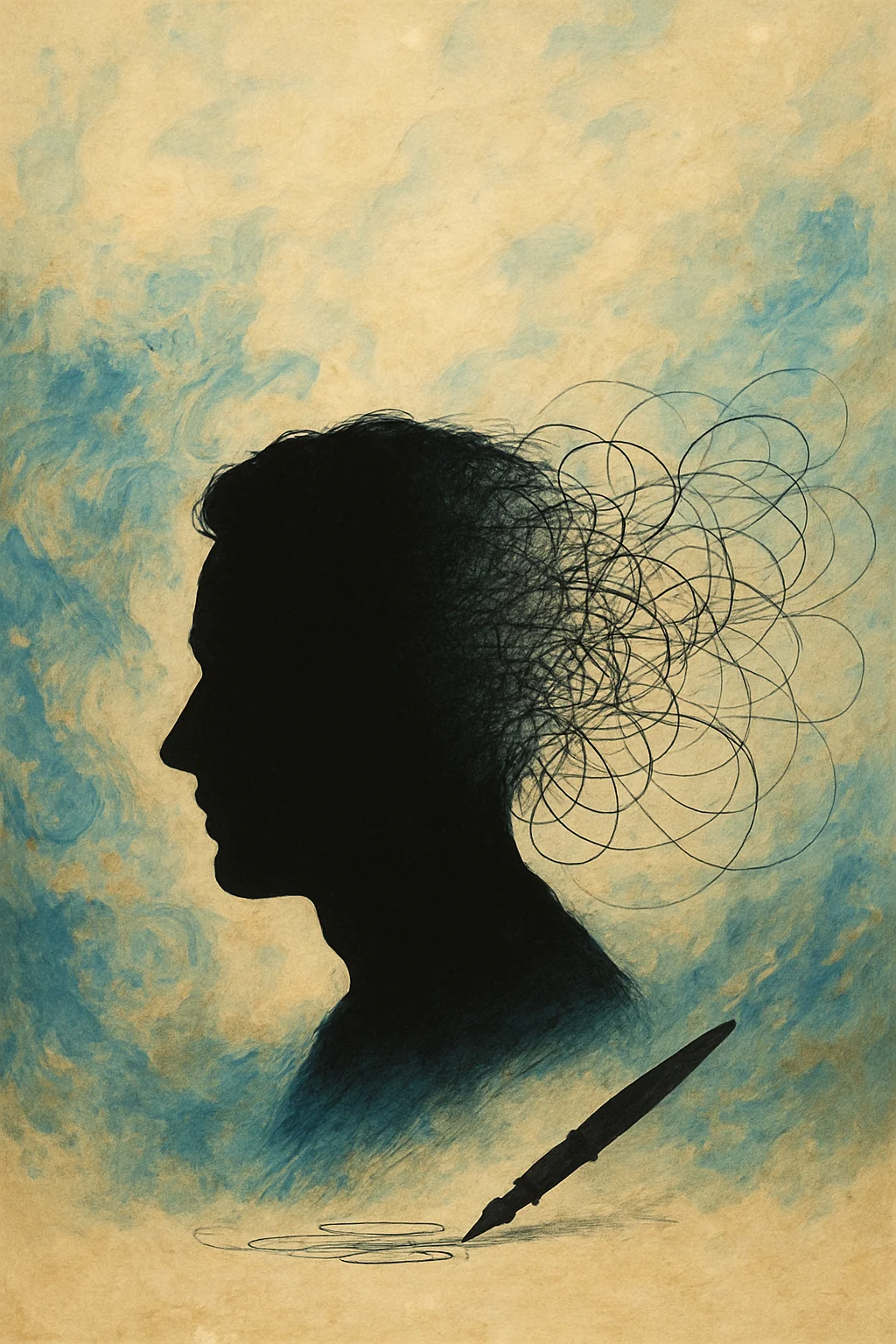
The Experience of the Unconscious in Poetry
By Dr. Walid Qassab
Some modern literary schools are enthusiastic about the experience of the unconscious, and count what results from it at the peak of art. They see that liberating the unconscious is the essence of the literary experience. Freud and his students - such as Jung and Adler - spread the idea that the sub-mind is a primary source for directing human behavior. Then the Surrealist school completed these illusions, denying reality and calling for liberating man and his art from the bond of the mind and clear logic. They claim that the first step towards artistic creativity is based on rejecting all givens of sense and reality, liberating the imagination from the conscious mind. Their philosopher Claudel said: "The game of poetry with the mind is like the game of the cat with the mouse; as soon as the cat of the mind appears, the mouse of poetry flees" (1),. Thus, modern Western schools adopted the experience of the unconscious, and the plague of hallucination spread in modern poetry, exiting the authority of the mind. In our opinion, these are sickly ideas. The experience of consciousness is the trait that should prevail in responsible literature. The poet must control his technical experience under the authority of wakefulness because the word is a responsibility: [Man does not utter any word except that with him is an observer prepared [to record]] (Qaf 18). Al-Hutay'ah once compared poetry to an ant crawling on his tongue; the word may escape the authority of consciousness, but the responsible poet possesses the ability to restrain the wild poetic emotion. If the unconscious sneaks into his experience during moments of creation, he does not surrender to it but re-examines his experience once he calms down. Look at these concepts in the position of our master Umar bin Al-Khattab regarding Al-Nu'man ibn Adi, vernor of Maysan. Umar heard a poem by Al-Nu'man about drinking wine. Umar dismissed him, saying: "Yes, by Allah, it does distress me." Al-Nu'man apologized, saying: "By Allah, I never drank it, it was just something that overflowed on my tongue." Umar said: "I think so, but you shall never work for me again, for you have said what you said" (2). Umar realizes that poetry may "overflow" on the tongue without the poet's control, but the absence of awareness represents a rift in the sound intellectual vision, especially for an official who is supposed to be a role model. The poet's emotion may be strong, but the difference between a responsible writer and an irresponsible one is that the first subjects his work to monitoring and revision, discarding what may spoil his intellectual vision regardless of its artistic beauty. Jarir once said when criticized for his satire: "They provoke me and I cannot remain silent." He fell under his intense emotion. Al-Abbas bin Mirdas also apologized to the Prophet ﷺ for poetry overflowing on his tongue during the distribution of spoils at Hunayn. The Prophet accepted his excuse, knowing the nature of poets (3). Our master Abdullah bin Rawaha once described poetry as something that agitates in a man's chest and comes out on his tongue (4). Poetry is a psychological agitation or an emotional shake. Abu Mihjan al-Thaqafi, imprisoned for drinking wine, told Salma, the wife of Sa'd ibn Abi Waqqas, that poetry simply crawled on his tongue. Sa'd ibn Abi Waqqas, with a refined critical sense, released him, saying: ", for I will not hold you accountable for something you say until you do it," because poetry may say what it does not do. This led the poet to vow never to use his tongue for a foul description again.