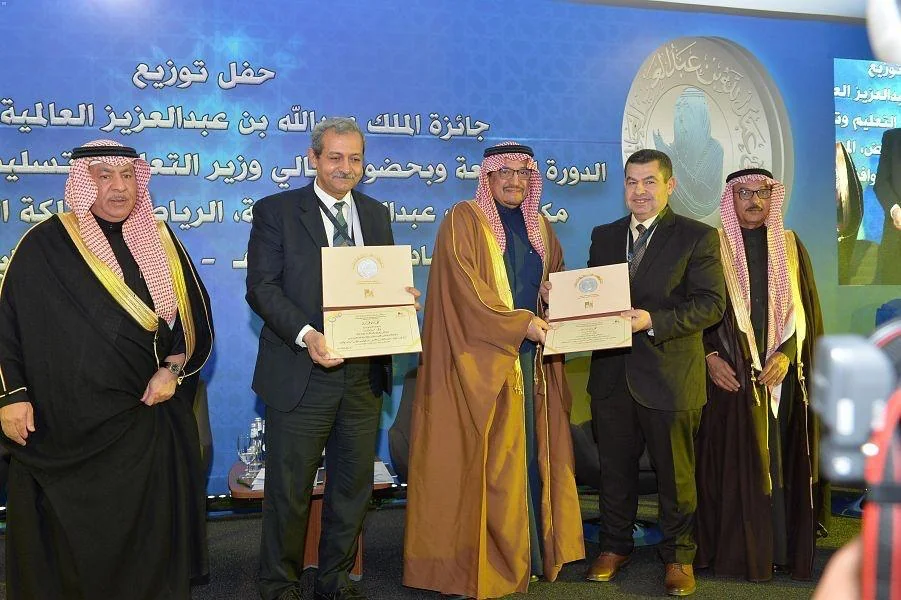
He emphasized its role in driving development and progress – Dr. Nasser Omar: There is a close relationship between the translation movement and civilizational progress
Dr. Nasser Mohammed Abdulsalam Omar, a researcher in natural sciences and chemistry, emphasized the importance of transforming translation into a major institutional work, especially with the rapid development of the field of artificial intelligence and the expansion of its application areas – such as: robotics, game industry, education and learning support systems, expert systems, speech recognition, natural language processing, pattern and shape recognition systems, decision support systems, and robots used in medicine and surgery, and the accompanying steady and rapid growth of specialized information and terminology.
He pointed out that this made it difficult for translators and researchers – individually – to keep pace with this huge progress and development at the appropriate speed. Therefore, the translation process should be institutional.
Dr. Nasser Omar, who won the ninth edition of the King Abdullah bin Abdulaziz International Award for Translation jointly in the field of: "Natural Sciences from other languages into Arabic" for the year 2020 AD, believes that translation works to transfer, disseminate, and localize science, technology, and knowledge.
From this standpoint, he translated a group of important scientific books during the period between 2008-2020, including:
"Fundamentals of Spectral Studies", "Organic Construction", "Organic Nitrogen Chemistry", "How Magnetic Resonance Imaging Works", "Mathematical Modeling of Biosensors", "Nanomanufacturing Directed for Biomedical Applications", "Nano: Materials, Technologies and Design", "Chemical Sensors", and "Bioenergy and Biofuel Production from Waste and Biomass". Ahwal Al-Ma'rifah magazine interviewed him about the role of translation in the field of science, and the role it plays in bringing the cultures of peoples closer together. This is the text of the interview:
What are your perceptions of the cognitive presented by the translation process between Arabic and other languages?
The translation process is linked to the process of cognitive and technical development witnessed by our Arab societies. This has led to stimulating many translators to translate many works in the fields of science and modern knowledge, to drive the wheel of development and progress. Translation builds bridges of communication between different peoples and cultures, and works to transfer, disseminate, and localize science, technology, and knowledge, and exploit them in achieving targeted development for the advancement of nations. The role of translation in transferring science, knowledge, and cultures between nations has been known since the dawn of history. If we reflect on the Greek and Roman civilizations, we find they were based on the translation of knowledge and science from the ancient Egyptian and Chinese civilizations. Similarly, Muslim scholars in Islamic civilization – which is considered the basis of modern Western civilization – translated the science and knowledge of the Greeks, Romans, and Persians in medicine, philosophy, logic, chemistry, engineering, mathematics, and astronomy, and they absorbed these sciences and were able to develop and innovate in them. Translation also works to mix culture with other cultures, and then it grows, flourishes, and advances. There is a close relationship between civilizational progress and the translation movement; the more the volume of translated works in the state increases, the more the state progresses civilizationally. Therefore, you find that the brightest eras of Arab civilization are those eras in which the translation movement flourished and expanded to a massive degree.
Does translation constitute a major window for receiving contemporary science and what is its role in developing the mechanisms and concepts of artificial intelligence in this era?
Translation is one of the main windows for communication and intellectual interaction between cultures in various fields of creativity, and it is the most important means for transferring knowledge and science between nations throughout the ages. The rapid development of artificial intelligence and the expansion of its application areas – such as robotics, game industry, education and learning support systems, expert systems, speech recognition, natural language processing, pattern and shape recognition systems, decision support systems, and robots used in medicine and surgery – and the accompanying steady and rapid growth of information and specialized terminology, have made it difficult for translators and researchers – individually – to keep pace with this huge progress and development at the appropriate speed. Therefore, the translation process should be institutional, and there should be an entity concerned with this on the level of the Arab world, which prepares a database for new translated and Arabized scientific and technical terms, including translated works and works nominated for translation, as well as including translators and specialized researchers in various sciences related to this field, in order to avoid repeating the translation of some works again, and to reduce the time gap between the emergence of that advanced knowledge and its reaching the Arab reader.
How do you view the King Abdullah bin Abdulaziz International Award for Translation in the context of emphasizing the role of scientific translation?
The King Abdullah bin Abdulaziz – may d rest his soul – International Award for Translation enjoys great global attention in academic circles, due to its distinguished status among international awards in the field of translation. The award's interest in researchers and translators and celebrating them has motivated them to complete the best works, which had a profound impact in revitalizing the translation movement and opening horizons for communication and rapprochement between Arab culture and other cultures. I was overwhelmed with feelings of joy and happiness when I won this great international award, which represents a dream for every translator, given the distinction of the works submitted for this award and the strength of the competition between them.
Do you see that the award covers distinguished cultural fields in the scene of Arab and global culture?
There is no doubt that this award covers distinguished cultural fields. I believe that the award's diverse and carefully selected fields including sciences, humanities, and various knowledge do not only serve the process of cultural and cognitive development in Saudi society, but in all Arab societies. Civilizational superiority requires spreading culture and science among members of society to form their comprehensive culture in all fields of modern science, languages, literature, history, and arts.
Highlight:
Nasser Mohammed Abdulsalam Omar
Born in Dakahlia vernorate, Egypt, on May 16, 1964 AD
PhD in Science (Chemistry, Organic Chemistry) titled: "Studies on Heterocyclic Nitrogen Systems" 2003 AD, Faculty of Science, Zagazig University.
Head of the Natural Sciences Department at the Community College, King Saud University (2008-2014 AD)
Lecturer at the Community College in Riyadh, King Saud University from 2003 AD to the present.