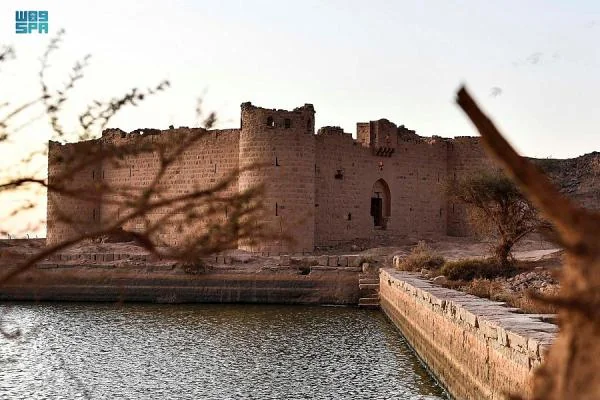
Registering 8176 archaeological sites in various regions of the Kingdom .. cultural initiatives reviving the material, artisanal, performance and industrial heritage above ground and submerged in water
The Saudi heritage is no longer just signals existing in books or magazine pictures
printed or stored in the press archive and library shelves. It became a living and tangible heritage and moved from its stored cultural side to the vitality of reality, and the movement of life.
The Saudi leadership in the recent years intended to return the glow of life to this heritage, and "The Spirit of Saudi" became a tangible reality, repeated practically, and the society feels it in its various daily manifestations.
Thus the Kingdom returns its cultural identity from new and works on its innovation and renewal, and transfers its heritage to the world. For the heritage today did not become just static witnesses, but it is an original part of the daily reality.
Heritage Initiatives:
In this context, the Ministry of Culture provided a bunch of cultural initiatives recently represented in the Heritage Commission launching the "Saudi Inscriptions" initiative as a step combining the authenticity and contemporary, and it is considered an important experience employing the archaeological elements in urban models, and the initiative aims to revive the heritage assets and historical landmarks in the Kingdom including 21 paths in Riyadh region and visiting several historical villages and palaces and continues until the second of next April. and it is held through two trips (Al Majma'ah - Al Ghat) and (Al Jubaila Sadous) containing many cultural activities that include visiting Mount Maniakh and Al Askar Palace and the heritage village in Al Ghat and the Emirate Palace in Al Ghat then Al Jubaila company and Sadous, and the initiative highlights the importance of traditional heritage handicrafts, and restoring the consideration for the folk heritage.
And comes in parallel with that the (Trooq) initiative which started on March 20 current in Asir region and that for the sake of maintaining the musical and performance heritage and limiting the heritage colors in Asir region field-wise and the initiative continues for a month.
As it was announced about the "Little Explorer" initiative, which includes orientation workshops for the children to provide them with the information and most suitable ways for the excavation operations of the antiquities, and developing the spirit of teamwork in them, beside providing them with all the knowledge and sciences and rights and duties towards the antiquities, as the initiative will organize competitions about the history and geography of the Kingdom to deepen the scientific impact linked with the field of excavation of the antiquities.
Innovation and Registration:
On another side, the Heritage Commission established the National Register to register and document the industrial heritage in the Kingdom to be added to the registers existing from before, which are: the National Register of Antiquities and the National Register of Urban Heritage. And the importance of the existence of these registers is documenting all the information about the heritage and antiquities of the Kingdom in its various forms, and thus providing the information base that helps in keeping these heritage properties and their maintenance. And the register is not just a paper book or a digital register for a database kept on the computer devices, but it represents the existence of the register as the first step towards keeping any heritage from extinction and loss; where the knowledge with what the Kingdom possesses of antiquities and heritage comes in the first rank followed by registering and numbering and documenting this heritage and its classification and its description with a precise documented description for the reliance on it in the future in knowing the changes that might occur on the monument.
And the Heritage Commission registered the old oil pipeline (Tapline) in the national industrial heritage register as the first industrial heritage site being registered in the Kingdom, as it registered recently Al Marqab presses in Riyadh. And there is a big number of Saudi industrial heritage sites where the works of their documentation are being finished to join to the first register of industrial heritage in the Kingdom of Saudi Arabia. This register will provide for the industrial heritage the protection, as well as granting it the chance to reuse it as a cultural tool that can be utilized and invested within the civilizational landmarks that register the story of industry and growth and economic development in the Kingdom of Saudi Arabia.
And the Heritage Commission in the Kingdom registered as it was announced recently (37) new urban heritage sites in Tabuk region in the National Register of Urban Heritage within its tireless efforts that aim to archiving and digitizing the heritage sites on the level of the Kingdom regions for the sake of containing them in a modern digital register serving the civilizational heritage of the Kingdom.
As it was started a scientific project to document and study the stone structures in the Kingdom in cooperation with the national and international specialized institutions and centers, and that within the plan of the survey and excavation program belonging to the Heritage Commission. And this project is considered among the most important scientific projects on the level of the world, where Saudi Arabia includes the largest number of stone structures on the level of the world, in addition to the uniqueness of the Kingdom with its hosting of the clear diversity in shapes and sizes and various functions for those structures, as well as many international scientific centers specialized in Stone Ages in general and stone structures in particular, look forward to the results and outputs of this project, which will provide them with information in top importance needed by the specialists to fill big gaps in this type of interesting studies that reveal the patterns of living in those ancient ages, especially that this field represents one of the scientific issues on the global level that need more exhaustive research to understand the nature of those structures and their function.
And this important scientific project provides answers for many questions about the environmental and cultural and social conditions for the human of those ages and the nature of these structures. That increases the sources of information about the historical ages in general, in addition to the importance of documenting such structures and maintaining them on the national level, and highlighting the important civilizational role for the land of the Kingdom from the point of human civilization and its investment from the environmental and cultural and tourist sides.
As Prince Badr bin Abdullah bin Farhan, the Minister of Culture, announced recently about the establishment of the Kingdom for the Center of Submerged Cultural Heritage under water as being a part of the responsibilities of the Heritage Commission towards keeping all the national heritage, whether existing above ground or buried below the sands or submerged in water, which the world knows as the sunken antiquities. And this center is considered among the most important projects of the Heritage Commission on the two levels local and international, where it aims to implementing the archaeological excavation projects for the submerged cultural heritage in the territorial waters in the Red Sea and the Arab Gulf through implementing scientific projects in cooperation with the Saudi universities and the specialized international centers; to monitor and document the sites of the historical sunken ship wrecks inside the Saudi territorial waters and performing the specialized scientific studies, in addition to performing the historical studies related with the maritime trade roads during various historical periods.
From what is mentioned that the Heritage Commission belonging to the Ministry performed registering 8176 archaeological sites in the National Register of Antiquities, and the Heritage Commission also performed registering and documenting fourteen archaeological sites in the second quarter of the year included the regions of Riyadh, and Qassim, and Tabuk and Al Jouf; to be added these sites to 624 archaeological sites being registered already during the year 2019 and until the first quarter of 2020, to reach by that the number of registered archaeological sites in the national antiquities register until now to 8176 archaeological sites in various regions of the Kingdom.
Signals:
https://aawsat.com/home/article/3479791
https://aawsat.com/home/article
https://www.sayidaty.net/node/
https://www.alyaum.com/articles/
https://www.alyaum.com/articles/