World Museums: 77% drop in attendance worldwide
The Art Newspaper's annual survey, translated by "Ahwal Al-Ma'rifa", shows how the pandemic had a devastating impact on museums around the world.
In normal days before the pandemic, more than nine million visitors competed to see the Mona Lisa or Delacroix's Liberty, and half a million fashion enthusiasts attended the opening of the spring shows.
But these cultural activities became news from the past in 2020 after the widespread destruction caused by the global Covid-19 pandemic.
The annual survey by The Art Newspaper reveals that total attendance at the world's 100 most visited art museums fell by a staggering 77% in 2020 – from 230 million in 2019 to just 54 million, after museums worldwide were forced to close. Museums were closed for a total of 41,000 days in total.
The year began with reports from Wuhan about the Covid-19 virus, which was spreading rapidly across the Chinese city. By the end of January, the city was in lockdown and staff at one of Wuhan's largest museums, the Hubei Provincial Museum, which was closed from January 23 to June 13, were not allowed to travel to and from work.
The National Museum of China in Beijing is the second most popular museum in our survey with 1.6 million visitors. The museum closed for three months starting January 25 as Beijing authorities cancelled Chinese New Year celebrations. When the museum reopened, its maximum capacity was initially reduced by 90% – from 30,000 to 3,000 visitors per day – then gradually eased as the year went on to 8,000 visitors per day by August.
The second most visited Asian museum is the 21st Century Museum of Contemporary Art in Kanazawa, Japan, which received 971,000 visitors in 2020. It was closed for an additional 66 days last year.
European Crises
The three main art museums in the French capital – the Louvre, the Pompidou Center, and the Musée d'Orsay – saw a 73% drop in attendance overall, falling to 4.5 million from 16.5 million in 2019.
Despite this, the Louvre reported losses of about 90 million euros in 2020.
Lost tourism and lockdowns also affected major museums in Spain: the Prado Museum in Madrid saw a 76% drop (from 3.5 million in 2019 to 852,000), while the Reina Sofía figures fell by 72% (from 4.4 million in 2019 to 1.2 million).
The pandemic forced the Prado to close for an additional 85 days, reopening with less than half its visitor capacity, while the Reina Sofía was closed for an additional 80 days and reopened at only 33% capacity. Meanwhile, visits to Italy's heavyweight museums – the Vatican Museums, the Uffizi Galleries and the Accademia in Florence – fell by 81%, 72% and 81% respectively.
Despite being closed for an additional 193 days – one of the highest closure rates in the European museums surveyed – attendance at the Palazzo Reale in Milan fell by only 48%, to about 391,000. The National Gallery of Ireland in Dublin was closed for almost the same period, 186 days, resulting in a 73% drop in visitors.
British Ups and Downs
In the UK, the Tate Modern in London was the most visited museum, surpassing the British Museum.
Many of the UK's major museums rely heavily on tourism: the British Museum's audience consisted of 77% foreign visitors for the 2019/20 financial year, while the National Gallery is usually "about 60% per year".
On average, British museums saw a 77% drop in attendance, and were closed for an average of more than half of 2020. When the institutions eventually reopened, all major museums imposed visitor limits. Although varying, most museums were able to operate at only about 20% to 30% of normal capacity.
The sharp drop in footfall contributed to heavy financial losses. The self-earned income for the four Tate museums fell from £94 million in the 2019/20 financial year to an estimated £38 million for 2020/21, a 60% drop.
Similarly, the Victoria and Albert Museum saw a 63% loss in income, as its own funds fell from £64 million to £24 million. The National Gallery emerged relatively unscathed, losing only £14 million, according to a spokesperson for the museum.
However, there were some success stories. More than 580,000 people at the Saatchi Gallery saw a touring exhibition of Tutankhamun's treasures from the Grand Egyptian Museum in Cairo, while more than half a million people saw Tate Modern's Olafur Eliasson show.
American Image
As each state set its own social distancing restrictions and safety protocols, American museums had to adhere to widely different rules. The number of extra days institutions were closed last year ranged from 75 (Crystal Bridges Museum of American Art in Arkansas) to 293 (National Museum of the American Indian in New York).
Many California museums closed last March and remained closed for most, if not all, of last year, while Crystal Bridges reopened in June. However, the Bentonville museum received 353,000 visitors, half the 2019 number.
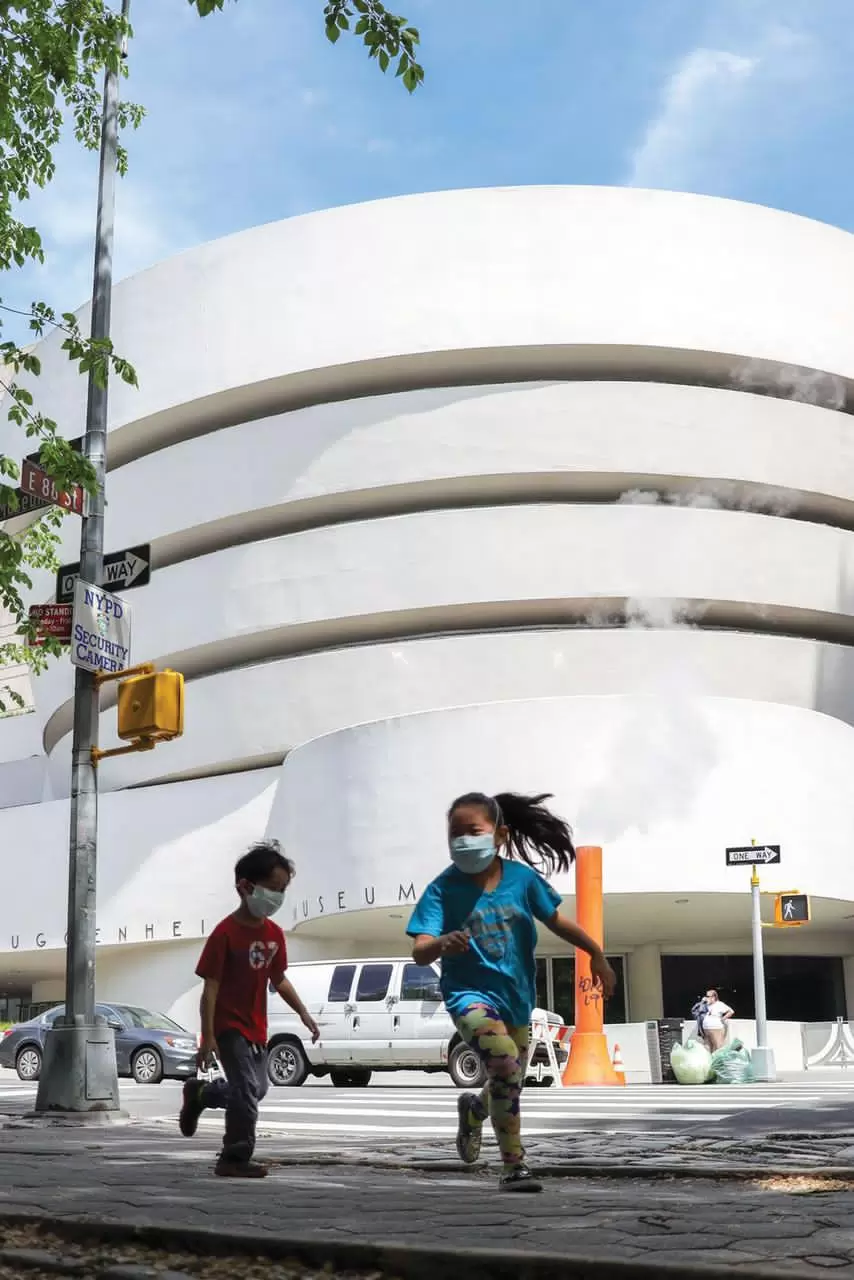
The Guggenheim Museum saw the largest drop of 88%. While many New York museums were closed for almost six months, the Guggenheim was closed for more than seven months and reopened at only 25% capacity.
Museums in Washington D.C. faced a second year of unexpected closures, after already being plagued by a government shutdown in late 2018 and early 2019. The National Gallery of Art (NGA) was closed for an additional 138 days, while the Smithsonian American Art Museum (SAAM) and the National Portrait Gallery (NPG), which share an entrance and have the same number of visitors, were closed for an additional 225 days.
Attendance at NGA fell by 82% to 730,000 from 4.1 million in 2019, and attendance at SAAM and NPG was 321,000, representing an 81% decrease from 1.7 million in 2019.
Data from 19 Brazilian institutions surveyed by the paper show that museums were closed for an average of 203 days last year, more than any other country in this report.
New Zealand Success
New Zealand was one of the great success stories of the pandemic, thanks to the early implementation of restrictions, with many quick and severe lockdowns. Its museums were closed for less than the global average and generally faced no capacity restrictions when they reopened, unlike most other museums around the world.
The least affected major museum was the Christchurch Art Gallery, Te Puna o Waiwhetu, which was closed for 54 days, and saw only a 28% drop in visitors. The Museum of New Zealand Te Papa Tongarewa in Wellington, the country's most popular institution, received approximately 838,000 visitors, 46% fewer than in 2019.