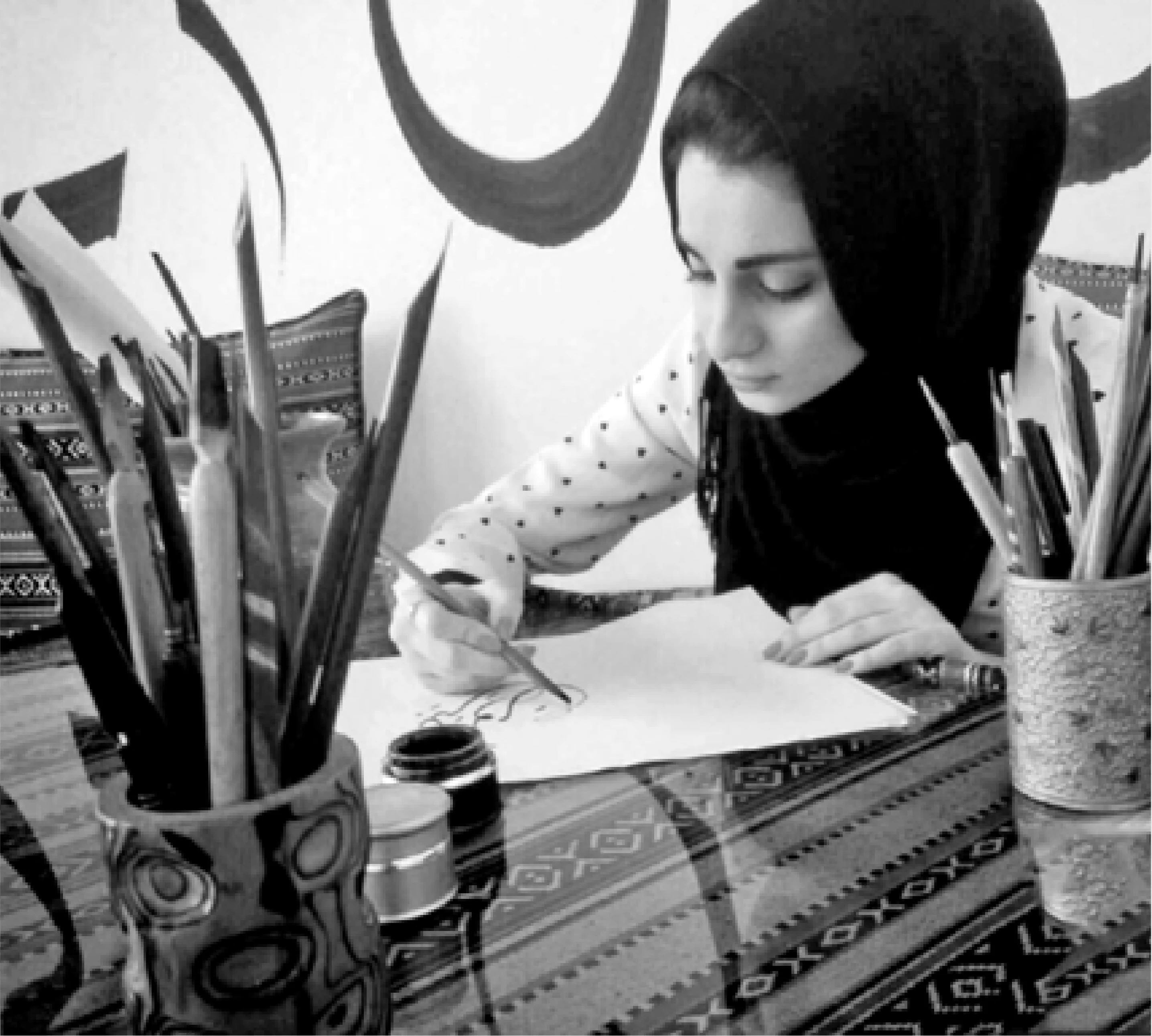
Women and Arabic Calligraphy: Creativity and Privacy
Arabic calligraphy is one of the arts that flourished and developed with the history of Muslims and the civilization of Islam, where Muslims paid great attention and extreme care to calligraphy and the drawing of letters, especially with the beginning of the codification of the Holy Quran. Then different forms of Arabic calligraphy were known, attributed to the region in which they were written, such as the Makki script, which was called the Kufi script with the transfer of the Islamic caliphate to Kufa and its development there. If Arabic calligraphy witnessed male creations by calligraphers at the level of the Arab and Islamic worlds, women were not far from this art and its aesthetics, as the genius of Arabic calligraphy appeared with female fingers, just as the genius of calligraphers from non-Arabs appeared, not only from the Arabs. There was a common language between Arabic calligraphy and women in which this privacy of women in the field of calligraphic creations emerged by emphasizing some points of difference between men and women. Women's lines, for example, tend to use colors more than the classical script, or to produce colored backgrounds, and use colored paper in calligraphy, and they also tend to ornamentation as a complementary rather than an essential element of Arabic calligraphy. This tendency towards ornamentation is perhaps the most prominent feature in the creative works of women in the field of Arabic calligraphy.