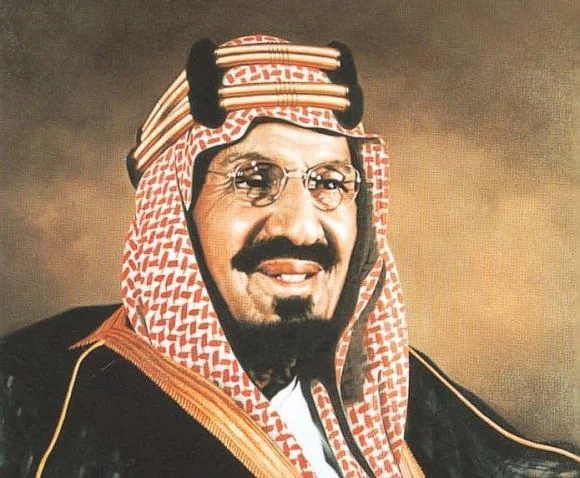
The most prominent of them are Ibn Uthaymeen, Al-Ghazzawi, Ibn Blihed, and Khalid Al-Faraj.. King Abdulaziz Al Saud's poets document the history of the founding and the achievements of the founder
Arabic poetry always forms its bright pages when it is linked to the history of nations and the history of the Arabs. It is a documented witness to historical, civilized, and social transformations and developments, due to its closeness to life and its proximity to the realistic events from which it inspires its favorite poetic worlds and its distinguished subjects.
The history of the founding King Abdulaziz Al Saud - may d have mercy on him - witnessed the presence of a large number of poets who documented the stage of the conquest of Riyadh and the founding of the Kingdom of Saudi Arabia in 1932. This presence documented the various important stages in the founding of the third Saudi state, presented its achievements, and praised King Abdulaziz - may d have mercy on him - with colors of poetry and distinguished poems that formed the poetic history of the founding stage.
Prominent Poets:
Among the most prominent poets of King Abdulaziz Al Saud - may d have mercy on him - were four of the Kingdom's poets, namely:
- Muhammad bin Abdullah bin Saad bin Uthaymeen, who was born in 1270 AH in the town of Al-Salamiyah in Al-Kharj. He learned reading and writing at the hands of the town's sheikhs, then moved to Riyadh to receive knowledge at the hands of scholars.
He traveled in search of a living in the Arabian Gulf region and lived in Qatar, where he contacted its ruler, Sheikh Qassim bin Thani, who brought him close to him. Then he moved from Qatar to Bahrain and contacted its sheikhs from the Al Khalifa family, who brought him close to them.
When King Abdulaziz Al Saud was able to recover Al-Ahsa in 1331 AH / 1913 AD, Muhammad bin Uthaymeen went to him and congratulated him with a poem in which he opposed Abu Tammam's poem: "The sword is more truthful in reporting than books," and its opening is:
Honor and glory are in the Indian blades
Not in the messages and the embellishment of speeches
From that time, he became associated with King Abdulaziz and immortalized with his poetry the King's victories, conquests, and generosities. He published much of his poetry in Umm Al-Qura newspaper, and his poetry was characterized by the richness of the wording, the strength of the meaning, and the beauty of the phrasing.
- Ahmed bin Ibrahim Al-Ghazzawi, who was born in Rabi' al-Awwal 1318 AH / 1900 AD in Makkah Al-Mukarramah. He was educated in its schools, joining the Soltiya School in 1322 AH and memorizing the Holy Quran. He graduated from it in 1330 AH, then joined the Al-Falah School in the same year. He traveled with his father to Sudan and India in 1343 AH.
He worked in the Presidency of the Judiciary in late 1344 AH, then King Abdulaziz entrusted him with editing Umm Al-Qura newspaper, then editing Saut al-Hijaz. After that, he held several official positions until he was appointed Director of the Radio at the beginning of its work in 1368 AH. He died on Jumada al-Akhira 22, 1402 AH in Makkah Al-Mukarramah.
He won the title of Poet of the House of Saud in 1351 AH, and King Abdulaziz named him (King Abdulaziz's Hassan). He accompanied the King on his trip to Egypt in 1356 AH and delivered a poem there in praise of Kings Abdulaziz and Farouk.
- Muhammad bin Abdullah bin Blihed: From the Bani Khalid tribe, belonging to Qahtan. He was born in the year 1300 AH in (Dhat Ghasl) of the villages of Al-Washm in Najd. He learned reading and writing there, and tasted folk poetry (Nabati, Malhoun) and wrote Eloquent poetry. His poems in praise of King Abdulaziz were published in Umm Al-Qura newspaper.
He traveled in the deserts of the Arabian Peninsula as a raider, merchant, collector, and guide, gaining experience with its dwellings, valleys, plains, mountains, and water sources, thus becoming an expert in the paths of the heart of the Arabian Peninsula.
He collected his colloquial and eloquent poetry in a diwan he called: "Smiles of the Days".
- Khalid bin Muhammad Al-Faraj: From the Al Tarad family of the Manadil from the Dawasir. His father settled in Az-Zubara in Qatar, then moved to Muscat then Kuwait. Khalid was born in 1316 AH and was educated there. He traveled to Bombay, India to work as a clerk for an Arab merchant, and established a printing press there. Then he returned to Kuwait, and moved to Bahrain and praised its ruler Al Khalifa. Then he returned to Kuwait in 1927 AD and contacted King Abdulaziz Al Saud and praised him. He was appointed Director of the Al-Ahsa Municipality, then Qatif, then Dammam, and established the Saudi Press in Dammam. He died in Beirut in 1374 AH. He has a diwan of poetry and other works.
The poet Khalid Al-Faraj organized the history of King Abdulaziz and his biography in a poetic epic called: "The Best of Stories, or the Biography of King Abdulaziz bin Abdulrahman Al Faisal Al Saud". He began it with these verses:
To your glory, greatness is attributed and belongs
And in your mention, history dictates and writes
And in your justice, the honorable Sharia is represented
And in your rule, proverbs are recited and set
And there remains for Islam no helper but you
Supporting it in d, pleased or angry
In this way, poetry portrays and documents various subjects, especially those related to historical transformations and major national events, where poetry remains a documented witness, whether through its realistic expressions or through its images and imaginations that flow in the final analysis into the documented, literary, cognitive, and civilized scene in general.