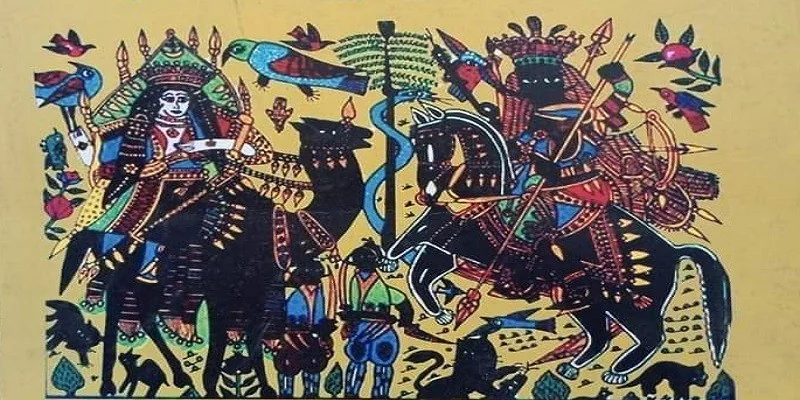
Arab Women and Folklore.. Women in the Taghribat Bani Hilal: Poet, brave knight, and sacrificer for the tribe
Hajjaj Salama
Women have been known since ancient times as carriers of oral heritage and guardians of civilization before the appearance of documentation. They pass everything they carry of civilizational, oral, or material heritage to their children in what is modernly called social upbringing. Our intangible cultural heritage is rich in diversity, illustrating the status of women and the popular group's respect for her feminine nature. A recent Egyptian study by Dr. Shaimaa Al-Saidi, Director General of the Egyptian Folk Traditions Atlas, sheds light on the role of Arab women in the oral epic—Taghribat Bani Hilal as a model—distinct from the chronicled biography that focused only on major political events. The study revealed an important social aspect concerning the other half of society in this rough Bedouin community. Despite the difference between oral and historical biographies, they complement each other. The oral version depicts the woman's place which historical sources were silent about. In the Hilalian epic, women enjoyed a distinguished position, starting with the story of Khadra Al-Sharifa. Al-Jazia was known for her wisdom and inherited her political status from her grandmother Shamma, holding a third of the consultation in the political council. Decisions were not made without her approval. This beautiful girl appeared during hardships when men failed to find solutions. Al-Jazia played a role of "soft heroism" as a rescuer and defender of truth. This indicates the popular group's trust in women's minds, supported by Islam and seen in the Prophet's biography. Al-Jazia often sacrificed for her tribe, marrying the Sharif of Makkah despite his flaws for the tribe's sake, and later leaving her children and comfort to migrate to Egypt to ensure her tribe's safety. Her greatest role was executing Abu Zeid Al-Hilali's will, raising the orphans of heroes to take revenge. She insisted on taking her brother's revenge herself and was eventually killed by Diyab. She also played a role in encouraging men for war, a custom from the Pre-Islamic era. In these epics, the woman reaches a level where she is equal to the hero, and we say "the woman hero" because heroism in popular epics has a unified concept involving combat and dual participation.