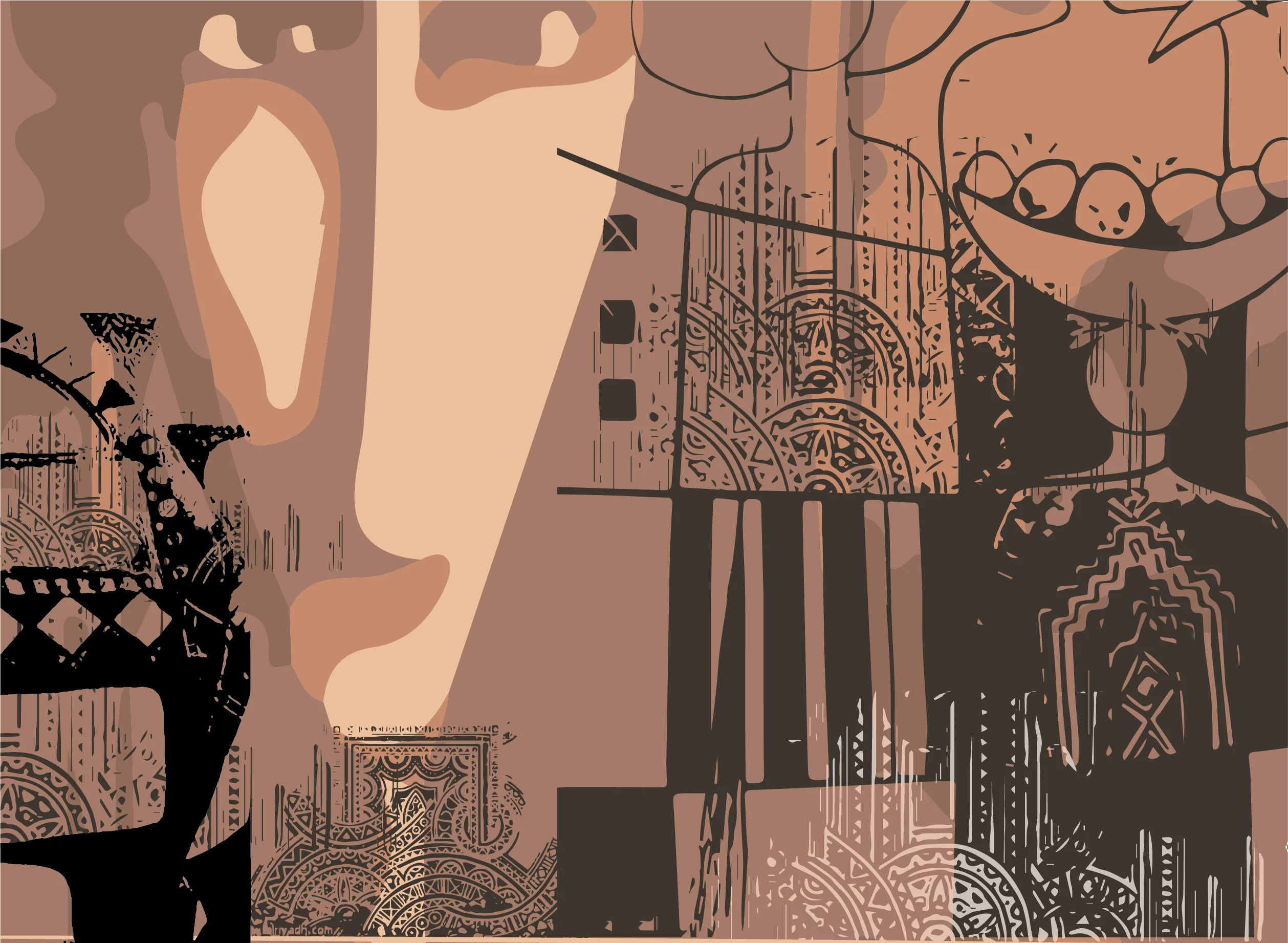
Abstraction .. the most famous art among Saudi fine artists
Radi uda
Heritage and social legacy were the first incentive in the beginnings of the formation of the Saudi plastic movement at the hands of the pioneers, then the types of knowledge and sources of artistic science branched out and the Saudi artist was affected by the presence of some art education teachers from the sons of their homeland, as well as some teachers coming from Iraq, Egypt, Palestine and others, and as long as there were opportunities for knowledge, it is difficult to waste them, and therefore we can say: The Saudi plastic artist benefited greatly from this diversity and difference in visions, but no break occurred between him and his society, perhaps some of them tried to touch the modern patterns and follow them, but the long period accompanying the work on naturalizing the Saudi form - if the expression is correct - and the artistic experiences that made them create a climate for art so that it becomes a material element that enters the details of life between monitoring and recording the environment through several elements, we mention among them:
- - Cities, villages, the desert, and people, and architecture from the inside or outside was the remarkable thing in the works of: Safiya bin Zaqr, Abdul Jabbar Al-Yahya, Dia Aziz, Ali Al-Razaiza, Taha Sabban, Hassan Madawi, Ibrahim Al-Jabr, Munira Mossly, Abdul Nasser Al-Amri, Khalid Al-Abdan, Ali Al-Saffar, and Samir Al-Daham.
- - Valleys, palm trees and trees, as are the works of Saad Al-Obaid, Siddiq Kashshaf, Saleh Al-Nuqidan, Abdullah Al-Tamami, Saida Saqran, and Muhammad Al-Ajam.
- - The dallah, cups, firewood, and the fire pit, tea and old cars, most of the male and female artists who participated in the arts hall activities at the Janadriyah National Festival for Culture and Arts were distinguished by their work.
- - Decoration, calligraphy, clothes, tattoos, branding, jewelry, tents and furnishings: Abdullah Hammas, Ibrahim Al-Fam, Nasser Al-Mousa, Muhammad Al-Abdulkarim, Fatima Abu Qahas, Abdullah Nawawi and Mansour Kurdi.
- - Hajj, the movement of caravans, horses and camels: Ibrahim Al-Bawardi, Fahd Al-Naymah, Nasser Al-Dabaihi, Hisham Benjabi and Hanan Al-Juaidan.
Also, some were influenced by the surrealist style such as: Abdul Hamid Al-Baqi, Saleh Khattab and Huda Al-Omran Saeed. We may find among the Kingdom's artists grotesque artists who work on wonder and innovation in their works that critics stand before with a lot of anticipation and monitoring of the ability to continue and develop the case, and create a creative climate for post-modernity as happened with the artists: Bakr Shekhon, Ahmed Mater, Abdul Nasser Gharem, Faisal Al-Samra, Raeda Ashour, Hashem Sultan and Abdullah Al-Marzouq. As for the pattern of abstraction that moves things from the sphere of their reality and working on reformulating them with a new artistic vision that shows the artist's experience and sense of color, movement and imagination. Abstract art is a type of twentieth-century art that rejects the specifically defined subject, abstract art is sometimes called: non-objective art. First: The abstract painting is just a pictorial piece, and as long as it reflects a state or a subject, it itself becomes a subject, its value is in its internal construction and in the organization of its elements and the cohesion of its parts. The popular social climate of the Saudi artist and his sense of pride in his Islam and that it is the most important source behind his trend towards abstract arts that adapt to his doctrine to form a philosophical result with an aesthetic specificity represented in abstractions based on colors, decorations, lines and some suggestive shapes, this is manifested in the works of the artist Muhammad Al-Rabat, who combines the concept of the uniqueness of Arabic calligraphy and its ability in abstract formation and the free color that suggests and does not disclose, and Al-Rabat alone is not the one who held and held on to the abstract pattern, but there is a large group, and perhaps the majority of male and female artists in the Kingdom who have adopted that, and what we can say about it:
- - Suggestive expressive abstraction: Abdullah Al-Sheikh, Abdul Rahman Al-Sulaiman, Hussein Al-Mohsen, Shalimar Sharbatly, Walid Al-Ruwaiba, Abdullah Al-Ahmari, Taghreed Al-Jadaani, Fahd Al-Naymah, Abdullah Al-Barqi and Saeed Al-Amri.
- - Geometric abstraction: Yusuf Jaha, Bakr Abdul Salam, Najla Al-Salim, Hamza Bajouda, Budour Al-Sudairy, Walid Al-Tuwairqi, Hassan Al-Ghamdi, Fahd Khalif, Nahar Marzouq, Saeed Qamhawi and Mahdi Rajeh.
And secondly: and as Afif Bahnsi explained: "The Aesthetics of Arabic Art" "Geometric thinking was not far from the consciousness of the Arab Muslim artist who devoted himself to studying geometric compositions such as the triangle and square and the like and reformulating them with harmonious structural systems relying on the line and color as basic material in design and performance, as the Arab artist set out with a geometric diversity of the Arabic line which initially carried geometric shapes and developed in them to take different forms, some of which are broken or geometric shapes or soft and broken together" which proves the ability of the Arab artist to renew the drawing of letters and words, and explains the extent of his mental liberation and his spiritual and aesthetic sense that we feel in what Arabic writing reached to the highest ranks of abstraction with a new and innovative plastic language in our contemporary time.